



The Great Thirst Before the Flood
Before the rain, there is the waiting. The final weeks of May in western India are a period of intense, suffocating heat. The sun bakes the earth into a cracked mosaic, rivers shrink to trickles, and the air is thick with a dusty haze. In Maharashtra,
a state on India’s west coast that’s home to over 125 million people and the bustling metropolis of Mumbai, this pre-monsoon tension is an annual rite. Life slows. The landscape, particularly the rugged spine of mountains known as the Western Ghats, holds its breath. This isn’t just a dry spell; it’s the quiet before a continental-scale transformation, a collective prayer for relief from the sky.
More Than Just a Rainstorm
For most Americans, “monsoon” might evoke images of a prolonged downpour. But the Indian summer monsoon is something far grander: a massive, seasonal reversal of winds over the Indian Ocean. Every year around June, moisture-laden winds from the southwest sweep in from the Arabian Sea, replacing the hot, dry winds blowing from the land. This colossal atmospheric shift is the planet’s most powerful weather phenomenon. It doesn’t just bring rain; it brings a complete change in existence. The branch of the monsoon hitting Maharashtra is one of the first and most dramatic arrivals, a wall of water and wind that slams into the coastline and begins a steady, inexorable march inland.
The Cliffs That Create the Spectacle
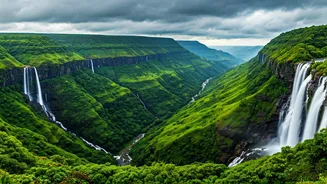
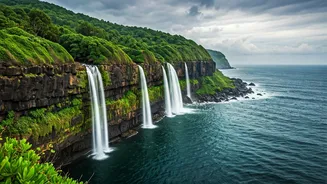
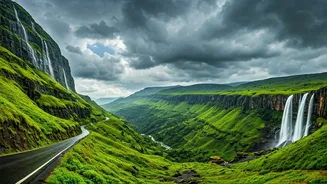
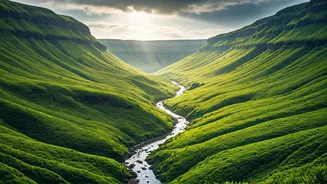
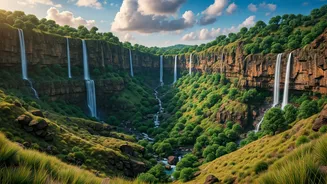
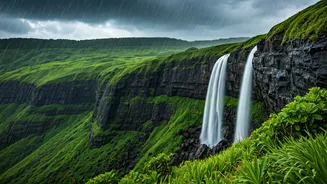
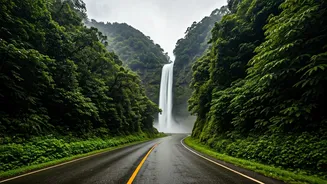
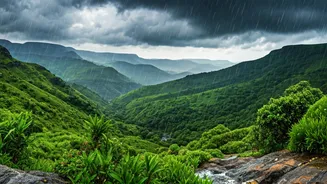
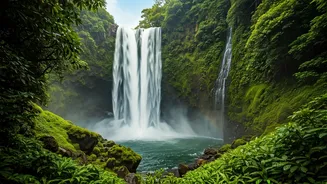
The headline's “coastal cliffs and valleys” refer to the Western Ghats, a UNESCO World Heritage site and one of the world’s most important biodiversity hotspots. This ancient mountain range runs parallel to India’s western coast, acting as a formidable barrier. When the monsoon winds, saturated with oceanic moisture, hit these mountains, they are forced to rise rapidly. This upward thrust cools the air, causing the water vapor to condense into torrential rain. The result is a breathtaking spectacle. Within days, the brown, dusty hillsides transform into a canvas of impossible green. Thousands of temporary waterfalls, some cascading for hundreds of feet, erupt from the cliffs. The dry valleys become gushing rivers. It’s a region reborn in water, and for a few months, it becomes one of the most stunningly lush landscapes on Earth.
India’s Economic Lifeline
While visually spectacular, the monsoon’s true importance is economic. It’s the lifeblood of India. These rains are responsible for about 70-80% of the country's annual rainfall, and they dictate the fate of its agricultural sector, which employs nearly half the population. A strong, timely monsoon means a bountiful harvest of rice, cotton, and soybeans, keeping food prices stable and rural economies afloat. The rains replenish reservoirs that provide drinking water for millions and feed the hydroelectric dams that power cities and industries. But this lifeline is also a tightrope walk. A weak monsoon can lead to drought and crop failure, while an overly aggressive one, as is often the case in the dense urban sprawl of Mumbai, can cause devastating floods, landslides, and widespread disruption.