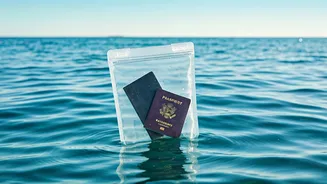







The “Policy” Protecting Your Most Vital Gear
Let’s be clear: a waterproof pouch won’t reimburse your canceled flight or cover a medical emergency. But the headline’s claim gets at a crucial truth. Traditional travel insurance is for big, unpredictable catastrophes. A waterproof pouch is your frontline
defense against a small, highly probable, and surprisingly expensive one: water damage to your electronics and documents. Consider the “deductible” you’d pay without one. Dropping your phone in the pool or getting caught in a monsoon can lead to a repair bill that easily tops $500 for a modern smartphone. If water fries the logic board, you might be forced to buy a new device outright. A water-damaged passport is an even bigger headache. Getting an emergency replacement at a U.S. embassy abroad is a stressful, time-consuming process that can cost you a day of your vacation and upwards of $200 in fees. Suddenly, a $10 pouch doesn’t just seem cheap; it seems like one of the highest-return investments you can make for your trip.
Anatomy of a Good Pouch
Not all pouches are created equal, but you don’t need to spend a fortune to get a great one. Most top-rated options cost between $10 and $20 for a two-pack. Here’s what to look for. First, check the IP Rating. You want a pouch rated IPX8, which means it can be fully submerged in water, typically up to 30 meters, for a specified time. This is more than enough for swimming, snorkeling, or surviving a torrential downpour. Second, look for clear, touch-sensitive material on both sides. This allows you to use your phone’s screen and camera without removing it from the pouch, letting you snap photos by the pool or navigate maps in the rain. Third, a secure locking mechanism is non-negotiable. Most reliable pouches use a combination of snap-and-lock clips that create an airtight seal. Finally, a sturdy neck lanyard is essential. It keeps your hands free and ensures your phone isn’t just waterproof, but also drop-proof and theft-resistant when worn under a shirt.
Beyond the Beach Vacation
The most common mistake travelers make is thinking these pouches are only for beach resorts. Their real value lies in their versatility. Think of all the scenarios where water is an unexpected threat. You’re on a boat tour in Alaska and the sea spray is constant. You’re exploring the misty base of Niagara Falls. You’re at a theme park, and your kids are dragging you onto a log flume ride for the fifth time. You’re hiking in the mountains and a sudden thunderstorm rolls in. In all these cases, a waterproof pouch transforms a moment of panic into a non-event. It’s also an incredible barrier against sand, dust, and dirt, which can be just as damaging to your phone's charging ports and speakers. Whether you’re on a fishing trip, a ski slope, or just navigating a humid day in Southeast Asia, the pouch provides a sealed, protected environment for your most essential items.
The Fine Print: Using It Right
Like any piece of gear, a waterproof pouch is only effective if used correctly. Before you ever trust it with your $1,000 phone, perform a simple test at home. Place a dry paper towel inside the pouch, seal it tightly, and submerge it in a sink or bucket of water for at least 30 minutes. When you take it out, the towel should be perfectly dry. If it’s not, return the pouch immediately. When you’re on your trip, always make sure there is no dirt, sand, or hair caught in the seal before closing it. In very hot and humid conditions, condensation can sometimes form inside the pouch due to temperature changes. To combat this, you can tuck a small desiccant packet (the kind that comes in shoe boxes) inside, away from your phone screen. These simple precautions ensure your “insurance policy” will actually pay out when you need it most.