









Deconstructing the 10-to-1 Claim
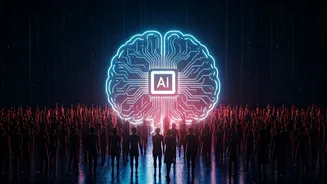
The eye-popping '10-to-1' ratio that has ricocheted across boardrooms and newsrooms stems from a 2023 analysis by investment bank Jefferies. While any such number is an estimate, it captures a fundamental truth about the current economy: the demand for
skilled AI professionals has wildly outpaced the supply. This isn't a case of a few tech giants hiring; it’s a systemic, cross-industry scramble. The figure serves as a powerful symbol of the talent chasm that opened up almost overnight, leaving companies of all sizes desperate to find the few individuals who can build, implement, and manage transformative AI technologies.
The Generative AI Gold Rush
The primary catalyst for this frenzy is the explosion of generative AI. The public launch of tools like OpenAI's ChatGPT didn't just create a new consumer fascination; it triggered a corporate panic. Suddenly, every executive from banking to retail to healthcare realized that failing to develop an AI strategy was not an option. This created an immediate, unprecedented need for people who understand large language models (LLMs), machine learning operations (MLOps), and the complex architecture behind generative AI. Companies are no longer just exploring AI for efficiency; they are racing to embed it into their core products and services, and they need the highly specialized architects to do it. This isn't a land-grab for competitive advantage, with talent as the most valuable territory.
Who Qualifies as an 'AI Expert'?
The term 'AI expert' is deceptively simple. It encompasses a wide spectrum of roles, each demanding a rare blend of skills. At the top of the pyramid are AI Research Scientists, often with PhDs, who are pushing the boundaries of what's possible. Just below them are Machine Learning Engineers, who build and deploy the models that power AI applications. Then there are Data Scientists who prepare and interpret the vast datasets AI feeds on, and the increasingly prominent 'Prompt Engineers' who specialize in optimizing interactions with AI models. The demand even extends to AI Ethicists, AI Product Managers, and UX designers who can create human-friendly interfaces for complex systems. This isn't a search for generic coders; it's a hunt for specialists with proven experience in a field that, until recently, was largely academic.
Salaries in the Stratosphere
When demand obliterates supply, prices skyrocket. In the AI job market, the 'price' is salary. It’s now common to see compensation packages for experienced AI talent soar past $300,000, with top-tier researchers and engineers commanding salaries and stock options well into the high six-figures, and in some cases, approaching $1 million. This has created a fierce bidding war. Tech behemoths like Google, Meta, and Microsoft are leveraging their deep pockets to hoard talent, sometimes hiring experts simply to keep them away from competitors. This leaves startups and non-tech companies in a difficult position, forced to offer massive equity stakes, fully remote work, and unprecedented autonomy to have a chance at attracting the people they need to survive and innovate.
A Bubble or a New Foundation?
Is this intense demand a short-term bubble or the foundation of a new labor market? The consensus leans toward the latter. While the current level of salary hysteria might cool as more people gain skills and as AI tools become easier to use, the fundamental need for AI expertise is not going away. This talent crunch is accelerating investment in education and corporate upskilling programs. Universities are scrambling to launch AI-focused degrees, and companies are building internal academies to train their existing workforce. The '10-to-1' ratio may eventually narrow, but the premium on human talent that can strategically direct, manage, and innovate with artificial intelligence is set to define the professional landscape for the foreseeable future. The gold rush may calm, but the value of the gold is here to stay.