






An Aging Icon in Orbit
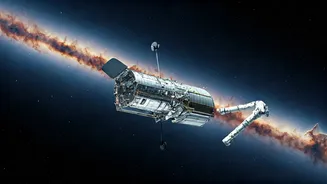
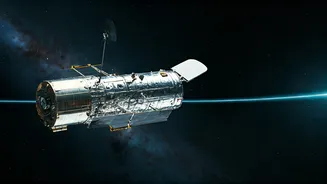
Launched in 1990, the Hubble Space Telescope is a victim of its own incredible success. Designed for a 15-year mission, it has outlasted every expectation, thanks in large part to five heroic servicing missions by Space Shuttle astronauts who upgraded
its instruments and replaced failing parts. But the last service call was in 2009. Since then, Hubble has been on its own, and the wear and tear is starting to show. The telescope relies on gyroscopes to point accurately at cosmic targets, and several have failed. While engineers have found clever workarounds, the telescope is currently operating in a reduced-pointing mode to preserve its remaining gyros. Its orbit is also slowly decaying. Without a boost, it will eventually re-enter Earth's atmosphere sometime in the next decade. The machine isn't broken, but like a classic car with irreplaceable parts, it requires constant, careful management to keep it on the road.
The Billion-Dollar-a-Year Question
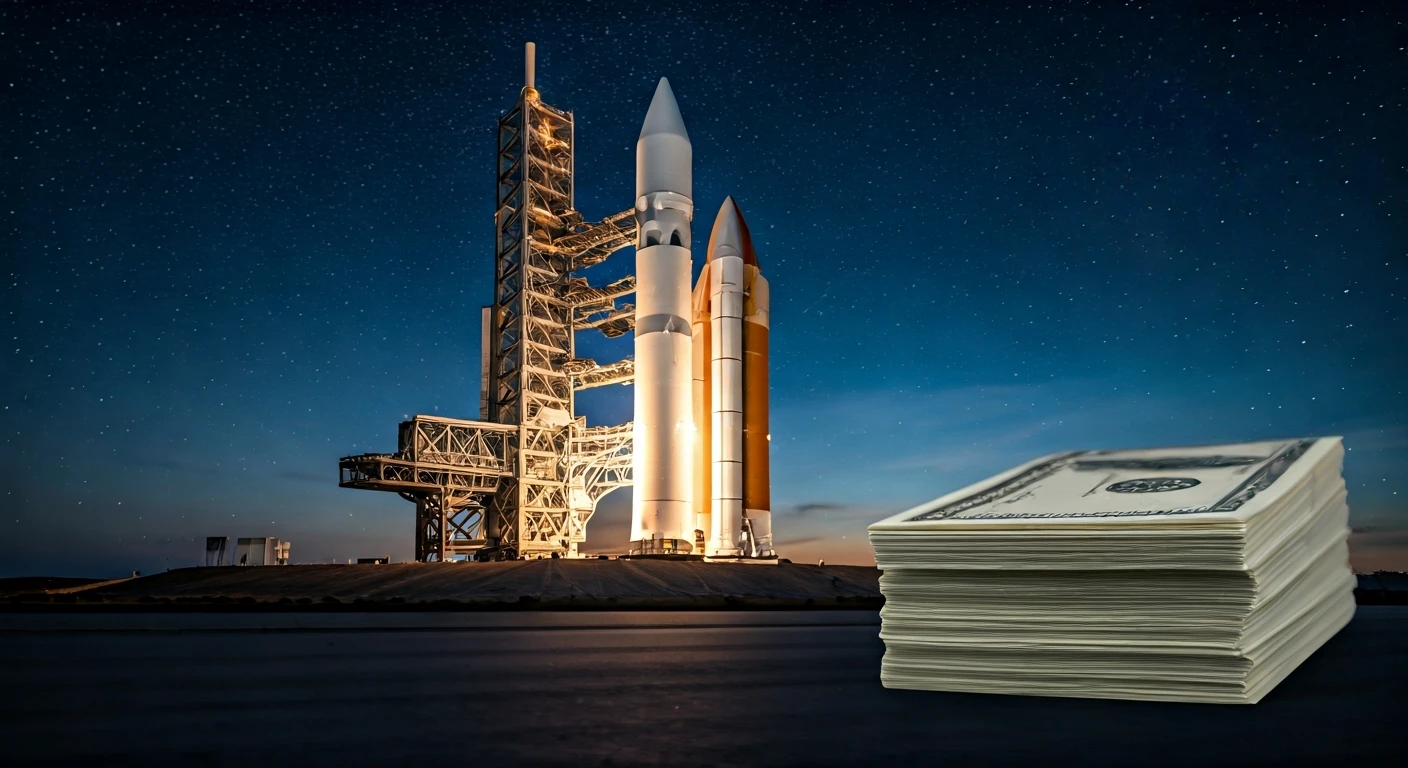
Keeping a premier observatory running 345 miles above Earth isn't cheap. Hubble's operations cost NASA nearly $100 million per year. That budget covers a massive ground-based infrastructure of engineers, scientists, and data processors who schedule observations, monitor the telescope's health, and manage the flood of data it sends back to Earth. While that’s a fraction of NASA’s total budget, it’s a significant line item in its astrophysics division. The problem is that NASA now has another, even more powerful eye on the sky: the James Webb Space Telescope (JWST). Webb’s own operating costs are substantial, and with budgets under pressure from Congress, funding two flagship observatories simultaneously creates a financial squeeze. NASA's Astrophysics Advisory Committee has pointedly noted that Hubble's cost is limiting funds for new, smaller missions. The agency is now actively looking for ways to trim Hubble’s operational budget without sacrificing its scientific output, a delicate and difficult task.
Why Not Just Use the Webb Telescope?
If the James Webb is the new hotness, why not just retire Hubble? The simple answer is that they see the universe in different ways. Webb is an infrared telescope, designed to peer through cosmic dust and capture the faint light from the earliest galaxies. It’s like having a pair of night-vision goggles for the cosmos. Hubble, on the other hand, observes primarily in visible and ultraviolet (UV) light—the same spectrum our eyes can see, and then some. This makes it a unique and irreplaceable tool for studying things like the atmospheres of nearby exoplanets, the behavior of massive stars, and the intricate details of nebulae within our own galaxy. Many of Hubble's targets are too bright for Webb's exquisitely sensitive instruments. The two telescopes are complementary partners, not competitors. Losing Hubble would mean losing our primary access to the UV universe, closing a critical window on the cosmos that Webb was never designed to open.
A Private Sector Lifeline?
Here’s where the story takes a fascinating turn. While NASA can no longer send its own astronauts to fix Hubble, the private sector might be able to. In 2022, NASA and SpaceX signed an agreement to study the feasibility of a commercial mission to service the telescope. This mission, potentially funded by billionaire astronaut Jared Isaacman's Polaris Program, would use a SpaceX Dragon capsule to visit Hubble. The primary goal would be to attach a new propulsion module to gently "re-boost" the telescope into a higher, more stable orbit, extending its life for many more years. A more ambitious plan could even involve a spacewalk to replace failing gyroscopes. This public-private partnership is a tantalizing possibility. It could save a beloved national treasure, extend its scientific mission, and pioneer a new model for servicing satellites—all without costing taxpayers a dime for the launch itself. However, the mission would be technically complex and risky, and it remains a study, not a confirmed plan.