







The Old 'Healthy' Promise
You know the one. It’s that small, boxed-off section of the menu titled “Lighter Fare” or “Wellness Choices.” Inside, you’d find tandoori chicken (good, but often served with a side of cognitive dissonance), maybe a lentil soup, and, most audaciously,
a 'vegetable korma'—a dish traditionally swimming in a rich sauce of cream, cashews, and butter. The promise was wellness, but the reality was often just a slightly less decadent version of the same creamy, heavy, North Indian-centric dishes that have come to define the cuisine for many Americans. This approach wasn't dishonest out of malice. It was a business decision, an attempt to fit a complex, ancient food culture into a restrictive, Western-centric wellness box defined by simplistic metrics like “low-fat” or “low-calorie.” It catered to a diner who wanted to feel virtuous while still eating something familiar, but it did a disservice to the incredible depth of truly healthful food that has always existed within the Indian subcontinent.
What 'Honest' Actually Looks Like
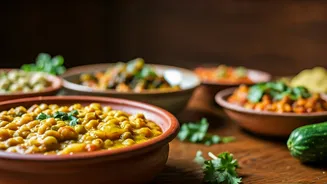
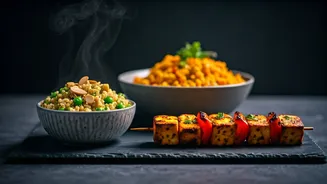
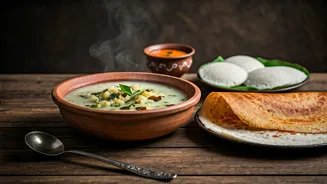
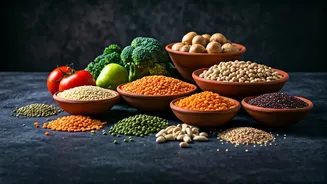
The new, honest wellness menu doesn’t try to make butter chicken a health food. Instead, it asks a different question: What if we celebrated the vast diversity of Indian dishes that are already, by their very nature, nourishing? This shift represents a return to regional and traditional foodways that were never about heavy creams or gravies in the first place. Honesty, in this context, means showcasing dishes from the South, like steamed idlis and dosas made from fermented rice and lentil batter. It means embracing the complex, vegetable-forward thalis of Gujarat. It means featuring grains like millet, ragi, and sorghum that have been staples for centuries, long before quinoa became a pantry hero in the U.S. This new wave is about celebrating food that is inherently balanced—dishes that were designed for digestion, seasonality, and holistic well-being, not just to hit a specific calorie count. It’s about flavor that comes from spices, herbs, and fermentation, not just fat and sugar.
Beyond Calorie-Counting Culture
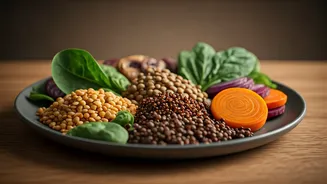
This movement is also a quiet rebellion against the reductive nature of American diet culture. Traditional Indian wellness systems, like Ayurveda, don’t view food as a simple equation of macronutrients. Instead, food is medicine, a tool for balancing the body’s internal energies. An “honest” Indian wellness menu is one that implicitly understands this. It might not have an Ayurvedic chart printed on the back, but the philosophy is embedded in its DNA. The focus shifts from what’s being *removed* (fat, carbs, calories) to what’s being *added* (fiber, micronutrients, digestive spices like ginger, turmeric, and cumin). The goal is not deprivation but satiation and genuine nourishment. It trusts that a dish made with whole ingredients, thoughtful spice blends, and time-honored techniques will make you feel good in a way that a lab-formulated “lite” dressing never could. It’s a more intuitive, holistic, and, frankly, more enjoyable way to think about eating well.
The Diaspora Chefs Leading the Charge
This change isn’t happening in a vacuum. It’s being driven by a generation of Indian-American chefs and restaurateurs who are tired of their culinary heritage being flattened into a few familiar, anglicized dishes. For many, this is personal. They grew up eating light, regional, home-cooked meals that bore little resemblance to the heavy fare served at the local Indian buffet. Now, as they open their own restaurants, they are using their platforms to re-educate the American palate. They are proudly putting their grandmother’s lentil recipes on the menu, championing coastal fish curries made with coconut milk instead of heavy cream, and telling the stories behind the food. In doing so, they are not just cooking; they are reclaiming a narrative, pushing back against the stereotype that Indian food is exclusively a heavy, indulgent, special-occasion meal. They are proving it can be your vibrant, nourishing, everyday go-to.