





Unpacking the Quirky Warning
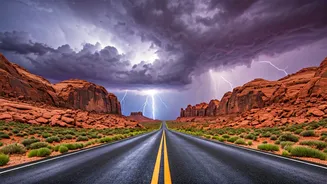
In states like Arizona, New Mexico, and parts of California, the summer monsoon season brings dramatic thunderstorms, high winds, and, inevitably, power outages. When the lights go out, the clock starts ticking on the food in your refrigerator. The phrase
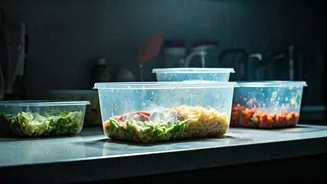
“cold leftovers are a monsoon red flag” is a memorable, regional way of saying that if the food in your powerless fridge has lost its chill, it’s a sign that it may no longer be safe to eat. It’s a clever mnemonic that replaces dry government warnings with a bit of local flavor, reminding you to be suspicious of food that should be cold but isn’t. While the term is born of the monsoon, the advice is universal for any power outage, whether it's caused by a hurricane, a blizzard, or a simple grid failure.
The 40°F to 140°F 'Danger Zone'
The science behind the red flag is simple and non-negotiable. According to the USDA and CDC, bacteria that cause foodborne illness—like Salmonella, E. coli, and Listeria—grow most rapidly in the temperature range between 40°F and 140°F. This is known as the “Danger Zone.” A refrigerator is designed to keep perishable foods like meat, dairy, and leftovers below 40°F. When the power goes out, the temperature inside the fridge begins to rise. Once it crosses that 40°F threshold, your food has officially entered the Danger Zone. The longer it stays there, the more opportunity harmful bacteria have to multiply to dangerous levels, even if the food doesn't look or smell spoiled.
The Four-Hour Refrigerator Rule
So how long do you have? Federal food safety experts have a clear guideline: a closed refrigerator will keep food safe for about four hours during a power outage. To maximize this window, it's critical to keep the door shut. Every time you open it to peek, you let the precious cold air escape, accelerating the warming process. If the power has been out for more than four hours, you need to start making some tough decisions. Use a food thermometer to check the temperature of items. If anything is above 40°F, it should be discarded. This applies to meat, poultry, fish, eggs, milk, and any leftovers. The risk of getting sick far outweighs the cost of the discarded groceries.
Your Freezer's 48-Hour Lifeline
Your freezer offers a much longer grace period, but the same principles apply. A full freezer can hold its temperature for approximately 48 hours (or 24 hours if it’s only half-full) if the door remains closed. Food that is still partially frozen or contains ice crystals can usually be safely refrozen or cooked immediately. However, if the items have completely thawed and spent time above 40°F, they fall under the same rules as refrigerated food. A great pre-storm tip is to group foods together in the freezer, as a full, dense freezer stays cold longer than an empty one. You can also freeze containers of water to create block ice, which will help maintain the cold.
When in Doubt, Throw It Out
This is the single most important rule in post-outage food safety. You cannot rely on sight, smell, or taste to determine if food is safe. Many of the bacteria that cause food poisoning do not produce noticeable odors or change the appearance of food. A small taste test could be enough to make you violently ill. Is that container of chili worth a week of misery, or worse? The answer is always no. If your refrigerator has been without power for more than four hours, or if you have any uncertainty about the temperature history of an item, your safest and smartest move is to discard it. Your health is not worth the gamble.