




Beyond "Turn Around, Don't Drown"
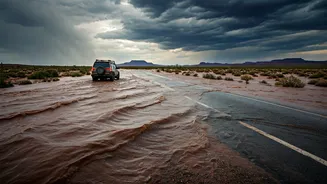
Public service announcements have drilled one phrase into our collective consciousness: “Turn Around, Don’t Drown.” It’s vital, life-saving advice. But it’s also fundamentally reactive. By the time you’re facing a flooded wash or an impassable underpass
and need to turn around, you’re already in a high-stress, high-risk situation. You’re making a critical decision with limited information, often with other panicked drivers around you. The problem with relying solely on this advice is that it positions you as a victim of circumstance. The real safety “hack” isn’t about what to do when facing a wall of water; it’s about ensuring you rarely get into that situation in the first place. True monsoon preparedness is proactive, not reactive. It begins before you even put the key in the ignition.
Adopt a Proactive Mindset
The most seasoned desert drivers have a different mental model. They don’t just know their primary route from home to work; they know the entire grid. They understand the topography of their daily commute—which intersections are notorious for flooding, which underpasses become lakes, and where the natural washes cross the roads. This isn’t encyclopedic knowledge; it’s a practical, curated understanding of their environment. This is the essence of the backup route strategy. It’s a shift from thinking, “This is my route,” to “This is my primary option, and here are my alternatives.” This mindset transforms driving during a storm from a gamble into a calculated exercise in risk mitigation. The goal is to have your decision already made before the moment of crisis arrives. When you see traffic slowing ahead, you’re not wondering what to do; you’re already turning off to execute Plan B or Plan C.
How to Build Your Mental Map
Building this mental map doesn't require a degree in cartography. Start small and use the tools you already have. Before monsoon season even starts, pull up your daily commute on a digital map. Now, switch to the satellite or terrain view. Look for the subtle, dry riverbeds—the washes—that crisscross the landscape. These are the arteries for flash floods. Note where they intersect with your route. Pay attention to major underpasses and low-lying areas. Next, physically or digitally trace two alternate routes for your most common destinations. Don't just find the fastest detour; find the *safest*. A good backup route stays on higher ground, avoids known problem spots, and uses streets you know are wide and well-maintained. The key is to do this on a clear, sunny day. The 15 minutes you spend planning now could save you hours of frustration—or worse—during a downpour.
The Ultimate Backup: Don't Go
The smartest and safest route is sometimes no route at all. The very nature of monsoon storms is that they are often intense but short-lived. A torrential downpour that makes roads impassable can move on in 30 to 60 minutes. If a severe storm hits, waiting it out is often the best possible move. If you’re at work, stay at work. If you’re at home, stay at home. If you are already on the road when a storm hits with blinding rain and low visibility, your priority is no longer reaching your destination—it’s survival. This is where Arizona’s “Pull Aside, Stay Alive” campaign becomes critical. Pull your vehicle as far off the roadway as possible, turn off your headlights and your foot off the brake (so others don't follow you into a hazard), and wait for the storm to pass. This isn't giving up; it's a strategic pause. It’s the final and most important backup plan in your arsenal.