
The Sweetness of Occasion
In Indian culture, sweets aren't just a dessert; they're a language. A box of assorted mithai arriving at your door is a message: “Congratulations,” “Happy Diwali,” or “We’re celebrating!” These intricate confections, made from milk, sugar, flour, nuts,
and spices, are deeply woven into the fabric of ritual and community. Think of glistening Jalebi, rich Kaju Katli (cashew fudge), or dense, grainy Ladoos. For generations, their presence signified a special event, a break from the everyday. They were the edible exclamation points to life’s biggest milestones, prepared with care and shared with intention. This scarcity, this connection to a specific time and place, is part of what makes them so special.
Enter a Modern Classic: Mango Barfi
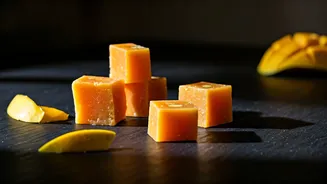
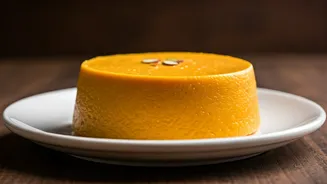
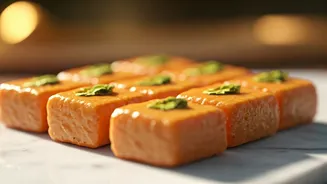
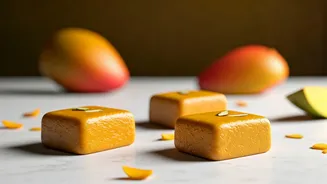
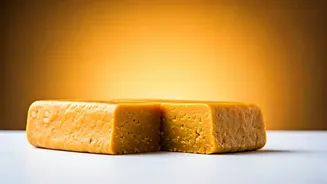
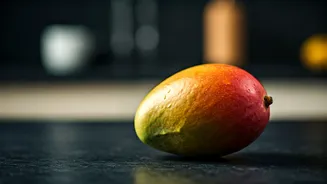
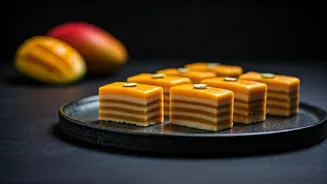
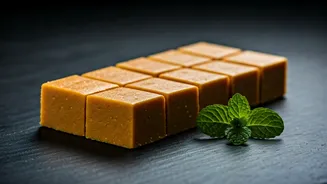
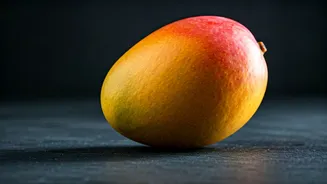
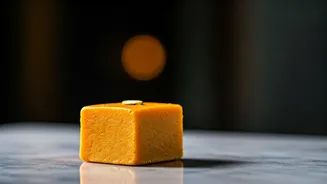
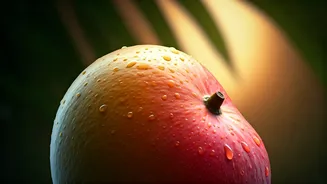
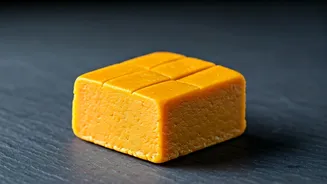
Amidst the pantheon of ancient recipes, a newer star has risen: Mango Barfi. At its core, barfi is a simple, fudge-like sweet made by condensing milk and sugar until thick. Classic versions are flavored with cardamom, rosewater, or pistachios. But the mango version is something else entirely. It captures the bright, sunny, intoxicating flavor of ripe mangoes and packs it into a dense, chewy, melt-in-your-mouth square. Made with rich mango pulp (often from prized Alphonso mangoes), milk solids (khoya) or milk powder, sugar, and a hint of cardamom, it’s both comfortingly familiar and refreshingly vibrant. It doesn’t taste of heavy tradition; it tastes like sunshine. This distinction is exactly why it’s leading the charge out of the festival-only category.
Breaking the Festival Barrier
So why are we suddenly giving ourselves permission to enjoy these treats without a formal invitation? The shift is happening for a few key reasons, particularly within the Indian diaspora in the U.S. First, there's the accessibility factor. Thanks to high-quality canned mango pulp, you no longer have to wait for peak mango season to get that perfect flavor. Indian grocery stores are more widespread than ever, making key ingredients like khoya and good-quality ghee readily available. Second, for many first- and second-generation Indian Americans, these flavors are a powerful link to their heritage. A piece of Mango Barfi isn't just a sweet; it’s a taste of childhood, a comforting anchor in a busy life. It’s becoming a form of everyday self-care, a small indulgence that brings joy without needing a big occasion. It’s the perfect after-school snack for kids or a delightful treat with afternoon chai.
An Ambassador for Indian Sweets
Mango Barfi is also the perfect gateway mithai for the uninitiated. While some traditional Indian sweets can have complex, unfamiliar flavors involving rosewater, saffron, or chickpea flour, mango is a universally beloved flavor. It’s sweet, fruity, and immediately recognizable. Offering a friend a piece of Mango Barfi is easy—there’s no steep learning curve. This accessibility has helped it and other fruit-forward mithai find a broader audience. As modern Indian sweet shops and online purveyors pop up across the country, they are putting modern, approachable flavors front and center. They are reframing mithai not just as ritualistic offerings, but as gourmet confections to be enjoyed anytime, just like a fine chocolate or a French macaron.