




Welcome to the Wettest Place on Earth
Nestled in northeastern India, Meghalaya’s name translates from Sanskrit to “Abode of the Clouds,” and it’s a title earned with every torrential downpour. This isn’t the gentle pitter-patter of a spring shower. This is a full-scale, operatic performance.
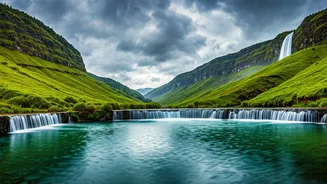
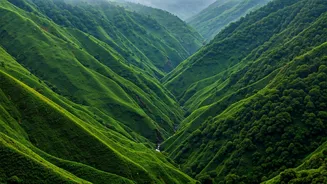
The region is home to two villages, Mawsynram and Cherrapunji (historically known as Sohra), that have long vied for the Guinness World Record for the highest annual rainfall on the planet. We’re talking about an average of over 450 inches of rain a year—more than ten times the rainfall of Seattle. During the monsoon season, from roughly June to September, the sky opens up with a relentless, life-giving force. The air grows heavy, thick with the scent of wet earth and blooming flora. Mist clings to the emerald-green hills, rolling through valleys and obscuring, then revealing, breathtaking landscapes. For visitors, this isn't an inconvenience; it's the main attraction.
Where Bridges Are Grown, Not Built
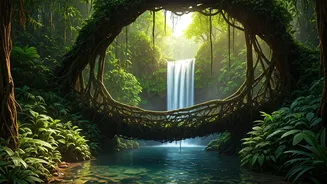
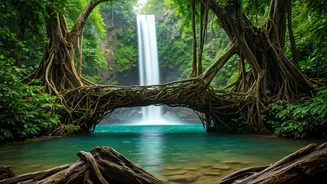
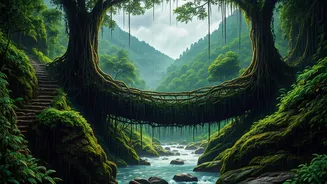
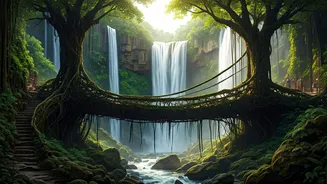
The relentless rain in Meghalaya has shaped not just the landscape, but also human ingenuity. Here, in the heart of the Khasi and Jaintia hills, you will find one of the world's most stunning examples of bio-engineering: the living root bridges. For centuries, the indigenous Khasi people have guided the aerial roots of the Ficus elastica tree across rivers and gorges, weaving them together over time to form sturdy, living structures. These bridges grow stronger as they age, becoming more resilient with each monsoon that feeds their roots. The most famous of these, the Umshiang Double-Decker Root Bridge in Nongriat, is a testament to patience and a deep harmony with nature. Reaching it requires a significant trek down thousands of steps, but to stand on a bridge that is alive, with a rain-swollen river roaring beneath your feet, is to feel a connection to a place that feels almost otherworldly.
A Symphony of Waterfalls
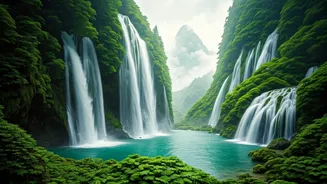
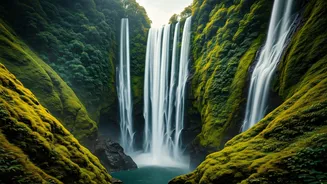
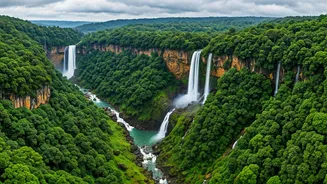
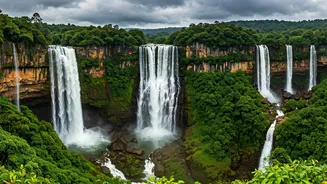
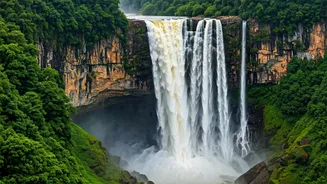
If the rain is the conductor, then the waterfalls are the orchestra, and in Meghalaya, they play at full volume. The monsoon transforms modest streams into thundering cataracts that plunge from staggering heights. Nohkalikai Falls, one of India’s tallest plunge waterfalls, is a sight to behold. Its name carries a somber local legend, but its power during the monsoon is pure, raw nature. The water crashes into a turquoise pool below, sending up a spray that mingles with the ever-present mist. Nearby, the Seven Sisters Falls (Nohsngithiang Falls) presents a different kind of drama—a wide curtain of seven distinct streams cascading down a limestone cliffside. The beauty of these falls isn't just in their size, but in their context. They are everywhere, carving through the lush greenery, their roar providing a constant, hypnotic soundtrack to your journey.
Embracing the Moody Green
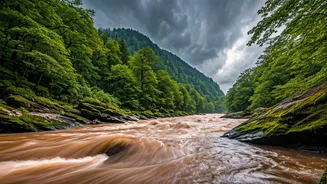
Traveling in Meghalaya during the monsoon is an exercise in surrender. You will get wet. Your plans might change. But the reward is a world saturated in impossible shades of green. The rain washes the dust from every leaf, revealing a vibrant, electric landscape that feels intensely alive. Even the challenges are part of the charm. Navigating a slick path to a hidden waterfall, huddling in a small tea stall while a storm passes, or watching the clouds part to reveal a sliver of blue sky feels like a shared secret with the land itself. And amidst the drama, there are moments of serene clarity. The Umngot River in Dawki, near the border with Bangladesh, is famous for its crystal-clear water, so transparent that boats appear to float in mid-air—a stunning visual contrast to the moody, misty highlands.