




Understanding Monsoon Aesthetics
Before you can blend it, you have to understand it. Monsoon aesthetics isn't a formal design school but a feeling captured in physical form. Imagine the world during a heavy rain in a tropical climate. The sky is a moody slate gray, the greens of the landscape
become impossibly deep and lush, and the air is thick with the scent of wet earth (a smell known as petrichor). It’s an aesthetic built on a sensory experience: the coolness of stone, the dampness of wood, the visual drama of a storm-darkened sky seen from a cozy shelter. It evokes feelings of refuge, contemplation, and a powerful connection to nature’s cycles. In design, this translates to embracing dark, saturated colors, raw textures, and an atmosphere of serene enclosure.
The Minimalist Canvas
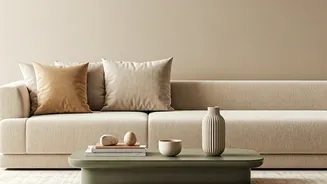
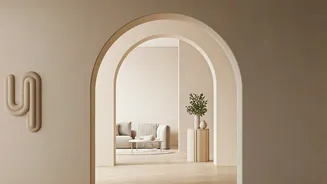
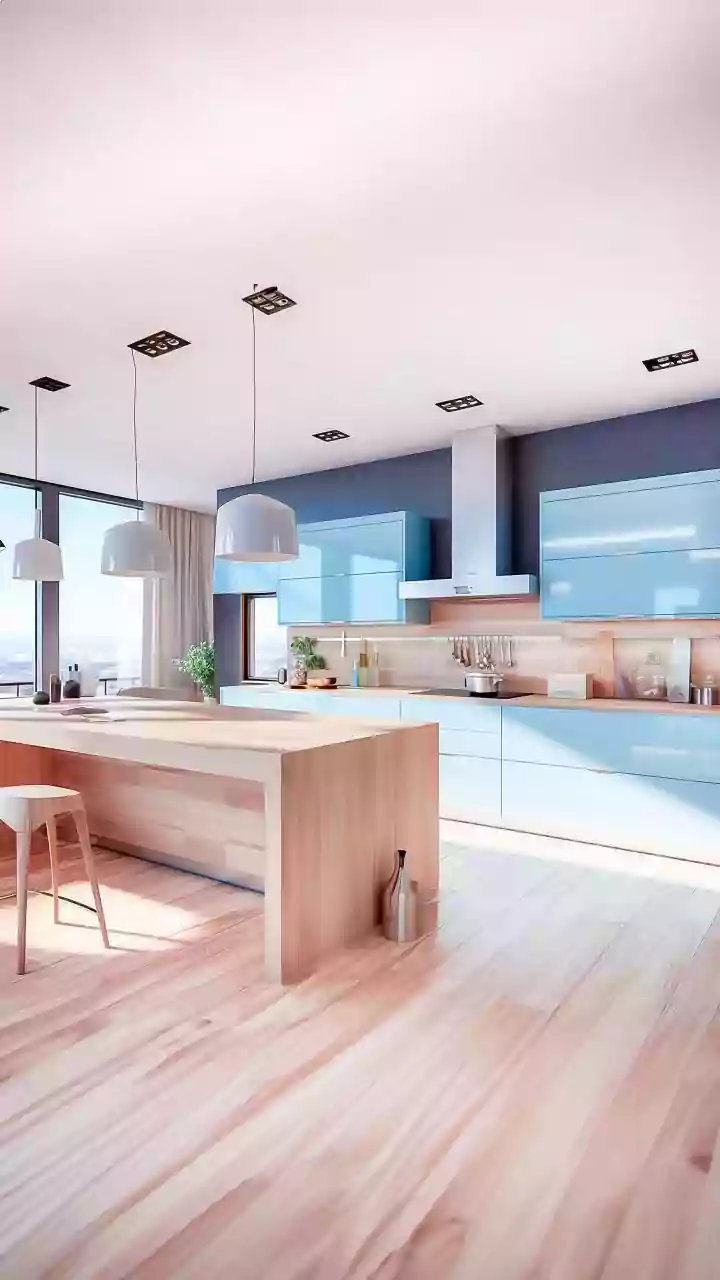
So, how does this dramatic, atmospheric style meet the “less is more” ethos of minimalism? Beautifully, it turns out. Minimalism provides the perfect foundation—a quiet, uncluttered stage where the rich elements of monsoon style can take center focus without creating chaos. Think of minimalism as the essential editing process. It clears away the non-essential, leaving you with a framework of clean lines, intentional empty space, and functional forms. Upon this canvas, the deeper, more textural elements of the monsoon aesthetic don’t feel like clutter; they feel like art. They become the focal point, the soul of the room.
Embrace a Moody Palette
This is where the fusion truly begins. While classic minimalism often leans on a palette of white, beige, and light gray, a monsoon-inspired version invites depth. Don't be afraid of darker hues. A feature wall painted in a deep charcoal, slate blue, or forest green can evoke the stormy sky or dense foliage. These dramatic colors should be used intentionally, balanced by the lighter, neutral tones of your minimalist base. The goal isn't to create a dark, oppressive space, but to use color to create pockets of mood and intimacy, much like finding a dry, cozy spot to watch a downpour.
Layer Natural Textures
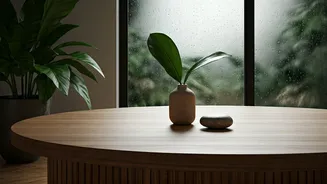
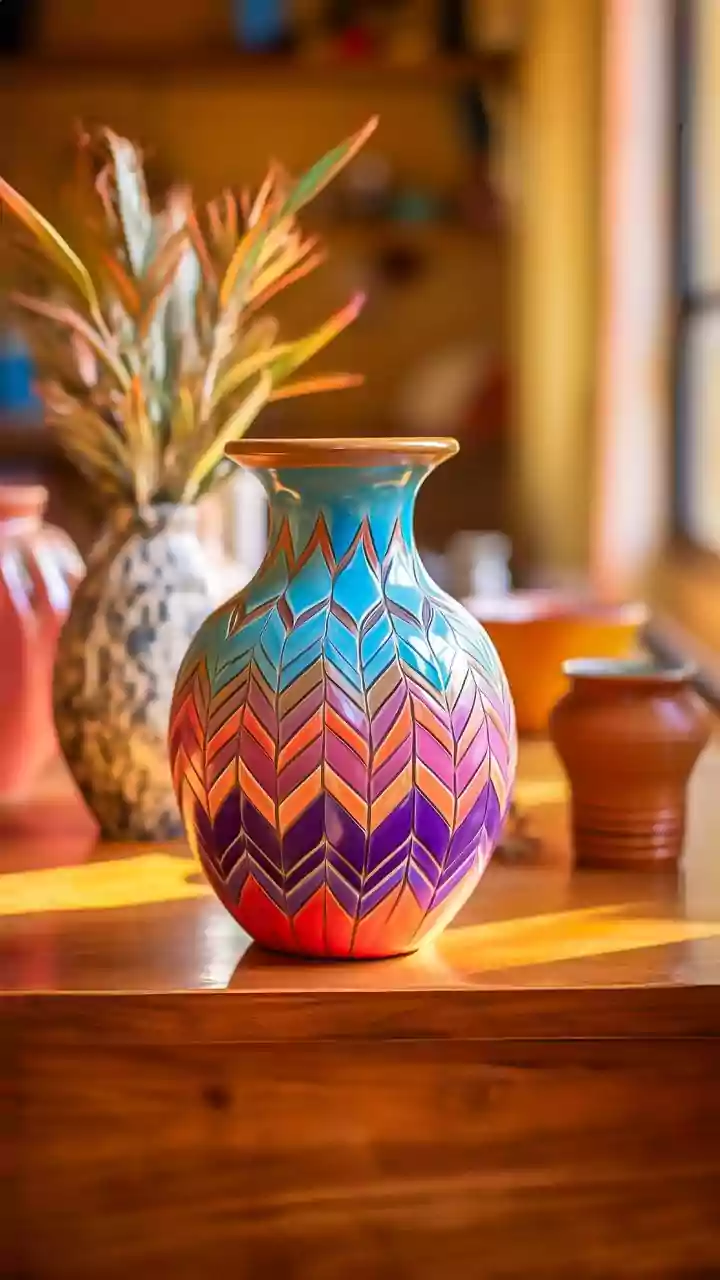
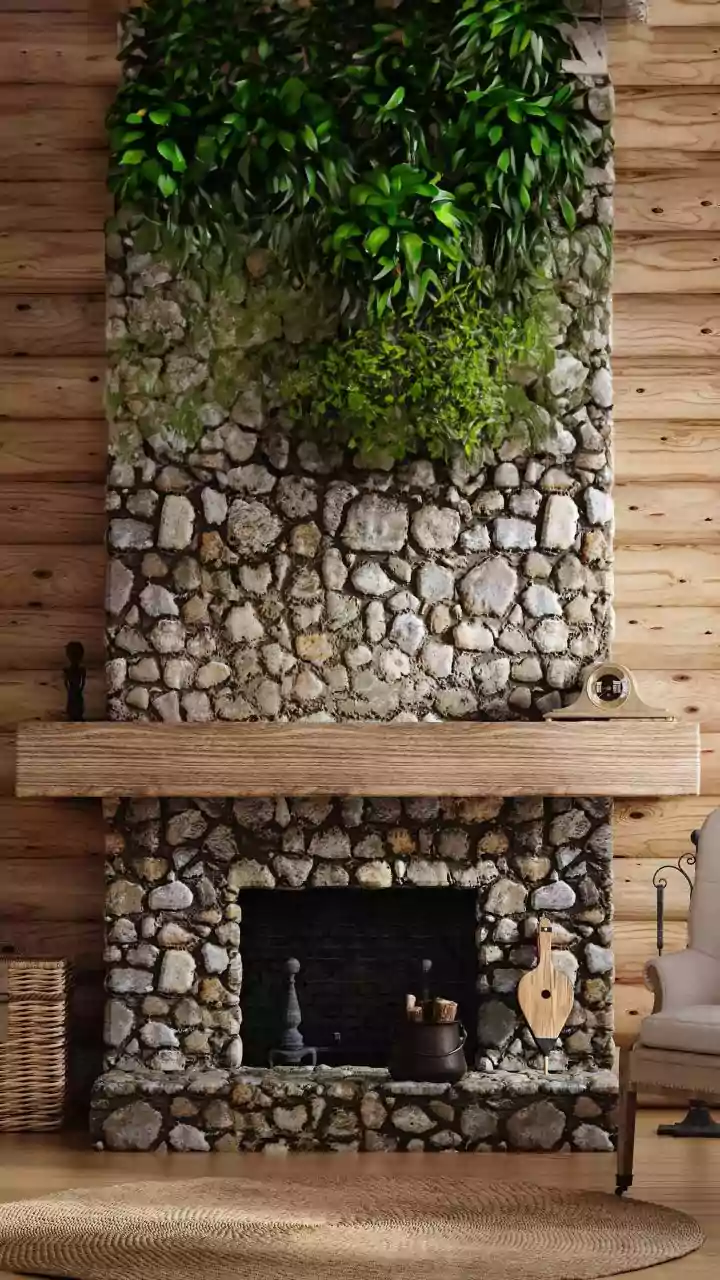
If color sets the mood, texture tells the story. This is the most crucial element in bringing the monsoon aesthetic to life. Contrast is key. Pair the smooth, clean surfaces of minimalist furniture with raw, natural textures. Think of a rough-hewn wooden coffee table, slate or stone coasters that feel cool to the touch, and hand-thrown ceramic vases with an imperfect, earthy finish. For textiles, swap out synthetic fabrics for natural linen curtains that diffuse light softly, or a chunky wool throw that adds warmth and weight. These textural elements mimic the organic materials of the natural world, grounding the space and making it feel more tactile and alive.
Let the Jungle In (Carefully)
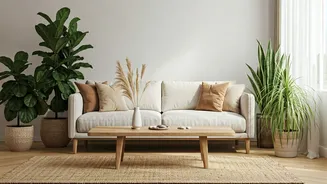
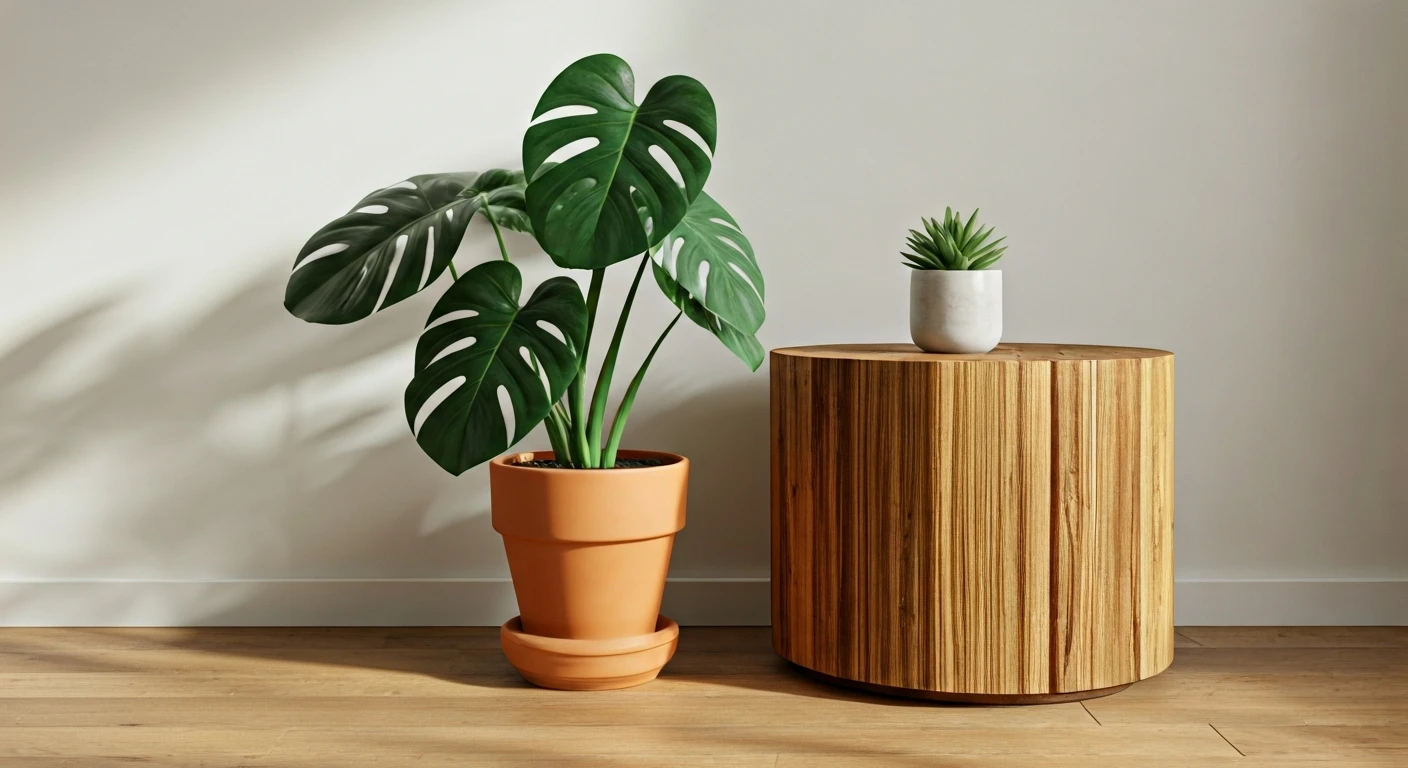
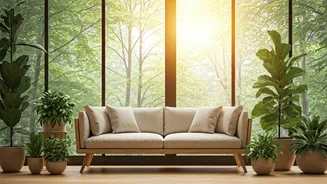
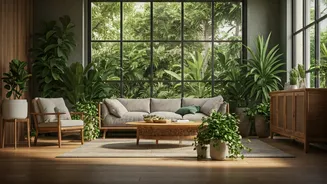
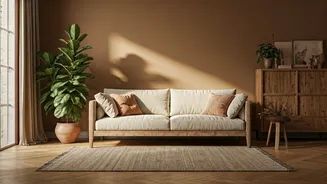
Bringing plants into a minimalist home isn't a new idea, but in monsoon aesthetics, the choice of plant matters. Opt for species with large, lush leaves that evoke a tropical rainforest. A fiddle-leaf fig or a Monstera deliciosa (Swiss cheese plant) can act as a living sculpture, their vibrant green popping against a muted wall. Ferns, with their delicate fronds, are another excellent choice, suggesting the damp undergrowth of a forest floor. The key is to be selective. Instead of a jumble of many small pots, choose one or two large, statement plants to maintain the uncluttered principles of minimalism while delivering a powerful dose of nature.
Accent with Light and Scent
Finally, complete the multi-sensory experience. Lighting should be soft and layered. Use warm-toned bulbs (around 2700K) in floor lamps and table lamps to create pools of light rather than relying on a single, harsh overhead source. This mimics the filtered, atmospheric light of a rainy day. Scent is the invisible layer of design that can transport you instantly. Use an essential oil diffuser with scents like sandalwood, vetiver, or patchouli to evoke damp earth and wood. A high-quality candle with a petrichor or rain-inspired fragrance can be the final touch that makes the space feel like a true sanctuary from the storm.