





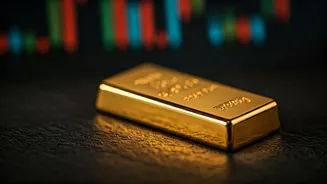



The New Gold Rush Isn’t For Mining
Forget dusty prospectors and pickaxes. The biggest gold rush of the 21st century is happening inside bank vaults. In the last couple of years, central banks from China to Poland to Singapore have been buying physical gold at rates not seen in over half
a century. According to the World Gold Council, the official scorekeeper of the industry, these institutions have been adding hundreds of metric tons to their reserves. This isn't a speculative frenzy; it's a calculated, long-term strategy by the world's most conservative financial players. They aren't trying to time the market. Instead, they are sending a clear, powerful signal about their outlook on the world's economic and political future—and it’s one that warrants our attention.
Why the Big Money Is Hedging Its Bets
So, why the sudden love for an ancient, non-interest-bearing asset? The answer lies in a cocktail of global anxieties. First is the specter of persistent inflation. After years of low interest rates and massive stimulus, currencies like the U.S. dollar are losing purchasing power. Gold has a millennia-long track record as a store of value, a reliable hedge when paper money falters. Second, geopolitical instability is rampant. Conflicts in Eastern Europe and the Middle East, coupled with rising tensions between major world powers, create an environment of uncertainty where investors seek safety. Gold is the ultimate neutral asset; it carries no counterparty risk and isn't tied to any single government's policies. Finally, many nations are actively trying to reduce their dependence on the U.S. dollar, a process known as de-dollarization. By stocking up on gold, countries diversify their reserves and gain a measure of financial independence.
The Ripple Effect on Your Portfolio
When the world’s most powerful financial institutions all start doing the same thing, it’s wise for the rest of us to ask why. This institutional vote of confidence is making many retail investors re-evaluate their own strategies. For decades, the standard “diversified” portfolio has been a mix of stocks and bonds, often in a 60/40 split. But in a world where stocks and bonds can fall at the same time, as they did recently, that definition of diversification feels shaky. The big money’s move into gold highlights a potential blind spot in many retail portfolios: a lack of assets that perform differently from traditional financial instruments. It’s forcing a fundamental question: Is my portfolio truly prepared for the kind of uncertainty that central bankers are bracing for?
Gold's Role in a Modern Strategy
This doesn't mean you should cash out your 401(k) and buy a stack of gold bars. For the average investor, gold isn't about getting rich quick. It's about wealth preservation and risk management. Think of it less as a star player and more as a reliable defender on your financial team. Its value often moves inversely to the stock market, providing a cushion during downturns. Financial advisors have long debated the ideal allocation, but a common rule of thumb suggests that holding 5% to 10% of a portfolio in gold or gold-related assets can provide a meaningful hedge without sacrificing too much potential growth. Today, accessing gold is easier than ever, through Exchange-Traded Funds (ETFs) like GLD or IAU, which trade like stocks, or through reputable dealers of physical coins and bullion. The key is to see it not as a hot tip, but as a strategic tool for long-term stability.