



Why Ferns Love Humidity
Before diving into specific types, it’s worth understanding why ferns are the perfect match for your home’s most humid spots. These plants evolved on shady, damp forest floors, under the canopy of larger trees. Their delicate, complex leaves, called fronds,
are designed to soak up ambient moisture from the air. Unlike succulents that rot in damp conditions or flowering plants that need direct sun, ferns see a steamy shower or a boiling pot of pasta as a delightful reminder of their ancestral home. Instead of fighting your home’s natural environment, choosing a fern is about working with it. They don’t just tolerate humidity; they metabolize it into vibrant, green life, creating a spa-like atmosphere in the process.
1. The Classic Boston Fern
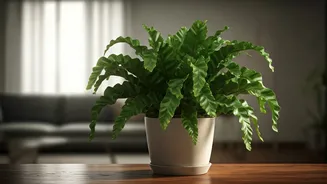
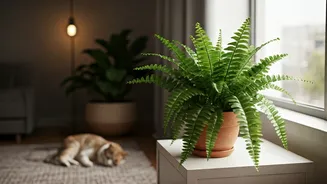
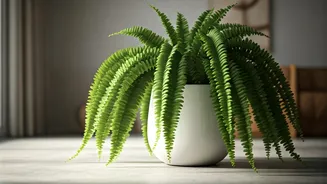
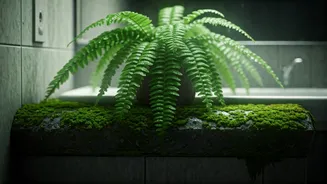
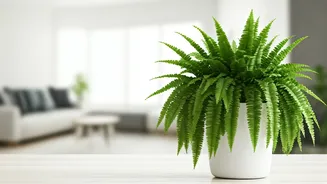
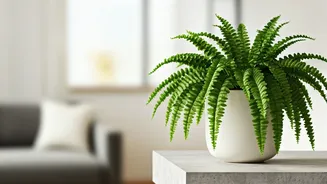
When you picture a fern, you’re likely thinking of the Boston Fern (Nephrolepis exaltata). With its gracefully arching fronds and ruffled leaflets, it’s a Victorian-era classic for a reason. These ferns are practically synonymous with hanging baskets on covered porches, but they are just as spectacular indoors. A Boston Fern is a humidity-loving powerhouse. Place one in a hanging planter in the corner of your bathroom, where it can absorb the steam from every shower. Its feathery texture softens hard tile and porcelain, instantly making the space feel more luxurious. It prefers bright, indirect light and consistently moist soil, so don't let it dry out completely between waterings.
2. The Delicate Maidenhair Fern
For a touch of pure elegance, look no further than the Maidenhair Fern (Adiantum). Its wiry, black stems hold clusters of tiny, fan-shaped leaves, giving it a light, airy appearance that seems to float. This is the artist of the fern world, but its beauty comes with a condition: it demands consistent humidity. A dry spell is its mortal enemy. This makes it an ideal candidate for a bathroom countertop or a terrarium. It detests drafts and direct sun, so place it in a sheltered spot with gentle, filtered light. The Maidenhair is a commitment, but watching its delicate fronds unfurl in a space you thought couldn't support life is its own reward.
3. The Sculptural Bird's Nest Fern
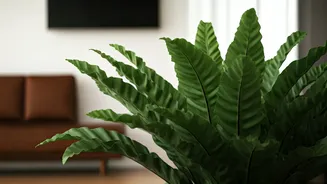
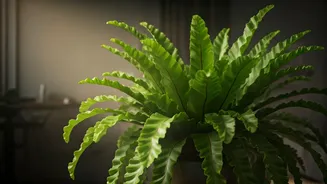
If you want something more modern and architectural, the Bird's Nest Fern (Asplenium nidus) is a showstopper. Instead of lacy fronds, it produces wide, wavy, apple-green leaves that radiate from a central rosette, resembling a bird’s nest. These smooth, leathery leaves are less delicate than other ferns, making them a bit more forgiving. They thrive in the medium-to-low indirect light common in many bathrooms and kitchens. The Bird's Nest Fern adds a bold, tropical feel and its unique shape provides a stunning contrast to more traditional houseplants. Water the soil, not the central “nest,” to avoid crown rot, and it will become a living sculpture in your home.
4. The Statement Staghorn Fern
Ready to graduate to living art? The Staghorn Fern (Platycerium) is an epiphyte, meaning it grows on other plants in the wild, not in soil. This makes it perfect for mounting on a wooden plaque and hanging directly on a wall. It produces two types of fronds: small, flat basal fronds that protect the roots and anchor the plant, and dramatic, antler-like fronds that reach for the sky. Hung on a bathroom wall, a Staghorn Fern transforms the room into a gallery. It absorbs moisture and nutrients through its fronds, so it will thank you for the humidity from your shower. To water, simply take it down and soak its base for 15-20 minutes every week or two, depending on how humid the room is.