





A Revolution on Two and Three Wheels
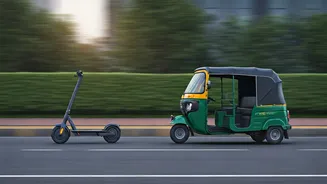
When Americans think of electric vehicles, they picture a Tesla or a Rivian. But in India, the EV revolution isn’t happening in the garage—it’s happening on the streets, and it’s being led by the humble scooter and the three-wheeled auto-rickshaw. While
the headline’s claim of “taking over” might sound like an overstatement for cars, it’s becoming a reality for the smaller vehicles that form the backbone of urban transport. In cities like Bengaluru and Pune, sleek electric scooters from startups like Ather Energy and Ola Electric are weaving through traffic, their silent motors a stark contrast to the sputtering gasoline engines they’re replacing. The most visible change, however, is in the auto-rickshaw sector. These iconic “tuk-tuks” are rapidly going electric, with entire fleets in some neighborhoods now running on batteries. It’s a ground-up transformation, driven less by luxury and status and more by pure, simple economics.
The Government’s Big Green Push
This shift isn't happening in a vacuum. It’s being supercharged by aggressive government policy. India, home to many of the world's most polluted cities, is desperate to clean up its air and reduce its dependence on imported oil. The government’s FAME (Faster Adoption and Manufacturing of Electric Vehicles) scheme has been a game-changer. By offering significant upfront subsidies, the policy makes the higher initial cost of an electric scooter or rickshaw more manageable for the average buyer or driver. For a rickshaw driver, the calculation is simple: despite a higher sticker price, the daily running cost of an EV is a fraction of its gasoline-powered counterpart. With no need for expensive fuel and less maintenance, drivers can take home more money at the end of the day. This direct financial incentive has turned hundreds of thousands of drivers into evangelists for the new technology, accelerating adoption at a speed few analysts predicted.
Don't Forget About Natural Gas
While electric is the future, another “green drive” has been a quiet success story for years. In Delhi, the nation's capital, a massive transition to Compressed Natural Gas (CNG) began over two decades ago. Following a Supreme Court mandate to curb apocalyptic levels of air pollution, the city’s entire fleet of public buses and a vast majority of its auto-rickshaws were converted to run on CNG. The result was a noticeable improvement in air quality. Today, long lines at CNG filling stations are a common sight, a testament to the fuel's deep integration into the city's transport ecosystem. This long-standing CNG infrastructure provides a crucial lesson: India has a history of making massive, fleet-wide fuel transitions when motivated by public health crises. The current EV push is simply the next, more technologically advanced chapter in that story.
It's a Different Path to the Future
The Indian model offers a fascinating counterpoint to the EV transition in the West. In the U.S. and Europe, electrification is a consumer-led phenomenon, centered on personal cars and driven by environmental consciousness and performance. In India, it's a commercial and utilitarian revolution, starting with the smallest and most work-oriented vehicles. The goal isn’t just about being green; it's about livelihood. This bottom-up approach may prove more resilient and scalable in the developing world. Companies have responded with innovative business models, like battery-swapping stations that allow a rickshaw driver to exchange a depleted battery for a full one in minutes, eliminating range anxiety and long charging times. It’s a practical solution for a market where people don’t have private garages for overnight charging.
Roadblocks on the Electric Highway
Of course, the path forward isn't perfectly smooth. The biggest hurdle is infrastructure. While battery swapping works for commercial fleets, the lack of a widespread, reliable public charging network remains a barrier for personal EV car ownership. India’s electricity grid is also under strain, and adding millions of EVs will require massive investment in generation and distribution. Furthermore, there are concerns about the sourcing of lithium for batteries and the environmental impact of their disposal. But the momentum is undeniable. The sheer volume of two- and three-wheelers—which vastly outnumber cars—means that even partial electrification of this segment can have an outsized impact on pollution and carbon emissions.