



What Is the Rath Yatra?
The Rath Yatra, or Chariot Festival, is one of the most important Hindu festivals, celebrated annually in the city of Puri in the eastern Indian state of Odisha. The event commemorates the journey of Lord Jagannath—an incarnation of Vishnu—along with
his elder brother Balabhadra and younger sister Subhadra, from their home temple to their aunt's temple, the Gundicha Temple, located about two miles away. The festival is a public procession of the deities, who are normally cloistered within the temple sanctum. It's a rare occasion for devotees, especially those not permitted inside the main temple, to see the gods up close. At its heart, it’s a symbolic journey that makes the divine accessible to everyone, breaking down barriers of caste and creed in a massive, shared act of faith.
The Stars of the Show: Deities and Chariots
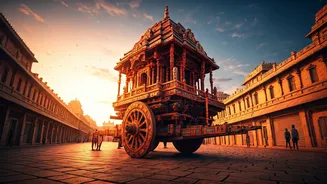
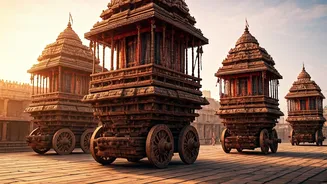
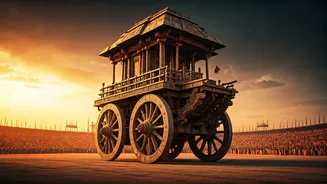
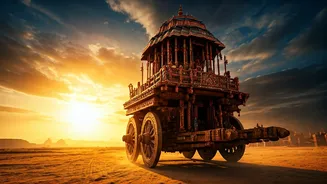
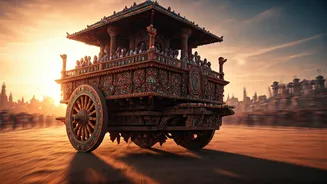
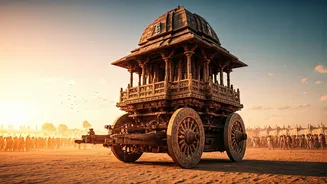
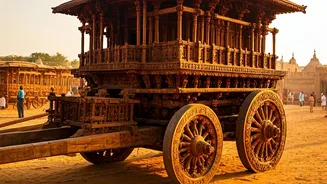
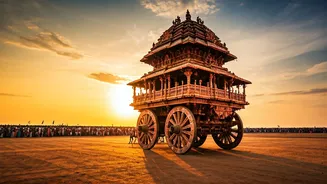
The deities at the center of the Rath Yatra are unlike any other Hindu idols. Lord Jagannath, Balabhadra, and Subhadra are represented by large, stylized wooden figures with big, round eyes and no discernible limbs. Their abstract forms are rooted in tribal art and symbolize a universal, formless divine presence. For the festival, three enormous new chariots are constructed every single year by a dedicated team of artisans using traditional methods passed down through generations. These are not small floats. Jagannath’s chariot, Nandighosa, stands about 45 feet tall, has 16 wheels, and is draped in vibrant red and yellow cloth. The sheer sight of these towering, intricately decorated structures moving through the streets is an unforgettable experience.
A Spectacle of Epic Proportions
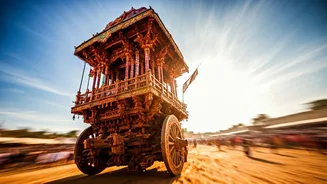
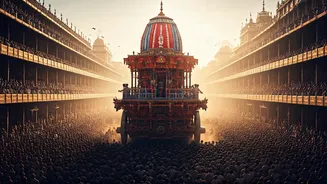
To understand the Rath Yatra, you have to think in terms of scale. Picture the dense crowds of Times Square on New Year’s Eve, but instead of waiting for a ball to drop, the entire mass of humanity is helping pull three gigantic wooden chariots with thick coconut fiber ropes. The air is filled with the deafening sound of gongs, cymbals, and trumpets, punctuated by cries of “Jai Jagannath!” (Victory to Jagannath). The procession moves at a crawl, taking hours to cover just a couple of miles. It is a powerful, overwhelming sensory experience—a river of people flowing through the Grand Road of Puri, all united by a single purpose. For many, simply touching the ropes used to pull the chariots is considered an act of immense piety, capable of cleansing sins.
More Than Just a Parade
While the procession is the main event, the Rath Yatra is a nine-day affair steeped in ritual and meaning. After reaching the Gundicha Temple, the deities reside there for a week. During this time, the temple becomes a hub of activity, with cultural programs and religious ceremonies. The return journey, known as the Bahuda Yatra, is equally grand. One of the most fascinating rituals occurs when the deities are about to re-enter their home temple. Goddess Lakshmi, Jagannath's consort, feigns anger at being left behind and initially blocks his entry, leading to a playful, symbolic spat between the divine couple that devotees watch with delight. This humanization of the gods makes the festival relatable and deeply personal for millions.
What to Know If You Go
Attending the Rath Yatra is an intense, full-immersion cultural experience, not a casual tourist activity. The event, typically held in June or July, coincides with India's monsoon season, meaning high heat and humidity are constants. Crowds are monumental, and personal space is non-existent on the main thoroughfare. For a more manageable viewing experience, many visitors book rooms or rooftop spaces in hotels and guesthouses along the Grand Road well in advance—often a year ahead. It’s essential to stay hydrated, protect yourself from the sun, and be mentally prepared for the sheer density of people. For the intrepid traveler seeking an authentic, powerful, and unforgettable glimpse into the heart of Hindu devotion, there is simply nothing else on earth quite like it.