



The Monsoon's Transformation
For much of the year, Rajasthan is a landscape of sun-baked forts and arid plains. But when the monsoon clouds roll in, typically from July to September, the entire region undergoes a dramatic metamorphosis. Dust settles, the air cools, and a vibrant
green emerges, carpeting hillsides that were moments before a dusty brown. In a state where water is precious, the rain is more than a weather event; it’s a festival. The smell of petrichor—the earthy scent of rain on dry soil—fills the air, and a palpable sense of joy and renewal ripples through its cities. Nowhere is this transformation more magical than in Udaipur.
A City Built for Water
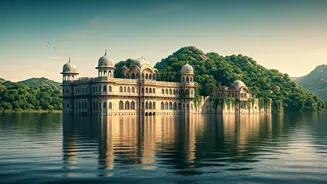
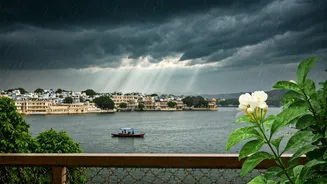
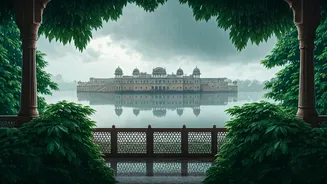
Often called the “Venice of the East,” Udaipur is a city ingeniously designed around a network of interconnected lakes, most famously the magnificent Lake Pichola. Unlike other Rajasthani cities built for defense in the desert, Udaipur’s founders embraced the water. Grand palaces, intricate temples, and sprawling havelis were constructed right on the water's edge. The City Palace complex seems to rise directly from the lake, while island palaces like Jag Mandir and Jag Niwas (now the Taj Lake Palace hotel) appear to float dreamily on its surface. This unique waterside architecture sets the stage for the monsoon's most breathtaking performance.
The Soul of the Haveli
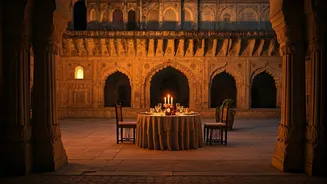
The havelis are the heart of Udaipur's old-world charm. These traditional mansions, once home to nobles and wealthy merchants, are architectural marvels. Characterized by their ornate facades, delicate latticework screens (jalis), and projecting balconies (jharokhas), they represent a fusion of Rajput and Mughal styles. Many of these historic buildings, with their courtyards and frescoes, now function as heritage hotels, restaurants, and private homes. During the monsoon, the rain washes away months of dust, revealing the rich, warm tones of the sandstone and marble. The colors become saturated and deep, turning the buildings from historical artifacts into living, breathing works of art.
The Dance of Reflections
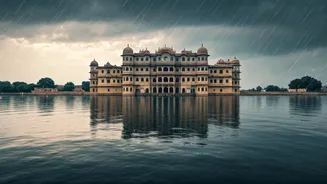
This is where the true romance of the headline unfolds. As the rain falls, the surface of Lake Pichola transforms from a sun-dappled expanse to a moody, reflective canvas. The freshly washed havelis, their ornate details sharpened and their colors enriched, are mirrored in the water below. The reflections are not perfect, static images; they are shimmering, impressionistic paintings that ripple with every raindrop and gentle current. At dusk, when the lights of the palaces and havelis begin to twinkle, the effect is mesmerizing. The golden light from the jharokhas spills out, creating long, dancing columns of light on the dark water. It’s a quiet, intimate spectacle—a view that feels both grand and deeply personal, capturing a sense of timeless romance that has inspired poets and artists for centuries.
Finding the Perfect Viewpoint
Experiencing this magic is surprisingly accessible. A slow boat ride on Lake Pichola during a light drizzle offers a 360-degree view of this liquid dreamscape. Alternatively, find a table at Ambrai Ghat, a waterside platform on the lake's western bank that offers a classic, postcard-perfect view of the City Palace and Lake Palace. Many heritage hotels and rooftop restaurants around the lake, particularly in the Lal Ghat area, are designed to maximize this very vista. Sitting with a cup of hot chai, watching the rain blur the lines between the real and the reflected world, is an experience that defines the romantic allure of Udaipur in the monsoon.