





More Than Just Stargazing
You’ve probably looked at the stars before, but have you ever 'bathed' in them? The term 'star bathing' is a deliberate nod to its wellness cousin, forest bathing (*shinrin-yoku*). Like its terrestrial counterpart, star bathing isn’t about scientific
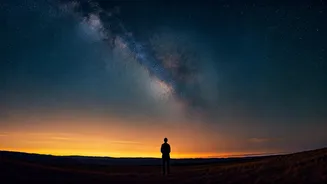
analysis or identifying every constellation with an app. Instead, it’s about sensory immersion. It’s the practice of finding a dark place, putting away the distractions, and simply letting the starlight wash over you. It’s about feeling the night air, listening to the sounds around you, and allowing your eyes to slowly adjust until the pinpricks of light become a glittering, overwhelming canopy. It shifts the goal from seeing to feeling, from intellectual observation to a quiet, meditative experience.
The Undeniable Power of Awe
There's a scientific reason this practice feels so profound. Staring up at a truly dark sky triggers a powerful emotion: awe. Psychologists define awe as the feeling we get in the presence of something vast that challenges our understanding of the world. Research from institutions like UC Berkeley has shown that experiencing awe can have tangible benefits. It can decrease stress levels, combat feelings of entitlement, increase generosity, and promote a sense of connection to others and the world at large. Gazing into the incomprehensible scale of the cosmos—looking at light that has traveled millions of years to reach your eyes—effectively shrinks our day-to-day anxieties. Your looming work deadline or petty grievance suddenly seems insignificant when confronted with the silent, glittering expanse of a galaxy.
Turning an Activity into a Ritual
The magic of star bathing lies in transforming a simple activity into a personal ritual. An activity is something you do; a ritual is something you experience with intention. To create your own star bathing ritual, you don’t need special equipment, just a commitment to the moment. First, dedicate the time. This isn’t a five-minute glance on your way back to the car. Plan for at least 20-30 minutes to allow your eyes to fully adapt to the dark. Second, eliminate distractions. Put your phone on silent and tuck it away. The blue light from a screen will ruin your night vision and pull you out of the moment. Third, set the stage for comfort. Bring a blanket, a thermos of tea, or a comfortable chair. The goal is to be present, not shivering or uncomfortable. Finally, begin with a moment of transition. Take a few deep breaths. Actively listen to the crickets or the wind. The ritual is the deliberate act of quieting your mind to receive the experience.
Where to Find the Darkness
In our brightly lit modern world, the biggest challenge is finding true darkness. More than 80% of Americans live under light-polluted skies, unable to see the Milky Way. This is what makes star bathing such a special vacation activity—it often requires a pilgrimage away from the glow of civilization. The best places are designated International Dark Sky Parks and Sanctuaries. Organizations like the International Dark-Sky Association certify locations around the world that are protected from light pollution. You can find them in iconic U.S. destinations like Big Bend National Park in Texas, Death Valley National Park in California, and Katahdin Woods and Waters National Monument in Maine. But you don’t need an official designation. Simply driving an hour or two away from a major city, finding a safe pull-off in a national forest, or booking a rental in a remote rural area can provide a night sky far more brilliant than what you see at home.