






1. Ignoring Your Critical Contact Points
Your tires and wiper blades are the only two things connecting you to the road and providing a clear view of it. Ignoring them is the first step toward disaster. Worn tires with shallow tread can't effectively channel water away, dramatically increasing
your risk of hydroplaning. A simple way to check is the penny test: place a penny upside down in your tread. If you can see all of Abraham Lincoln's head, your tires are dangerously worn and need replacement. Similarly, cracked or brittle wiper blades won't clear your windshield; they'll just smear water, destroying visibility when you need it most. **The Cost:** A new set of quality tires can run from $600 to over $1,000, and wipers are around $50. But the cost of an accident caused by hydroplaning or poor visibility—from insurance deductibles and premium hikes to a totaled vehicle—is infinitely higher.
2. Driving Too Fast for Conditions
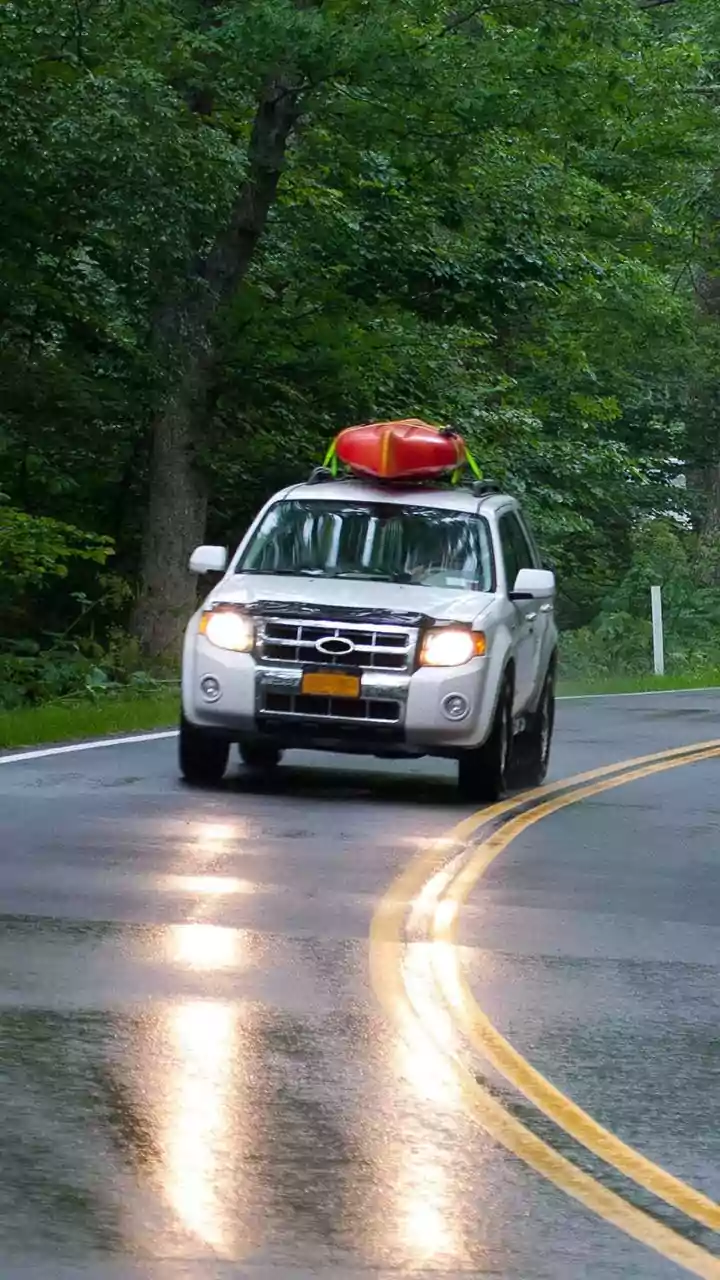
That speed limit sign is for ideal, dry conditions. When the road is wet, your car's ability to grip the pavement is significantly reduced. Driving too fast on a wet surface can lead to hydroplaning, a terrifying situation where your tires lose contact with the road and skate on a thin layer of water. At this point, you have no steering, braking, or acceleration control. This can happen at speeds as low as 35 mph if there's enough water. If you feel the car begin to hydroplane, your instincts might scream to slam the brakes, but that’s the worst thing to do. Instead, ease your foot off the accelerator and steer straight until you feel the tires regain traction. **The Cost:** The most immediate cost is a loss of control, which frequently results in single-vehicle or multi-vehicle collisions. The financial fallout can range from minor bodywork to a complete vehicle write-off and major liability claims.
3. Following Too Closely
The “three-second rule” for following distance is a good starting point in dry weather, but it's dangerously insufficient in the rain. Wet roads can increase your vehicle's stopping distance by two or even three times. Oil and grime on the road surface mix with water, creating a slick film that reduces your tires' grip. When the car in front of you suddenly brakes, you need extra time and distance to react and stop safely. In rainy conditions, you should double your following distance to at least five or six seconds. This simple habit is one of the most effective ways to prevent a rear-end collision. **The Cost:** A fender-bender might seem minor, but even a low-speed collision can result in thousands of dollars in bumper, sensor, and paint repairs, not to mention a likely increase in your insurance premiums for years to come.
4. Underestimating Puddles
Driving through a large, standing puddle may seem like a bit of harmless fun, but it's a high-stakes gamble. First, you have no idea how deep it is or what's lurking beneath the surface—it could be hiding a deep, wheel-destroying pothole. Second, and far more catastrophic, is the risk of hydrolock. If water is forced into your engine's air intake, it can enter the cylinders. Since water doesn't compress like air, the engine's pistons will try to crush it, leading to bent connecting rods, cracked blocks, and a completely seized engine. **The Cost:** This is one of the most expensive mistakes a driver can make. Repairing a hydrolocked engine is often impossible; a full engine replacement is the typical solution. This can cost anywhere from $3,000 to over $10,000, and it's often not covered by standard insurance.
5. Forgetting to See and Be Seen
In low-light, rainy conditions, visibility is a two-way street. Many drivers forget a simple rule: if your wipers are on, your headlights should be too. This isn't just a suggestion; it's the law in many states. Your headlights make you more visible to other drivers, significantly reducing the risk of a collision. Internally, a foggy windshield is just as dangerous. Drivers often fumble with controls, making the problem worse. The fastest way to defog your interior windows is to turn on your air conditioner, which removes moisture from the air, and direct the vents to the windshield. **The Cost:** The financial penalty for not using headlights in the rain can be a traffic ticket and a fine. The cost of an accident because another driver didn't see you, or because you couldn't see through a fogged-up window, is incalculably worse.