



More Than Just a Six-Pack
First, let’s be clear: this isn’t about the crunches you did in high school gym class. The new wave of “core-control” fitness is an entirely different beast. Modalities like Pilates, Lagree, and other reformer-based workouts focus on the deep, stabilizing
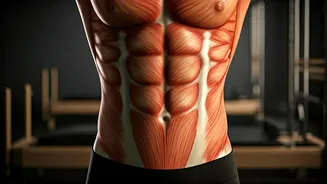
muscles that wrap around your torso like a corset. The goal isn’t the blocky, superficial rectus abdominis (the “six-pack”), but the transverse abdominis—the invisible muscle group that governs posture, stability, and what instructors call “the powerhouse.” The movements are often slow, deliberate, and excruciatingly precise. Think tiny pulses, long holds, and controlled resistance that forces you to engage muscles you didn’t know you had. It’s an internal-feeling workout that produces an external look of long, lean, and effortlessly poised strength. The flex isn’t the size of the muscle; it’s the degree of control over it.
The Rise of 'Quiet' Fitness
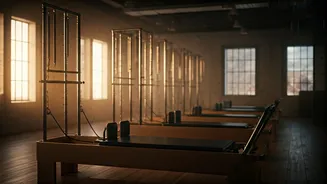
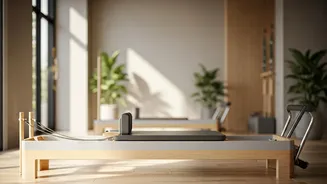
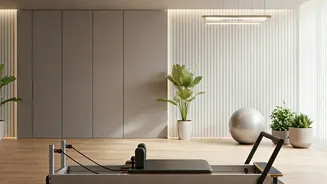
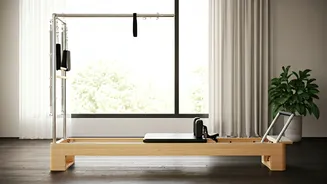
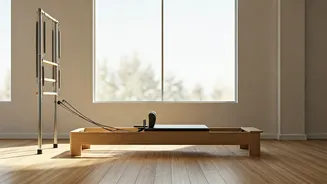
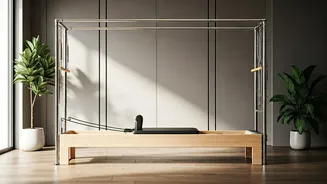
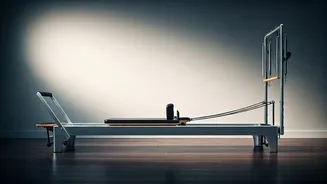
This trend dovetails perfectly with the broader cultural shift toward “quiet luxury.” Just as fashion has moved from logo-mania to understated, high-quality basics, fitness has entered its own stealth-wealth era. The old-school gym was a place of loud grunts, clanging weights, and conspicuous effort. Core-control studios are the opposite: serene, aesthetically pleasing spaces with futuristic-looking machines that glide and whisper. The uniform isn’t a torn T-shirt but a matching set of high-end leggings and a bra top, often paired with grippy socks that are a status item in their own right. The flex is showing up to a $40 class looking relaxed and leaving an hour later with the tell-tale sheen of sweat that says you did something incredibly difficult without ever losing your composure. It’s the physical embodiment of looking put-together, even when you’re shaking through the last 10 seconds of a plank.
A Symbol for the Burnout Generation
In a world that feels increasingly chaotic and out of control, where do we turn for a sense of stability? For a growing number of Americans, the answer is inward—literally, to their core. There's a powerful psychological appeal to a workout that promises total bodily control. When your work, social life, and the global news cycle feel precarious, mastering a move that requires immense concentration and physical discipline provides a tangible, immediate win. It’s a form of active meditation that demands your full presence. You can’t scroll your phone or let your mind wander during a Lagree class; you’ll simply fall off the machine. This focus on discipline and inner strength resonates deeply with a generation grappling with burnout. Achieving a strong, stable core becomes a metaphor for having your life together from the inside out. It’s a private victory that has a visible, public-facing result.
Engineered for the Social Media Age
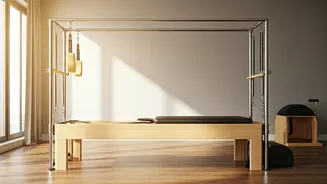
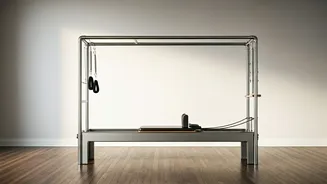
While the feeling is internal, the look is undeniably public. Core-control fitness is perfectly engineered for visual culture. The minimalist, light-filled studios provide a clean backdrop. The reformer machines, with their system of springs, straps, and sliding carriages, look both elegant and intimidatingly complex. And the poses themselves—from pikes to planks to “catfish” stretches—create long, graceful lines that are incredibly photogenic. It’s a workout that looks as sophisticated as it feels. A quick scroll through Instagram or TikTok reveals a sea of serene-looking influencers holding impossibly difficult poses, often with captions extolling the virtues of mind-body connection. Sharing your Pilates practice isn’t just an accountability check; it’s a carefully curated signal that you are dedicated, disciplined, and invested in a form of wellness that is as much about aesthetics as it is about athleticism.