





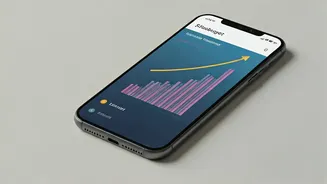



Meet Your New Financial 'Friend'
Imagine sending a text that says, “How much did I spend on coffee this month?” and getting an instant, non-judgmental answer. That’s the core promise of conversational AI for personal finance. These aren't your parents' clunky budgeting apps. Instead,
they are chatbots that live inside platforms like Facebook Messenger, or as standalone apps that mimic a text message conversation. Services like Cleo, Digit, and Trim have pioneered this space, aiming to make money management as easy as chatting with a friend. The idea is to remove the friction and intimidation that stop many people from getting a handle on their finances. Instead of navigating complex menus and charts, you simply ask questions in plain English, and the AI bot responds with data, insights, and even a bit of personality.
How AI Actually Saves You Money
This sounds neat, but how does a chatbot translate to real dollars back in your pocket? These services typically connect securely to your bank accounts and credit cards in a 'read-only' mode. Once connected, they get to work in several ways. First, they provide effortless spending analysis. You can ask, “What are my top spending categories?” or “Did I get my paycheck?” to stay informed. Second, many of these bots are expert subscription hunters. They can scan your statements for recurring charges—like that free trial you forgot to cancel or the streaming service you no longer use—and help you cancel them with a simple command. Some services, like Trim, even offer to negotiate bills on your behalf. They’ll contact your cable, internet, or phone provider and try to get you a better rate, taking a percentage of the savings as their fee. Others use algorithms to analyze your cash flow and automatically transfer small, manageable amounts of money into a separate savings account, helping you save without thinking about it.
The Psychology of a Conversational Interface
The real magic of these tools isn't just the technology; it's the psychology. A traditional budgeting app presents you with data. A conversational AI engages you in a dialogue. For many users, this makes a world of difference. The informal, text-based interface feels less like a chore and more like a quick check-in. The AI might send you a weekly summary with an encouraging GIF, or celebrate a savings milestone with you. This positive reinforcement and low-effort interaction can help build consistent financial habits. It lowers the mental barrier to entry. You don’t have to set aside an hour to review your finances in a spreadsheet; you can find out what you need to know in 30 seconds while waiting in line for coffee. This casual accessibility is what makes users stick with it, and consistency is the key to any successful financial plan.
But Is It Safe to Text Your Financial Life?
Handing over financial data to a chatbot is, understandably, a source of anxiety for many. It’s the single biggest question people have, and a valid one. Reputable services in this space take security very seriously. They typically use bank-level, 256-bit encryption to protect your data. Critically, most of them use third-party connectors like Plaid to link to your bank, which means the AI service itself never sees or stores your banking login credentials. Furthermore, they operate with read-only access, so the bot can’t move money out of your accounts or make payments without your explicit permission for a specific feature (like an automated savings transfer). Before signing up for any service, you should always review its privacy policy and security protocols. Check to see if it’s insured and what its data-sharing policies are. While the risk is never zero with any digital service, the leading players have built their businesses on being as secure as the banking apps you already use.