








What is Longevity Fitness?
Forget the flashy branding. Longevity fitness isn’t a specific workout program you buy, but a shift in philosophy. Instead of prioritizing short-term performance goals—like a heavier bench press or a faster mile—the focus is on increasing your “healthspan.”
That is, the period of your life spent in good health, free from chronic disease and physical limitation. It’s about training today so you can still play with your grandkids, carry your own groceries, and get up off the floor without assistance when you’re 80. This approach prioritizes foundational pillars that tend to degrade with age: stability, flexibility, functional strength, and balance. It asks not “How much can you lift?” but “How well can you move?”
The Downside of Pure Intensity
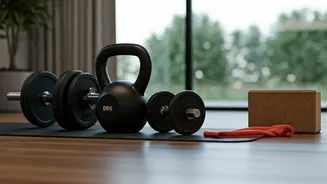
There’s nothing inherently wrong with heavy intensity training. Building strength is crucial for metabolic health, bone density, and overall resilience. The problem arises when it’s the *only* thing you do. Many traditional gym workouts focus on repetitive movements in a single plane of motion—think bicep curls, bench presses, or leg extensions. While these build muscle, they can also create imbalances and reinforce movement patterns that lead to stiffness. Over-specializing in lifting heavy weight without balancing it with mobility work can shorten muscles and tighten connective tissues around your joints. This reduces your active range of motion, making you “strong” in a very narrow context but functionally stiff in everyday life. You become a powerful engine stuck in a rigid chassis, increasing your risk of injury when you’re forced to move in an unexpected way.
Embracing a Mobility-First Mindset
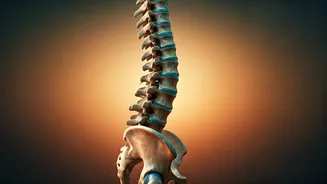
Adopting a longevity approach doesn't mean abandoning the weights. It means supplementing and rebalancing your routine. The goal is to master your body’s full, natural range of motion before you load it with heavy external weight. A mobility-first workout might start with dynamic stretches that actively take your joints through their complete range, like deep hip circles, cat-cow stretches for spinal flexion, and shoulder pass-throughs with a band. It emphasizes control and stability at the end-ranges of your movement. For example, instead of just a heavy back squat, you might incorporate deep goblet squats to improve ankle and hip mobility, or Cossack squats to open up the adductors. The idea is to build a foundation of supple, resilient joints and a stable core that can support any activity you throw at it, inside or outside the gym.
Simple Swaps for a Longer Healthspan
Integrating this philosophy is easier than it sounds and doesn't require a whole new gym membership. It’s about making smarter choices. * **Instead of:** A 10-minute jog on the treadmill for a warm-up. * **Try:** A 10-minute dynamic mobility routine. Focus on controlled articular rotations (CARs) for your hips, shoulders, and spine to actively prepare your joints for work. * **Instead of:** Focusing solely on your one-rep max for big lifts. * **Try:** Reducing the weight and focusing on impeccable form with a full range of motion. Go deeper in your squats, pause at the bottom, and control the entire movement. * **Instead of:** Finishing your workout and heading straight for the door. * **Try:** A 5-minute cool-down dedicated to static stretching or foam rolling the muscles you just worked. This helps signal to your nervous system that it’s time to relax and can aid in recovery and flexibility.