




More Than Just a Step Counter
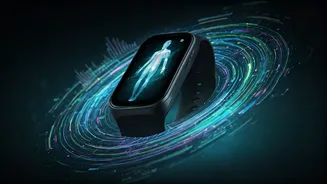
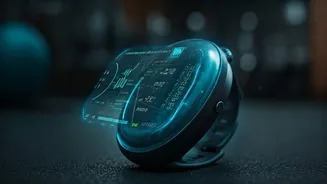
For years, fitness tech meant a simple pedometer or a calorie-tracking app. AI-driven fitness is an entirely different league. These new systems act less like a logbook and more like a biometric analyst. Using data from wearables like the Oura Ring or Whoop
strap, AI platforms monitor everything from your heart rate variability (HRV) and sleep quality to your respiratory rate and daily physical strain. It’s this deep well of personal data that fuels the “insights.” Instead of just telling you that you walked 10,000 steps, an AI coach can tell you that based on your poor sleep and high strain from yesterday’s workout, today should be a light recovery day, not a high-intensity session. This moves the focus from simply doing more to doing what’s right for your body at that specific moment.
The 24/7 Personalized Plan
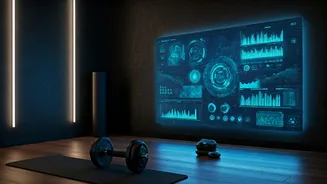
The true power of an AI trainer lies in its ability to adapt. A human trainer might write you a four-week plan, but they can’t adjust it in real-time if you have a stressful day at work or a terrible night’s sleep. AI can. Platforms like Future and Tonal use this data to dynamically build and modify your workouts. Did you crush your last leg day? The AI will learn and program a more challenging session next time. Are you reporting low energy? It might swap a heavy lifting day for mobility work. This constant feedback loop ensures your training is always optimized for your current state. The AI doesn’t guess; it calculates. It can analyze your lifting form via a phone camera, suggest weight increases based on your speed and consistency, and structure your entire fitness schedule around your body’s readiness to perform, something previously only accessible to elite athletes with a team of sports scientists.
Where The Human Element Still Wins
So, is it time to fire your human trainer? Not so fast. While AI is brilliant at analyzing data and creating logical plans, it lacks the one thing a great human coach excels at: genuine connection and accountability. An AI can’t look you in the eye and give you a pep talk when your motivation is tanking. It can’t share a laugh or intuitively understand the external life stress that’s impacting your workout. A subtle wince or a slight break in form might be missed by a camera, but not by a trained human eye. For many, the accountability of having a scheduled appointment with a person they respect is the single most important factor for consistency. Recognizing this gap, some of the most successful platforms use a hybrid model. Services like Future pair you with a real human coach who uses the AI’s data to inform their guidance, offering the best of both worlds: data-driven precision and human-led motivation.
Is an AI Trainer Right for You?
Deciding to go with an AI trainer depends on your personality and goals. If you're a data-driven person who loves seeing metrics and optimizing performance, an AI-only platform could be a perfect fit. It offers incredible value and personalization for a fraction of the cost of a full-time human trainer. However, if you thrive on personal connection, need hands-on form correction, or find accountability in a human relationship, a hybrid model or a traditional trainer might be more effective. The market is diversifying rapidly, with options ranging from pure data-analysis wearables and smart home gyms to apps that provide AI-generated workouts. The key is to understand what truly motivates you to move and to choose the tool—human, digital, or a combination—that best supports that.