



The Meaning Behind Rangoli
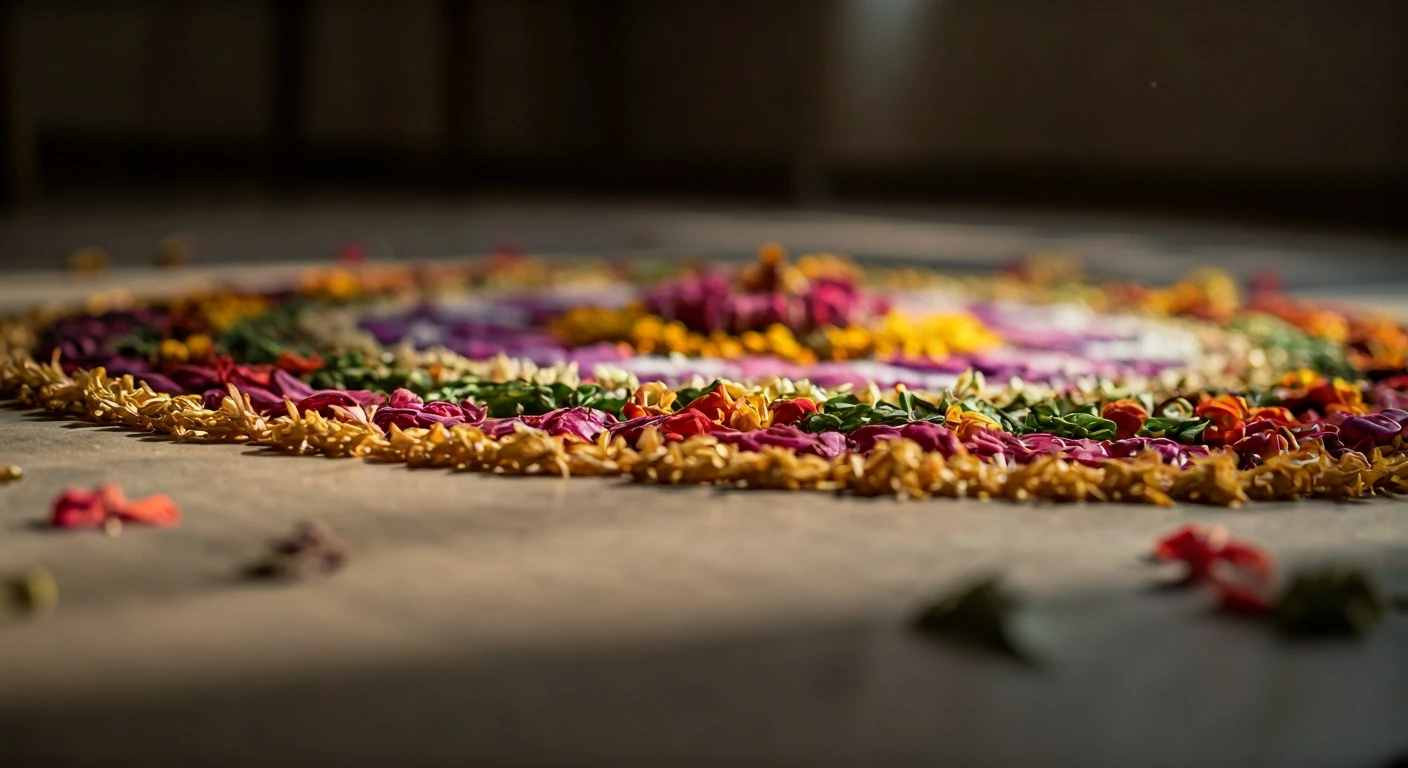
Before you start scattering petals, it’s worth knowing the rich history behind this art form. Rangoli is a traditional Indian art where intricate patterns are created on the ground, often in courtyards or entryways, using materials like colored rice,
sand, powders, or fresh flower petals. Typically made during festivals like Diwali, Pongal, and Onam, these designs are more than just decoration; they are a sacred welcoming symbol, intended to invite good fortune and positive energy into the home. While traditional rangolis are ephemeral, meant to be swept away and remade, the version we’re exploring embraces a different kind of longevity by using dried botanicals.
Why Dried and Local Matters
The magic of this project lies in its sustainable philosophy. Using dried flowers instead of fresh ones transforms a temporary creation into a lasting piece of art you can display for a season or even a year. It honors the full life cycle of the plant, from bloom to delicate, preserved form. The second key element is sourcing locally. Choosing flowers from your own garden, a nearby farm, or a local florist dramatically reduces the carbon footprint associated with transportation. It also connects you directly to the landscape and seasons of your specific region. This approach isn't just about making something pretty; it's a mindful practice that celebrates nature, reduces waste, and supports your local community.
Gathering Your Natural Palette
Your first step is to become a collector. Think of yourself as a forager of texture and color. You can source materials from several places: your own backyard (fallen petals, leaves, and seed pods are all fair game), a local farmers market, or a “U-Pick” flower farm. Look for a variety of shapes and sizes. Sturdy flowers like hydrangeas, statice, lavender, and strawflower dry beautifully and hold their color. Don't forget other elements like delicate grasses, interesting leaves, small pinecones, or dried seed heads. The goal is to build a diverse palette of natural materials. Remember to forage responsibly—never take more than you need, and be sure you're not harvesting from protected areas or private property.
The Simple Art of Drying Flowers
Preserving your floral treasures is easier than you might think. The simplest method is air-drying. Just bundle a few stems together with twine and hang them upside down in a dark, dry, well-ventilated area like a closet or attic. Darkness is key to helping the flowers retain their color. After two to three weeks, they should be crisp and ready. For individual petals or smaller, flatter flowers like violas or pansies, pressing is a great option. Place them between two sheets of parchment paper and set them inside a heavy book. After a couple of weeks, you’ll have delicate, paper-thin botanicals perfect for intricate details in your design.
Designing Your Floral Masterpiece
Now for the fun part: creation. You can create your rangoli on any flat surface—a large platter, a wooden board, a tabletop, or even a designated corner of a floor. Start by creating a faint outline for your design. You can use chalk to draw a circle, a star, or a geometric pattern, or simply start from the center and work your way out. There are no rules here. Begin by laying down your larger, foundational elements, then fill in the details with smaller petals and seeds. Play with symmetry, or embrace a more organic, free-flowing design. Think about color blocking, creating gradients, and contrasting textures. The beauty of a dried floral rangoli is its imperfection and organic nature. It's a snapshot of your local environment, arranged by you.