








What is the Grand Chariot Procession?
The event captivating onlookers worldwide is the Rath Yatra, or Chariot Festival, an annual Hindu tradition with its most famous iteration taking place in the coastal city of Puri in Odisha, India. The festival is a spectacular public display of devotion
centered on the deity Jagannath—considered a form of Vishnu—along with his brother Balabhadra and sister Subhadra. For a few days each year, these deities leave the inner sanctum of the revered Jagannath Temple to journey to a nearby temple, giving everyone, regardless of caste or creed, the chance to see them. This procession is not merely a parade; it's a profound spiritual event where the gods come out to meet the people. The pulling of the chariots' ropes by devotees is seen as an act of service and a way to gain spiritual merit, creating an electrifying atmosphere of collective faith and effort.
The Chariots: Colossal Moving Temples
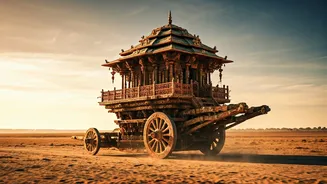
The stars of the show are, without question, the chariots themselves. These are not simple floats. Each one is a massive, temporary temple built anew each year from specific types of wood according to centuries-old specifications. Jagannath's chariot, Nandighosha, stands roughly 45 feet tall and rolls on 16 massive wheels, each seven feet in diameter. His siblings travel in their own slightly smaller, but equally impressive, chariots. Adorned with bright red, yellow, black, and green fabrics, these structures are towering works of art and engineering, constructed by designated families of artisans who have passed down the craft for generations. The sheer scale is breathtaking. When these colossal structures begin to move, pulled by thousands of devotees using thick coir ropes, the ground seems to tremble with the combined weight of wood, faith, and humanity.
A Journey of Inclusion and Devotion
At its heart, the Rath Yatra is a powerful symbol of equality. Within the main temple complex, access can be restricted. But when Lord Jagannath, whose name means “Lord of the Universe,” comes out onto the grand road, he is available to all. This open-air journey symbolizes a divine outreach that transcends social barriers. The spiritual significance is immense; for devotees, catching a glimpse of the deities on their chariots or, especially, touching the ropes is considered an incredibly auspicious act. The nine-day festival is filled with rituals, music, and chanting, as the deities complete their journey to the Gundicha Temple and back. It is this powerful, public display of a typically cloistered divine presence that makes the event so emotionally charged and spiritually resonant for the millions who attend.
From Local Ritual to Global Phenomenon
While the Puri Rath Yatra remains the archetype, the festival has officially gone global, validating the headline's claim. Thanks to the efforts of the Hare Krishna movement (ISKCON) and the growing Indian diaspora, massive Rath Yatra celebrations now take place in over 100 cities worldwide, from New York and London to Toronto and Sydney. These events bring a slice of Odisha's spiritual fervor to major international hubs, introducing the culture to new audiences. Furthermore, social media and global news coverage have beamed the stunning visuals from Puri across the planet. This has exponentially increased its visibility, attracting not just pilgrims but also international tourists, photographers, and documentarians. Puri is no longer just a dot on India's coastline; it's increasingly recognized as a key stop on the world map of unmissable spiritual and cultural experiences, a place where ancient tradition thrives in spectacular, public fashion.