







The Quiet Before the Storm
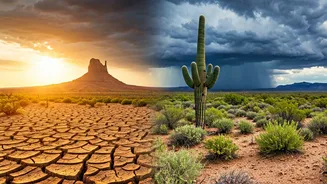
By June, the desert landscape of Arizona, New Mexico, and West Texas has been baked for months under a relentless sun. The heat radiates in waves from the rocky slopes and sandy washes. Cacti stand as stoic, spiny survivors, while the skeletal branches
of ocotillo and palo verde trees appear dormant, almost lifeless. The air is bone-dry, and the predominant color is a dusty tan that seems to absorb all light and hope. This is the quiet, patient phase—a landscape holding its breath, waiting for a signal that seems impossible in the face of such arid stillness.
When the Sky Breaks Open
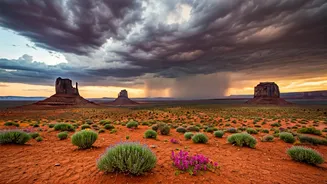
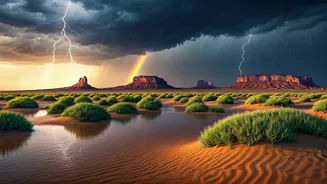
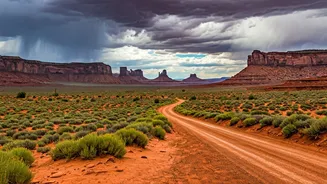
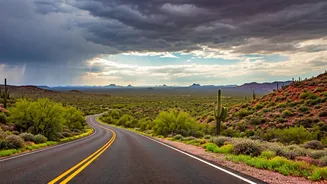
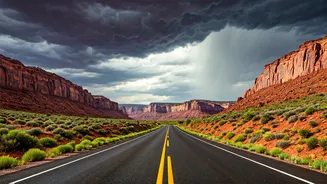
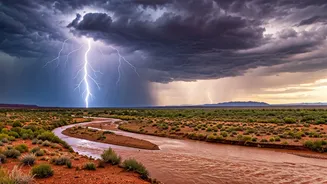
The change, when it comes, is not subtle. In late June or early July, the weather patterns shift. Moisture from the Pacific Ocean and the Gulf of Mexico gets pulled northward into the super-heated Southwest. The first sign is often a towering afternoon cloud, a cumulus anvil building on the horizon with shocking speed. The air grows thick and heavy. The wind picks up, carrying the distinctive, earthy scent of petrichor—the smell of rain hitting dry soil. Then, the sky opens. A monsoon storm is a violent, cathartic event. Drenching rain, crackling lightning, and booming thunder consume the landscape in a chaotic but life-giving deluge that can drop an inch or more of rain in under an hour.
A World Painted Green
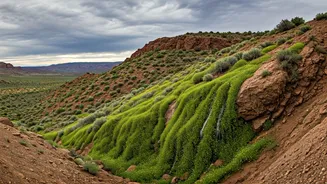
The morning after the first big storm is a revelation. The transformation is shockingly fast, a biological time-lapse playing out in real life. Those seemingly dead ocotillo sticks sprout tiny, bright green leaves almost overnight. The palo verde trees, whose name literally means “green stick,” intensify their color as their bark photosynthesizes in overdrive. But the real drama unfolds on the hillsides. A fine, velvety carpet of new grass appears, turning entire mountain ranges from brown to brilliant green in a matter of days. Wildflowers that have lain dormant as seeds for years suddenly burst forth in a riot of purple, yellow, and red. The desert, so recently a portrait of dormancy, is suddenly, vibrantly alive.
The Science of the Spurt
This explosive greening isn’t magic; it’s a masterclass in adaptation. Desert plants have evolved incredible strategies to capitalize on this brief window of abundance. Many annual grasses and wildflowers complete their entire life cycle—sprout, grow, flower, and set seed—in just a few weeks before the soil dries out again. Their seeds can lie dormant for years, waiting for the specific temperature and moisture combination a monsoon provides. Perennials like the creosote bush and ocotillo have mastered the art of patience, shutting down their biological processes during the dry months and roaring back to life with the first taste of rain. It is a system built for boom and bust, a high-stakes gamble that pays off spectacularly when the storms arrive.
A Season of Peril and Plenty
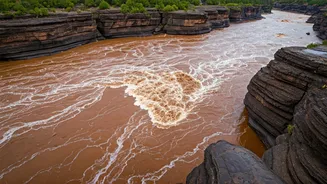
The monsoon is a season of duality. The same rains that trigger the green drama also bring significant dangers. The baked, hard ground cannot absorb the intense downpours, leading to powerful flash floods that can turn a dry wash into a raging torrent in seconds. Lightning strikes are a constant threat, sparking wildfires. Yet, this season of peril is also the season of plenty. It accounts for up to 50% of the region’s annual rainfall, replenishing the underground aquifers that sustain communities and ecosystems throughout the long, dry months to come. For wildlife, from insects and toads to deer and birds, it is a time of feasting and reproduction, a crucial period that ensures their survival for another year.