

Master the Illusion of Depth
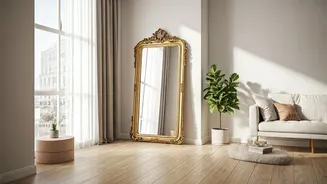
This is the mirror's most famous trick, but execution is everything. The goal isn't just to hang a mirror, but to create a convincing illusion of more space. For maximum effect, place a large, floor-length mirror against a long wall in a narrow room or hallway.
The reflection creates a visual extension of the floor and ceiling lines, tricking the eye into perceiving a much deeper, wider area. The key is scale: a tiny mirror will look like a postage stamp on a large wall and won't have the same space-doubling effect. Go as big as your wall and budget will allow. A simple, thin frame or even a frameless style works best to make the illusion feel seamless and modern.
Amplify Every Ounce of Light
Dark corners and shadowy rooms are the enemies of small-space living. Mirrors act as light multipliers, grabbing any available source—natural or artificial—and bouncing it around the room. The most effective strategy is to place a mirror directly opposite a window. This not only reflects the light but also the view, bringing a piece of the outdoors inside and creating a brighter, more dynamic atmosphere. If you don't have a window to work with, place a mirror next to a lamp, behind a candle, or across from a bright doorway. Even the soft glow from a table lamp can be amplified, adding warmth and dimension to a space that might otherwise feel flat and dim.
Create a Window Where There Isn't One
Many small apartments or interior rooms suffer from a lack of windows, which can make them feel claustrophobic. A well-placed mirror can serve as a convincing stand-in. A large, arched mirror can mimic the classic shape of a Palladian window, adding architectural interest and a sense of grandeur. Similarly, a grid-style mirror with multiple panes evokes the look of a factory or casement window. Hang one in a dining nook, at the end of a hallway, or in a windowless entryway to instantly create a focal point and the illusion of an opening to another space. This trick works best when the mirror is reflecting something pleasant, like a beautiful piece of art, a plant, or a softly lit corner of the room.
Use Mirrors as Statement Art
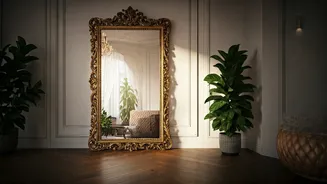
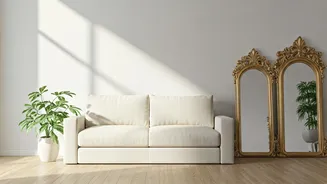
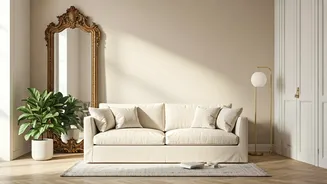
A mirror's function doesn't have to be purely practical. Today's designs feature ornate frames, unusual shapes, and antiqued or tinted glass that turn them into works of art in their own right. A single, oversized mirror with a dramatic gilded frame can anchor a living room just as effectively as a large painting. Consider creating a gallery wall of smaller, mismatched mirrors for a bohemian or eclectic vibe. Look for unique shapes like circles, sunbursts, or abstract forms to add personality. This approach is perfect for spaces above a console table, a fireplace mantle, or a bed, where you want to make a strong visual statement without adding clutter.
Strategic Placement: The Dos and Don'ts
Where you hang a mirror is just as important as the mirror itself. DO place mirrors where they reflect something beautiful or interesting—a window, a piece of art, a chandelier. DON'T place a mirror directly opposite your bed; many find it unsettling, and it can reflect disruptive light while you're trying to sleep. DO use a mirror in the entryway to create a welcoming first impression and allow for a quick last-minute check before you leave. DON'T hang a mirror where it reflects clutter, like a messy desk or a pile of shoes, as this will only amplify the chaos. Finally, DO mind the height. A common mistake is hanging mirrors too high. A good rule of thumb is to center the mirror at eye level, around 57 inches from the floor, unless it's a large piece meant to lean or cover a specific area.