




The Land in the Rain Shadow
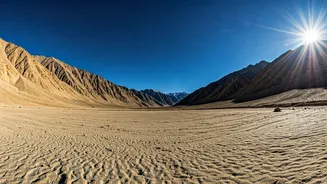
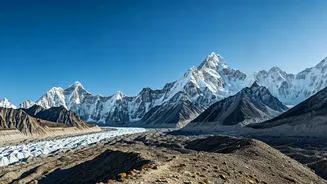
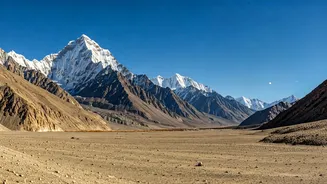
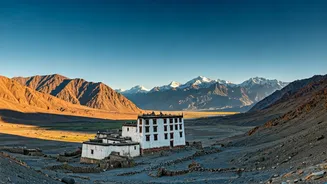
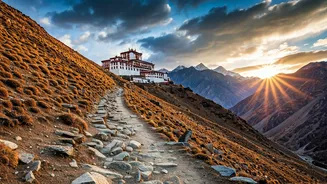
To understand Ladakh, you first have to understand its geography. Tucked behind the formidable barrier of the Great Himalayan range, this region of northern India exists in a vast 'rain shadow.' The towering peaks block the monsoon clouds that drench
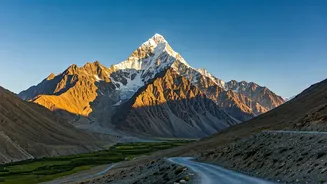
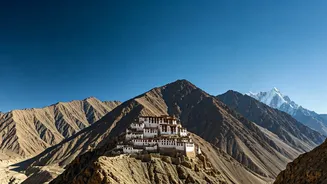
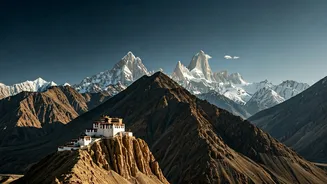
the subcontinent, creating a high-altitude desert of stark, breathtaking beauty. The landscape is a canvas of extremes: barren brown mountains give way to shocking bands of purple and green minerals, and deep-blue rivers carve paths through lunar valleys. It’s a place that feels geologically raw and spiritually ancient. This isolation hasn't just shaped the land; it has preserved a culture that feels like a portal to another time. Without the constant wash of the outside world, Tibetan Buddhism has flourished here for over a millennium, its monasteries clinging to rock faces as if they grew from the mountains themselves.
A Rhythm Set by Chants, Not Clocks
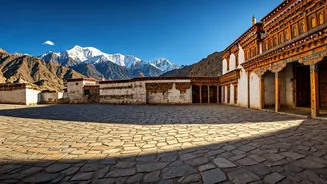
Stepping into a Ladakhi monastery is like stepping out of time. The Western obsession with deadlines and schedules dissolves in the face of a rhythm dictated by ancient ritual. The day begins before dawn with the sound of a conch shell calling young monks, their maroon robes a slash of color against the pale morning, to prayer. Inside the main prayer hall, or *dukhang*, the air is thick with the scent of juniper incense and melting yak butter from lamps flickering before statues of bodhisattvas. The low, guttural vibration of monks chanting sutras seems to resonate not just in your ears, but in your very bones. You might see a senior lama turning a massive prayer wheel, its revolutions sending millions of written prayers out into the universe, or a novice playfully chasing a friend in a sun-drenched courtyard. This isn't a performance for tourists; it is the living, breathing pulse of a community dedicated to a path of contemplation and compassion.
Giants Among the Peaks
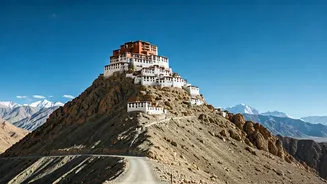
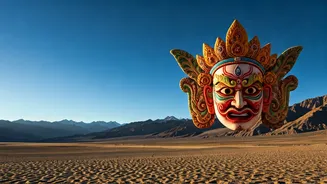
While dozens of monasteries dot the region, a few stand as iconic testaments to this enduring faith. Thiksey Monastery, a stunning 12-story complex cascading down a hillside, is often called a 'mini-Potala Palace' for its resemblance to the former home of the Dalai Lama in Tibet. Its main attraction is a magnificent 49-foot statue of the Maitreya Buddha, the 'future Buddha,' who sits in serene contemplation, filling a two-story hall. Further afield, Hemis Monastery, the wealthiest and largest in Ladakh, is tucked away in a hidden valley. It is renowned for its annual festival, where monks don elaborate masks and perform sacred dances depicting the triumph of good over evil. In the Nubra Valley, reached via one ofthe world's highest motorable passes, the Diskit Monastery is lorded over by another colossal Maitreya Buddha statue, which gazes down the valley, offering protection and peace.
How to Be a Respectful Witness
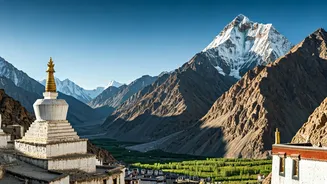
Experiencing this world doesn't mean becoming a monk for a week. For the traveler, the role is that of a respectful witness. The key is to move slowly, both to acclimatize to the dizzying altitude and to absorb the profound tranquility of your surroundings. When visiting a monastery, dress modestly, covering your shoulders and knees. Always walk around stupas (chortens) and prayer wheels in a clockwise direction, following the path of the sun and the cosmos. Ask for permission before taking photos of monks or religious ceremonies; many areas, especially inside prayer halls, are off-limits to cameras to preserve their sacred atmosphere. A quiet demeanor, a ready smile, and a small donation for the monastery's upkeep go a long way. This isn't an adventure to be conquered, but a lesson in humility to be received.