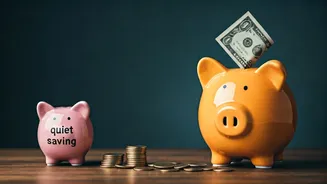









The New Reign of High-Yield Savings
For over a decade, the humble savings account was a financial afterthought, offering interest rates so low they were barely noticeable. That era is definitively over. As the Federal Reserve aggressively hiked interest rates to combat inflation, a previously
niche product went mainstream: the High-Yield Savings Account (HYSA). Suddenly, savers could earn 4% or even 5% on their cash, a return unheard of since before the 2008 financial crisis. This has triggered a massive shift in behavior. Millions of Americans have moved their emergency funds and short-term savings from traditional brick-and-mortar banks to online-only institutions offering these superior rates. It’s no longer enough to just have an emergency fund; the new conventional wisdom is that your emergency fund should be working for you, actively offsetting some of the corrosive effects of inflation instead of just sitting idle.
From 'Doom Spending' to 'Loud Budgeting'
Financial attitudes, especially among Millennials and Gen Z, are swinging between two extremes. On one side is 'doom spending'—the nihilistic impulse to spend on small luxuries now because long-term goals like homeownership feel hopelessly out of reach. But a powerful counter-trend has also emerged: 'loud budgeting.' Popularized on social media platforms like TikTok, it’s a rejection of the old taboo against talking about money. Instead of quietly stressing about finances, people are openly stating their saving goals and spending limits. Announcing 'I can’t go out, I’m saving for a down payment' is no longer a source of shame but a statement of empowerment. This cultural shift reframes frugality as a strategic choice, not a personal failure, and creates a sense of communal support for financial discipline in an economy that often feels stacked against the individual.
Rethinking the Role of Retirement
The 401(k) remains the bedrock of American retirement, but how people are using it is changing. Faced with high costs of living and economic uncertainty, some savers are making a difficult trade-off. They’re reducing their retirement contributions below the recommended 10-15% in order to build a more substantial liquid cash cushion. The thinking is that having six to twelve months of living expenses in an accessible HYSA provides more immediate security than maxing out a retirement account they can’t touch for decades. At the same time, younger savers are starting their retirement journeys earlier than previous generations, but often with more skepticism about the future. They see retirement not as a guaranteed finish line but as one of several major financial goals, competing with student debt, housing, and the desire for career flexibility.
The Psychology of 'Cash Drag'
The recent volatility in both the stock market and the economy has made many Americans fall back in love with cash. Holding significant amounts of cash and cash equivalents feels safe. It’s predictable and immune to market crashes. This strategy, sometimes called 'cash cushioning,' provides immense psychological comfort in turbulent times. However, it comes with a hidden cost known as 'cash drag.' Even in a high-yield account, cash is likely losing purchasing power to inflation over the long term. The challenge for the modern saver is finding the right balance: holding enough cash to sleep at night and navigate emergencies, without letting an excessive allocation hold back their long-term wealth-building potential. It’s a delicate dance between managing near-term anxiety and achieving far-off goals, a defining financial dilemma of our time.