





Bring Nature Inside, No Balcony Required
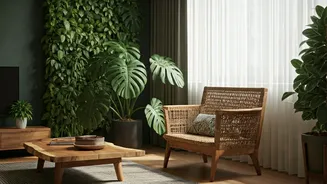
The core appeal of a Zen corner taps into a concept called biophilic design: our innate human need to connect with nature. When your window view is a brick wall and the nearest park is a subway ride away, incorporating natural elements indoors becomes
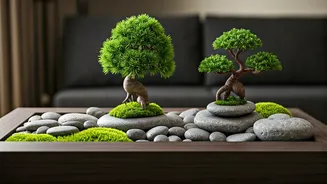
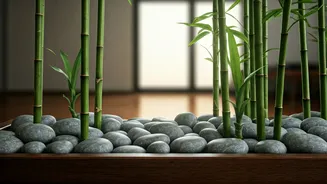
crucial for well-being. A simple tray filled with sand and arranged with river pebbles isn't just decoration; it's a miniature landscape. The varied, imperfect shapes of the stones, the fine texture of the sand, and the visual simplicity of the composition provide a powerful antidote to the harsh angles and artificial materials of urban life. This small patch of nature acts as a focal point for the eyes and a resting place for the mind, reducing stress by satisfying a primal longing for the natural world.
Create a Ritual of Mindfulness
A Zen corner is more than a static display; it’s an interactive tool for mindfulness. The classic image of a Japanese rock garden (karesansui) often includes a small rake for creating patterns in the sand. This act is a form of moving meditation. Tracing lines around the river pebbles requires focus, pulling you out of the cycle of anxious thoughts and into the present moment. You’re not trying to achieve a perfect design; you’re engaging in a simple, repetitive task. In a world of constant digital pings and notifications, spending just five minutes raking your mini-garden can reset your nervous system. It’s a screen-free, analog activity that signals to your brain that it’s time to slow down and breathe.
Define a Zone for Decompression
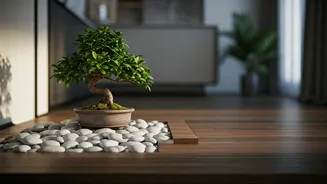
In a studio or one-bedroom apartment, the line between work, rest, and play can blur into a single, stressful space. Your laptop is on the dining table, your gym clothes are on the chair, and the pressure is everywhere. A Zen corner creates a clear, psychological boundary. By dedicating even a one-foot-square area to tranquility, you are physically defining a space where stress is not welcome. This spot, whether on a low shelf, a side table, or the floor, becomes a visual cue to decompress. When you see it, you’re reminded to take a deep breath. It’s the apartment equivalent of a ‘no-work zone,’ a designated sanctuary that helps you mentally clock out and find peace without ever leaving home.
The Simple Zen Corner Starter Kit
Getting started is inexpensive and requires no special skills. You don’t need to hunt for artisanal materials; the beauty is in the simplicity. All you need is:
- A Tray: A shallow wooden box, a ceramic platter, or even a sleek modern picture frame with the glass removed will work. Choose a size that fits your space, typically between 10 to 15 inches.
- Sand: Fine-grain craft sand, available at most art supply stores, is ideal. White or light tan sand creates a clean, bright look that makes patterns visible.
- River Pebbles: Look for a small bag of smooth, polished river stones. A mix of sizes, shapes, and colors (like gray, black, and white) adds visual interest. You only need a few—three or five is a classic choice in Japanese design.
- A Rake: Miniature bamboo rakes are sold specifically for this purpose, but a small fork, a chopstick, or even your fingers can work just as well to start.
Make It Uniquely Yours
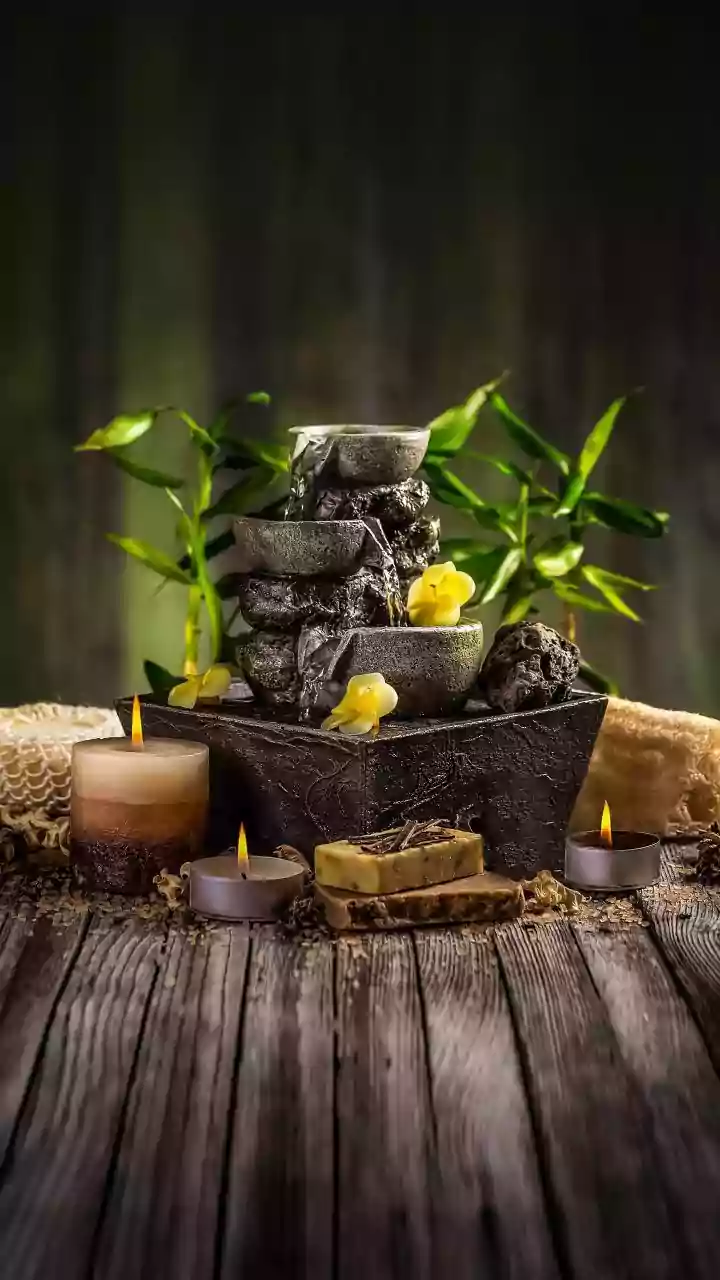
While the core components are simple, your Zen corner should feel personal. It's a space for your peace, after all. Consider adding one or two other elements that bring you joy or calm. This could be a single air plant (a low-maintenance touch of green), a small votive candle for a flickering flame, or a piece of driftwood with an interesting shape. Some people incorporate a specific crystal or a small brass bowl. The key is to avoid clutter. This is an exercise in minimalism. Each item should be chosen with intention, contributing to the overall sense of calm rather than detracting from it. Let it evolve over time as you discover what truly helps you feel centered.