




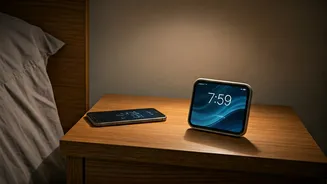
From Material Goods to Personal Metrics
For generations, status was broadcast through conspicuous consumption. A flashy car, a designer handbag, or a Swiss watch told the world you had arrived. But for a growing segment of the ambitious and affluent, that playbook feels dated. Today’s elite
are more interested in conspicuous production—demonstrating not what they can buy, but what they can achieve. And the bedrock of all achievement, from the boardroom to the gym, is sleep. This shift reframes luxury. Instead of an external object, the new prize is an internal state: peak physical and mental performance. In a culture obsessed with productivity, hacking one's own biology has become the final frontier of personal optimization. Sleep, once a passive activity, is now an active pursuit—a resource to be managed, measured, and perfected. The person who can casually mention their '95' sleep score or minimal sleep latency is signaling something far more potent than wealth. They’re signaling discipline, self-mastery, and an insider’s knowledge of the human operating system.
The Data-Driven Badge of Honor
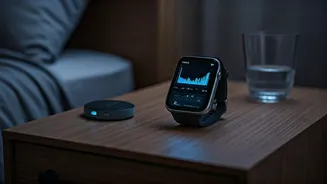
What makes this trend possible is the technology. Wearables like the Oura Ring, Whoop strap, and advanced sleep-tracking mattresses from Eight Sleep don't just count sheep; they provide a dashboard of your body’s most intimate data. They generate scores for 'Readiness,' 'Recovery,' and 'Sleep Performance,' turning the abstract concept of a 'good night’s sleep' into a quantifiable, competitive metric. This data becomes a new kind of social currency. Comparing sleep scores over brunch is the new comparing golf handicaps. It’s a subtle way to communicate that you are living an optimized life. A high score is a testament to your disciplined choices: you avoided that late-night glass of wine, meditated before bed, and kept your bedroom at the optimal temperature. It’s a humblebrag backed by biometric proof, a certificate of personal responsibility in a world full of distractions.
The New Uniform of the High-Performer
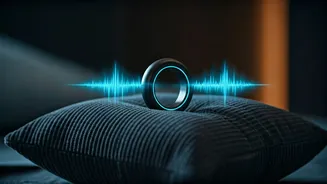
Look closely in Silicon Valley, on Wall Street, or among professional athletes, and you’ll see the new uniform. It’s not a power suit; it’s a sleek, unobtrusive ring or band. These devices act as a secret handshake for the initiated. Wearing one signals that you’re part of a club that values data, efficiency, and relentless self-improvement. These gadgets are intentionally designed to be subtle, unlike a garish gold watch. Their value isn't in their flashiness but in the conversation they start. Someone might ask, 'Is that an Oura Ring?' The ensuing discussion about REM cycles, heart rate variability (HRV), and body temperature trends is where the real status is exchanged. It shows you’re serious, you’re informed, and you’re investing in your most valuable asset: yourself. In this context, spending hundreds of dollars on a sleep tracker isn't an expense; it’s an investment in the personal brand of being a high-performer.
In an Unstable World, Control Is King
Beyond the social signaling, the obsession with sleep data taps into a deeper psychological need. In an increasingly chaotic and unpredictable world, mastering one's own body offers a tangible sense of control. You can’t control the stock market, global politics, or the algorithm, but you can control your bedtime, your diet, and your recovery. Perfecting your sleep becomes a deeply satisfying act of agency. This makes the pursuit of sleep insights more than just a wellness trend; it’s a modern philosophy. It suggests that the path to a better life isn’t found through acquiring more things, but through fine-tuning the self. The data provides a roadmap, and the daily scores offer immediate feedback, creating a powerful loop of effort and reward. The ultimate status isn't just telling people you're winning—it's having the data to prove it, starting with the moment you wake up.