





What Dog Stress Actually Looks Like
First, let's get real about canine anxiety. Stress in dogs isn't always dramatic. While some dogs exhibit obvious signs like destructive chewing or incessant barking, most signals are far more subtle. According to veterinary behaviorists, you should watch
for things like excessive yawning when not tired, frequent lip-licking, or showing the whites of their eyes (often called 'whale eye'). A dog that avoids eye contact, tucks its tail, or suddenly seems uninterested in food or play could also be feeling overwhelmed. These are involuntary physical responses to the stress hormone cortisol. Understanding these cues is the first step, because you can't treat a problem you can't see. Misinterpreting a dog's excitement or simple fatigue as 'stress' that requires a spa day might be more for you than for them.
The Aromatherapy Question: Sniff With Caution
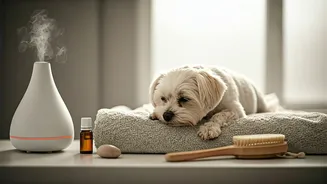
Here’s the most important part of this whole discussion: aromatherapy for dogs is not like it is for humans. A dog’s sense of smell is up to 100,000 times more powerful than ours, meaning a pleasant lavender whiff for you can be an overwhelming olfactory assault for them. More critically, many essential oils are toxic to dogs. According to the Pet Poison Helpline, oils like tea tree, pine, citrus, and peppermint can cause everything from skin irritation to liver damage if ingested, inhaled in high concentrations, or applied directly to their skin. While some scents like lavender and chamomile are often cited as calming, they must be used with extreme caution: heavily diluted, in a well-ventilated area, and never applied directly to your pet. Before you even think about diffusing anything, talk to your veterinarian. They can guide you on what, if anything, is safe for your specific dog.
Option 1: The At-Home DIY Spa Treatment
The most accessible and often most effective 'spa' experience is one you can create at home. This isn't about fancy products; it's about focused, calming attention. Start with a gentle massage. Using long, slow strokes, focus on their shoulders and back, avoiding any sensitive areas. Many dogs find this incredibly bonding and relaxing. You can also play calming music—studies have shown that classical music and soft reggae can lower stress levels in kenneled dogs. If you’ve cleared it with your vet, you might use a dog-specific calming spray on their bedding (never on them). The real luxury here is your undivided attention, which is a powerful stress-reliever on its own.
Option 2: The Mobile Groomer Glow-Up
For a step up, many mobile grooming services now offer 'spa packages' as an add-on. This is a great middle ground, combining a necessary task (grooming) with a bit of pampering. These packages often include upgraded shampoos and conditioners with soothing ingredients like oatmeal or aloe, a 'paw-dicure' which is essentially a nail trim followed by a moisturizing paw balm, and maybe a teeth-brushing session. The primary benefit is convenience and the one-on-one attention from a professional in a familiar environment (your driveway). While the 'aromatherapy' component is usually just a pleasant-smelling shampoo, the overall experience can leave a dog feeling clean, comfortable, and refreshed, which absolutely contributes to their well-being.
Option 3: The Full-Blown Doggy Day Spa
Welcome to the peak of pet pampering. These brick-and-mortar dog spas are where the 'luxury' in the headline truly lives. Here you'll find services that sound like they were pulled from a resort brochure: blueberry facials (a gentle, tear-stain-reducing face wash), hydrotherapy sessions in a heated pool, and even 'pawlates' for canine core strength. While some of these services, like hydrotherapy, have legitimate therapeutic benefits for dogs with arthritis or those recovering from surgery, others are purely for the owner's enjoyment. Is your dog actively asking for a cucumber-infused coat treatment? Probably not. But can it be a fun, novel, and safe experience if done by trained professionals? For some dogs, absolutely. It's the ultimate expression of the pet-as-family trend.
The Real Luxury: Your Time & Attention
After exploring all the options, the most powerful tool for reducing your dog's stress is, and always will be, you. A long walk in a new place, a 15-minute training session to engage their brain, or a good game of fetch are often more effective than any spa treatment. These activities meet a dog's core needs for physical exercise, mental stimulation, and bonding with their person. A tired, mentally engaged dog is a happy, low-stress dog. Before spending hundreds on a spa day, ask yourself if that time and money could be better spent on a training class, a set of puzzle toys, or simply carving out more dedicated one-on-one time each day. The answer is usually yes.