




A City Overwhelmed by Faith
On the eastern coast of India, the city of Puri in the state of Odisha becomes the epicenter of a human tide each summer. For a few weeks, its normal rhythms are completely subsumed by the Rath Yatra, or the “Festival of Chariots.” Streets overflow with
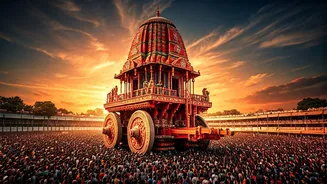
pilgrims, the air hums with the sound of bells, chants, and conch shells, and the entire atmosphere shifts from that of a seaside town to a sprawling, open-air temple. The event attracts anywhere from one to two million devotees and tourists, a gathering of a scale that few events on Earth can match. It’s a profound logistical challenge and an even more profound spiritual experience, where the personal act of worship becomes a massive, public celebration.
The Journey of the Gods
At the heart of the festival is a simple, powerful story. The main deities of Puri’s revered Jagannath Temple—Lord Jagannath (a form of Vishnu), his elder brother Balabhadra, and their sister Subhadra—leave the inner sanctum of their home temple for their annual “vacation.” They journey to the Gundicha Temple, said to be their aunt’s house, about two miles away. This is a rare occasion when the deities, normally only seen by Hindus inside the temple, are visible to everyone, regardless of caste or creed. Their procession through the main street, known as the Bada Danda, is the festival's main event. For devotees, the act of seeing the deities, known as darshan, is a moment of immense spiritual blessing.
Building the Divine Chariots
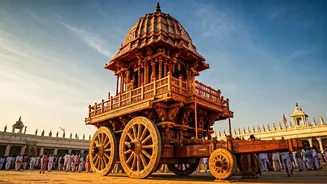
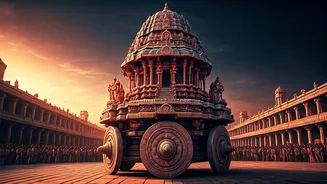
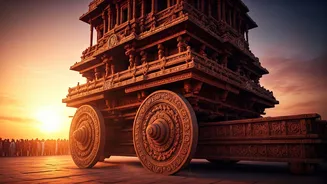
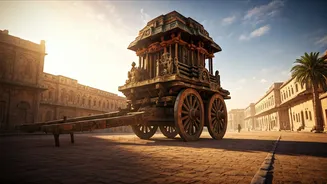
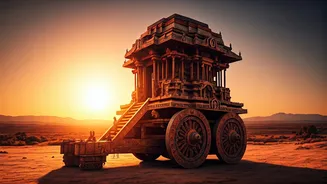
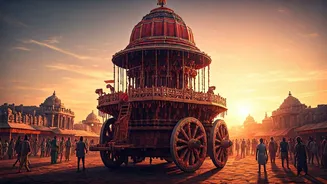
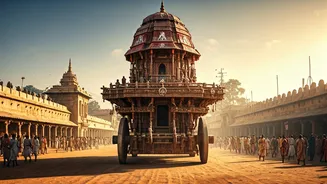
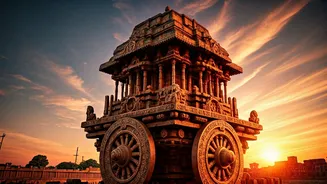
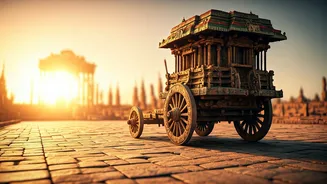
The vehicles for this divine journey are anything but ordinary. Three colossal wooden chariots are constructed from scratch every single year, following sacred traditions that have been passed down for centuries. These are not mere floats; they are temporary mobile temples. Lord Jagannath’s chariot, Nandighosha, stands roughly 45 feet tall and rolls on 16 massive wheels. His siblings’ chariots are similarly grand, each with its own specific color scheme, name, and design details prescribed by religious texts. A dedicated team of carpenters and artisans begins work months in advance, using specific types of wood and traditional tools, without modern blueprints. The construction itself is a religious ritual, culminating in towering structures of wood and fabric that are marvels of traditional engineering.
A Spectacle of Unparalleled Scale
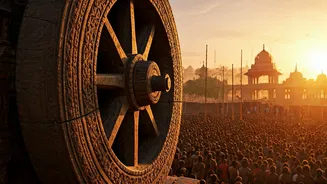
The climax of the Rath Yatra is the moment the chariots begin to move. They have no engines; they are pulled entirely by human power. Thousands of people grab hold of thick, long ropes attached to the front of each chariot and pull them through the packed streets. The energy is electric. It is a slow, painstaking process, a sea of humanity surging forward with a singular purpose. The belief is that pulling the ropes of the gods’ chariots is an act of devotion that cleanses sins and brings spiritual merit. This collective effort, where millions converge to participate in a single, sacred task, is what truly transforms Puri into a temporary “capital of devotion.” It’s a physical manifestation of shared faith, a reminder of the power of belief to mobilize millions in a stunning display of unity and reverence.