






Why Light Shapes Your Mood
Before you change a single bulb, it helps to understand why lighting has such a profound effect on us. Our bodies are wired to respond to light. Bright, cool-toned light mimics daylight, signaling our brains to be alert and productive. Conversely, warm,
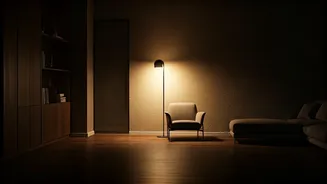
dim light resembles sunset, telling our internal clock—our circadian rhythm—that it’s time to wind down and relax. When the lighting in a room is at odds with its purpose (like a harsh, bright light in a bedroom), it creates a subtle but constant sense of unease. By consciously choosing our lighting, we're not just decorating; we're practicing a form of self-care, creating environments that support our natural cycles of energy and rest. This is the foundation of a restorative home: a space that works with your body, not against it.
Start with Natural Light
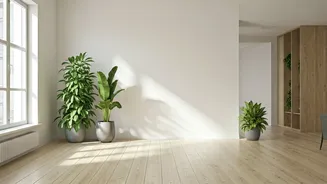
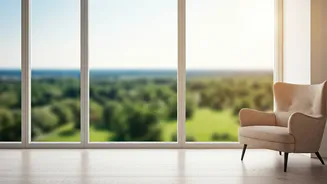
The best light is free. Maximizing natural daylight is the single most effective way to make a room feel more alive, spacious, and calming. Start by assessing your windows. Are they blocked by heavy, dark curtains? Consider swapping them for sheer or light-filtering options that provide privacy without sacrificing sunlight. If you have furniture obstructing a window, try rearranging the room to let the light pour in. Mirrors are another powerful tool; placing a large mirror opposite a window can double the amount of light in a room, bouncing it into darker corners. Finally, keep your windows clean. It’s a simple chore that makes a surprisingly significant difference in the quality and quantity of light entering your space.
Think in Layers
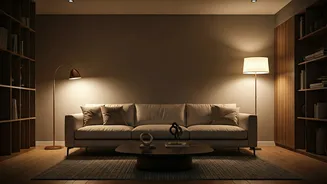
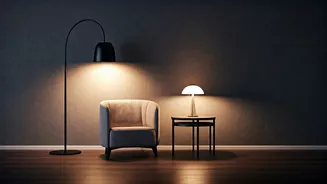
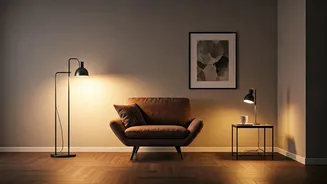
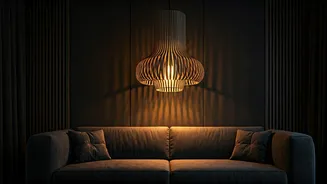
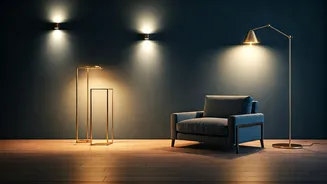
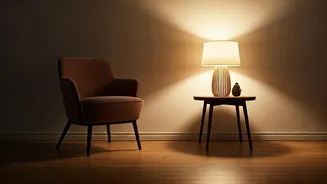
Professional designers don't rely on a single, harsh overhead fixture. Instead, they layer light to create depth, flexibility, and ambiance. Think of it in three categories: 1. Ambient Light: This is the room's overall illumination, the foundation of your lighting scheme. It’s often provided by a central ceiling fixture, recessed lighting, or a chandelier. Its job is to make the room safely navigable. 2. Task Light: This is focused light for specific activities, like reading, cooking, or working. Examples include a desk lamp, under-cabinet kitchen lights, or a reading lamp next to a sofa. It prevents eye strain and creates functional zones. 3. Accent Light: This is the jewelry of your room. It’s used to highlight architectural features, artwork, or plants. Track lighting aimed at a painting or an uplight behind a large plant are classic examples. Accent lighting adds drama and personality. A room that feels truly restorative has a mix of all three, allowing you to tailor the environment to your needs at any given moment.
Master Color Temperature
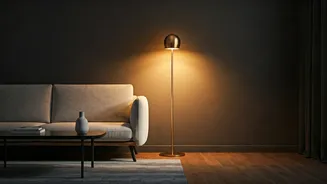
Not all light bulbs are created equal. The color of the light, known as its temperature and measured in Kelvin (K), dramatically affects a room’s atmosphere. You’ll see this number on the bulb’s packaging. - Warm Light (2700K–3000K): This is the cozy, yellowish-white glow of a traditional incandescent bulb. It’s calming and intimate, making it perfect for bedrooms, living rooms, and any space where you want to relax. - Cool White (3500K–4100K): This light is brighter and more neutral. It’s great for creating an energetic and focused environment, making it ideal for kitchens, bathrooms, home offices, and garages where clear visibility is key. - Daylight (5000K–6500K): This is a very crisp, blue-toned light that mimics natural daylight. It’s excellent for task-oriented areas like workshops or for applying makeup, but it can feel sterile and clinical in living spaces, especially in the evening. Matching the Kelvin to the room’s function is a game-changer.
Let Dimmers Be Your Friend
If there's one simple upgrade that delivers the most impact, it's installing dimmer switches. A dimmer allows a single light fixture to serve multiple purposes. The bright overhead light you need for cleaning can be dimmed to a soft, ambient glow for a dinner party. The task lighting in your kitchen can be lowered after the meal is prepared to create a more relaxed setting. Dimmers give you control, allowing you to adjust the mood of a room with the slide of a finger. They are relatively inexpensive and easy for an electrician (or a confident DIYer) to install on most fixtures, instantly making any room more versatile and responsive to your needs.