




First, What Is a Solar Storm?
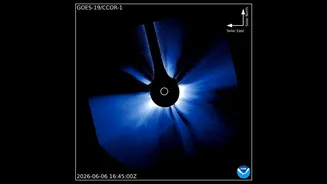
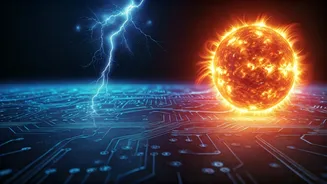
Think of the sun not as a steady lamp, but as a roiling, bubbling ball of superheated gas. Occasionally, magnetic energy builds up and snaps, launching enormous plumes of plasma and energy into space. These are called coronal mass ejections (CMEs). If
one of these happens to be aimed at Earth, that’s what we call a solar storm. It’s not a storm in the sense of wind and rain. Instead, it’s a massive wave of energetic particles and magnetic fields washing over our planet. Our planet’s magnetic field, the magnetosphere, acts like a planetary force field, deflecting the vast majority of this energy and protecting life on the surface. But a powerful enough storm can still rattle the cage, producing the beautiful auroras and some less beautiful technological side effects.
The Myth: Direct Harm to Your Body
Let’s get the biggest fear out of the way: a solar storm is not going to directly harm you as you walk down the street. You won’t get a sunburn, you won’t be 'irradiated,' and you don't need to stay inside. The Earth’s atmosphere and magnetosphere are incredibly effective at shielding us from the harmful radiation that travels with a solar storm. While astronauts in orbit, outside much of this protective bubble, have to worry about radiation exposure during solar events, those of us on the ground are safe. The amount of extra radiation that reaches the surface is negligible—far less than you'd get on a cross-country flight. So, a solar storm isn't a direct physical threat to your body. That anxiety can be put to rest.
The Murky Science of Indirect Health Effects
This is where things get more nuanced. Some researchers have explored potential correlations between strong geomagnetic activity and negative health outcomes, particularly cardiac events, migraines, or mood disturbances. The theory is that subtle fluctuations in the Earth’s magnetic field could affect biologically sensitive systems. However, it is crucial to understand that this link is weak, contested, and far from proven. Most studies show a very small statistical correlation, if any, and cannot rule out other factors. For now, the overwhelming consensus in the medical community is that there is no established, credible evidence that solar storms cause significant, widespread health problems. It remains an area of academic curiosity rather than a matter of public health concern.
The Real Danger: Our Fragile Technology
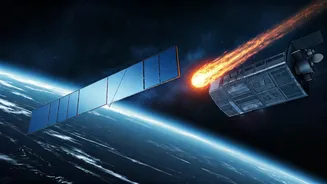
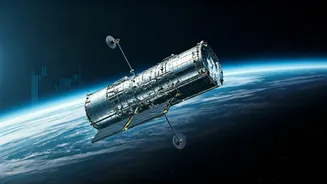
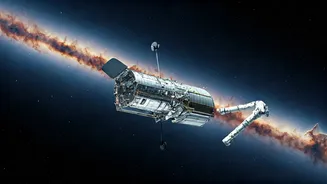
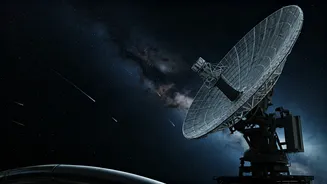
The true risk from a major solar storm isn't to our bodies, but to the technological backbone of our civilization. When a powerful CME interacts with our magnetosphere, it can induce powerful electrical currents in long conductors on the ground. The most vulnerable systems are our power grids. A massive storm could potentially overload transformers and cause widespread, long-lasting blackouts. This is the modern nightmare scenario. Furthermore, solar storms can disrupt high-frequency radio communications (used by airplanes and emergency services), scramble satellite operations (affecting GPS, weather forecasting, and communications), and pose a risk to pipelines by accelerating corrosion. This technological vulnerability is the primary reason organizations like NASA and NOAA monitor space weather so closely.
So, What Should You Actually Do?
Preparing for a solar storm looks a lot like preparing for any other potential natural disaster that could knock out the power grid, like a hurricane or an earthquake. You don’t need a tinfoil hat, but a standard emergency kit is always a good idea. This includes having a supply of non-perishable food and water, flashlights, batteries, a first-aid kit, and a battery-powered or hand-crank radio. It’s also wise to have some cash on hand, as electronic payment systems would go down in a widespread outage. The goal isn’t to panic; it’s to be prepared for a potential (though unlikely) infrastructure disruption, just as you would for any other emergency. Focus on practical readiness, not cosmic dread.