



Moving Beyond Steps and Heart Rate
For years, wearable tech has been about measuring motion and mechanics: how many steps you took, how fast your heart was beating, or how much you tossed and turned at night. It’s useful information, but it’s an indirect look at your health. It’s like
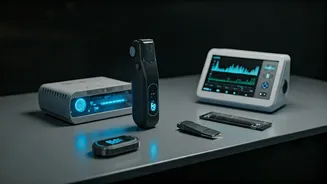
judging a car’s performance by only listening to the engine's roar. Advanced biomarker sensors are changing the game by opening up the hood to analyze the fuel mixture in real time. These devices, often in the form of a small patch with a tiny filament worn on the skin, measure the chemical composition of the fluid just beneath it. Instead of tracking movement, they track molecules. The most common example today is the continuous glucose monitor (CGM), once reserved for people with diabetes but now being adopted by wellness enthusiasts to understand how their bodies respond to food. This shift from mechanical tracking to chemical monitoring is the core of the revolution.
The Language of Your Cells
So, what are these sensors actually listening for? They’re tracking biomarkers—short for biological markers—which are molecules that give a snapshot of what’s happening inside your body. Think of them as the language your cells use to communicate. Glucose is the big one, revealing your metabolic health and how your body processes energy from food. Spikes and crashes in glucose can explain why you feel energetic after one meal and sluggish after another. But the technology is expanding. New sensors in development or early release can track: * **Lactate:** A key indicator of muscle fatigue during exercise. Monitoring it can help athletes optimize their training intensity and recovery. * **Cortisol:** Often called the “stress hormone.” Tracking its fluctuations could provide concrete data on your daily stress levels and how well you’re managing them. * **Ketones:** Molecules your body produces when it burns fat for fuel. This is crucial for people following ketogenic diets or exploring different metabolic states. By translating these chemical signals into data you can see on your phone, these sensors provide a direct line to your body's inner workings.
From Raw Data to Real Insights
Having a graph of your blood sugar is one thing; knowing what to do with it is another. The power of these devices isn't just in the data collection, but in the interpretation. This is where “deep cellular health insights” come from. For example, you might discover that your morning oatmeal, long considered a healthy choice, sends your glucose on a rollercoaster, leading to a mid-morning energy crash. That’s a cellular insight. You might see that a stressful work meeting causes a cortisol spike that lingers for hours, impacting your sleep quality later that night. Armed with this information, you can make specific, personalized changes. You might swap the oatmeal for eggs and avocado, or you might incorporate a ten-minute walk after that stressful meeting to help your cortisol levels return to baseline. It’s about moving from generic health advice (“eat healthy,” “reduce stress”) to precise, actionable steps based on your unique biology. This turns health management from a guessing game into a data-driven science.
The Future Is a Wearable Lab
While CGMs are readily available, the vision is a single, non-invasive sensor that can track multiple biomarkers at once—a tiny lab on your skin. Researchers are working on multi-analyte patches that can measure glucose, lactate, alcohol, and caffeine levels simultaneously. The challenges are significant: ensuring accuracy, making the sensors affordable and durable, and, critically, avoiding data overload for the user. An endless stream of biological data could create more anxiety than insight if not presented properly. The goal is to develop smart systems that can filter the noise and deliver clear, contextual notifications. For instance, your phone might buzz not just to say your lactate is high, but to suggest it’s an ideal time to end your high-intensity interval and switch to a cool-down. As this technology matures, it promises a future where we can continuously fine-tune our health, catching potential issues at the molecular level long before they become symptoms.