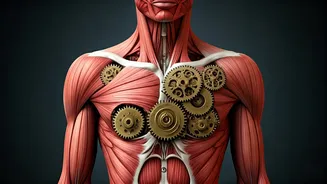









Diets Are Designed to Fight Biology
The fundamental flaw in most commercial diet plans is that they treat the human body like a simple machine: calories in, calories out. But our bodies are complex, adaptive ecosystems honed by millennia of evolution to survive, not to achieve a specific
body-fat percentage. When you drastically cut calories, your body doesn't just comply; it fights back. It interprets severe restriction as a famine, triggering a cascade of survival mechanisms. Your metabolism slows down to conserve energy (a process called metabolic adaptation), and hormones like ghrelin (the “hunger” hormone) surge while leptin (the “satiety” hormone) plummets. This is your body trying to save you, not sabotage you. A “real” body is one that resists starvation. Any diet plan that doesn't account for this biological reality—that doesn't prioritize nourishment and gradual, sustainable change over rapid, shocking deficits—is setting its user up for a frustrating battle they are biologically programmed to lose.
The Mental Toll of All-or-Nothing Rules
Beyond biology, there's the psychological trap. Diet culture thrives on an all-or-nothing mindset. Foods are labeled “good” or “bad,” and eating becomes a moral act. A slice of pizza isn’t just food; it’s a failure. This framework is incredibly damaging. It fosters a cycle of restriction followed by guilt-driven binges. When you forbid a certain food, you inadvertently place it on a pedestal, increasing its allure until the craving becomes overwhelming. Inevitably, you “give in.” The plan is broken, so you might as well go all out. This “last supper” mentality leads to overconsumption, followed by shame and a vow to be even more restrictive tomorrow. This isn't a lack of discipline; it's a predictable psychological response to deprivation. A diet that demonizes entire food groups and ignores the human need for pleasure and flexibility is not a health plan. It’s a recipe for disordered eating patterns and a fraught relationship with food.
Life Doesn't Fit Into a Meal Plan
Finally, most diet plans seem to be designed for a person who doesn't exist: someone with unlimited time, a generous budget, no social obligations, and zero stress. Real life is messy. It involves office potlucks, kids who are picky eaters, holidays, tight budgets, and days when you’re too exhausted to do anything more than order a pizza. A rigid plan that requires obscure, expensive ingredients or hours of weekly meal prep is simply not sustainable for the average American. It fails to consider the social function of food—the joy of sharing a meal with loved ones, the cultural significance of holiday dishes, the simple comfort of a favorite snack. When a diet forces you to choose between your plan and your life, life will—and should—win. Health-promoting behaviors must be integrated into our real, complicated lives. Any plan that demands we put our lives on hold to follow its rules has fundamentally misunderstood the assignment.