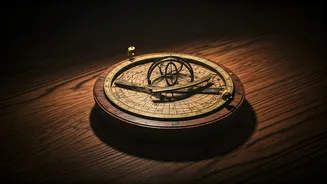







So, What Is Panchang?
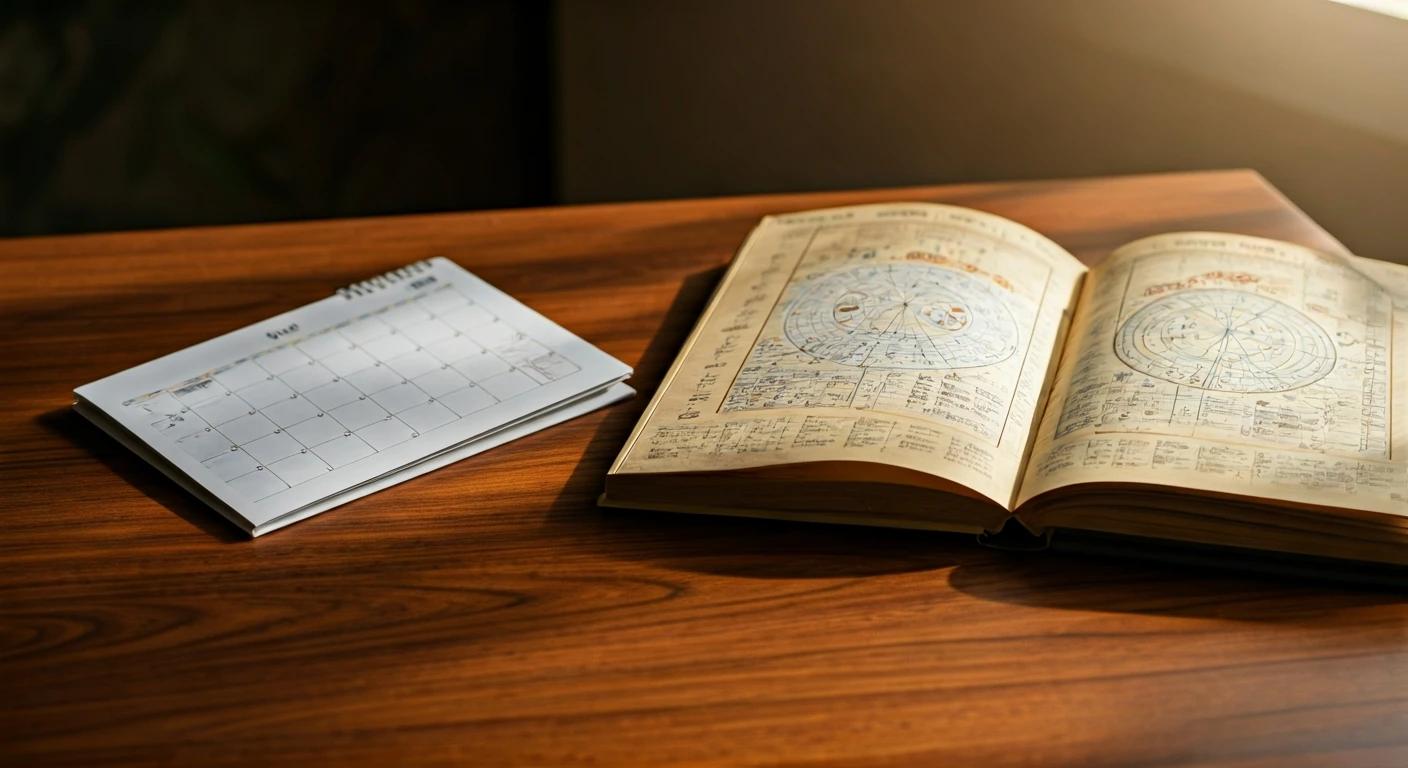
Forget your standard Gregorian calendar for a moment. The Panchang, or Panchangam, is the traditional Hindu Vedic calendar. Think of it less as a tool for tracking appointments and more as a daily astrological weather report. Its name literally translates
from Sanskrit to 'five limbs' (pancha-anga), because it tracks the daily energetic quality based on the interplay of five key astronomical elements. For millennia, people in India have used it to determine auspicious times for everything from weddings and starting a new business to planting crops and traveling. But you don't need to be planning a major life event to find value in it; many use it simply to align their daily activities with the subtle flow of cosmic energy.
The Five Limbs of Time
The Panchang’s 'five limbs' are what give it its texture and depth. They are: 1. **Tithi (The Lunar Day):** There are 30 Tithis in a lunar month, corresponding to the phases of the Moon. Each Tithi has its own unique quality and is considered suitable for different types of activities. This is the most foundational element, connecting your day to the Moon's journey. 2. **Vaar (The Solar Day):** This is the one you already know—the day of the week (Sunday, Monday, etc.). Each day is ruled by a planet (e.g., Sunday by the Sun, Monday by the Moon) and carries that planet's associated energy. 3. **Nakshatra (The Lunar Mansion):** This is where it gets really interesting. The sky is divided into 27 Nakshatras, or star constellations, through which the Moon passes. Each Nakshatra has its own personality, symbolism, and influence, adding a rich layer of character to the day. 4. **Yoga (The Celestial Union):** This isn't about downward dog. In this context, Yoga refers to 27 specific angular relationships between the Sun and the Moon. Each Yoga indicates a certain quality of time, from auspicious to challenging. 5. **Karana (The Half-Day):** A Tithi is divided into two parts, creating two Karanas. There are 11 different Karanas that repeat throughout the month, offering a final, subtle layer of energetic information for the day.
From Cosmic Data to a Grounded Feeling
This might sound incredibly complex, but the 'grounded' feeling the headline promises doesn't come from memorizing all 27 Nakshatras. It comes from the shift in perspective. Instead of seeing Tuesday as just 'Tuesday,' you might see it as a day ruled by Mars, occurring during a specific lunar phase, under a particular star. This practice encourages you to look up and out, connecting your small, personal world to the vast, cyclical rhythms of the cosmos. It's a form of mindfulness. By acknowledging that today has a unique energetic signature, you become more present. You're no longer just pushing through another block of time on your Google Calendar; you're participating in a day with its own specific character and potential. This simple act of awareness can pull you out of the hamster wheel of productivity culture and root you in a more ancient, natural sense of time.
How to Dip Your Toe In
You don't need to become an expert astrologer to start. Many websites and apps (like Drik Panchang or Vaidika) provide the daily Panchang for free. You can start by simply checking the Tithi and Nakshatra for the day. See if the description resonates with your mood or the events that unfold. For example, if it's a day governed by a 'sharp' Nakshatra, maybe it's a good time to tackle a difficult problem. If it's a 'gentle' one, perhaps it's better for creative work or spending time with loved ones. It’s not about rigid rules but about using the information as a prompt for introspection. Try it for a week: each morning, take 60 seconds to look up the day's Panchang. Notice how it influences your perception of the day ahead. You might find it brings a surprising sense of order and meaning to the daily grind.