






An Emerald Ocean of Hills
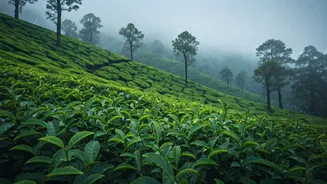
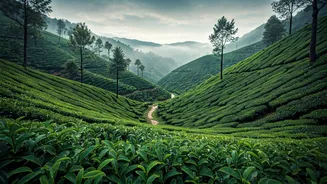
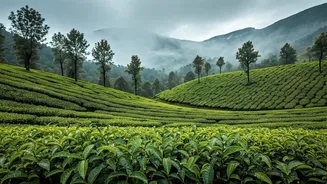
Perched high in the Western Ghats mountain range in the state of Kerala, Munnar is a landscape sculpted by tea. For as far as the eye can see, impossibly green plantations blanket the rolling hills, creating a contoured, velvety carpet that feels both
manicured and wild. Unlike the flat terrain of other agricultural regions, Munnar’s geography gives its tea gardens a breathtaking, three-dimensional quality. The roads snake through valleys and climb to staggering heights, with each turn revealing a new, more dramatic vista of neatly plucked bushes arranged in perfect, flowing lines. This isn't just farming; it’s large-scale landscape art, a testament to over a century of cultivation that has transformed the mountains into a living masterpiece.
The Magic of the Monsoon
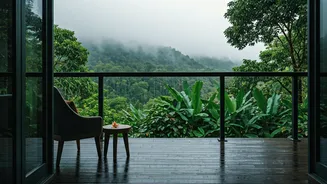
While most travel guides might steer you away from a destination during its rainy season, in Munnar, the monsoon (roughly June through September) is the main event. This is when the “misty rain” from the headline makes its grand entrance. It’s rarely a torrential downpour. Instead, it’s a persistent, soft drizzle that shrouds the hills in a mystical fog. The clouds descend from the heavens and weave themselves through the tea bushes, blurring the line between earth and sky. The air becomes crisp and cool, carrying the scent of wet earth and fresh tea leaves. The soundscape is a gentle symphony of dripping water and distant bird calls. This is the “aesthetic” experience: a moody, atmospheric, and deeply calming immersion in nature that feels a world away from the noise of modern life. It’s a time for quiet contemplation, a hot cup of chai, and a view that changes by the minute as the mist ebbs and flows.
Where to Find the Best Views
Capturing the perfect misty moment in Munnar is less about finding a single spot and more about embracing the journey. However, a few locations are legendary for their panoramic splendor. A drive to Top Station, on the border of Kerala and Tamil Nadu, offers a god’s-eye view of the surrounding mountains, which often appear as islands floating in a sea of clouds. For a more accessible but equally stunning perspective, the Lockhart Gap viewpoint provides a sweeping vista of the valley below, which becomes particularly dramatic when mist rolls in. To get up close, consider a visit to the Kolukkumalai Tea Estate. Accessible only by a bumpy jeep ride, it’s one of the highest tea plantations in the world. Sipping tea from the factory here while watching the clouds swirl below you is an experience that borders on the sublime.
Beyond the Vistas: Tea and Treks
While the views are the star attraction, Munnar offers more than just photo opportunities. To truly understand the region, you must engage with its lifeblood: tea. Many estates have factories open to visitors, such as the Tata Tea Museum (also known as the Kanan Devan Hills Plantation Tea Museum), where you can witness the entire process, from the withering of the leaves to the final packaging. The smell inside is intoxicating. For the more active traveler, trekking through the plantations is a must. Guided walks take you along narrow paths between the tea bushes, allowing you to see the skill of the tea pluckers up close and feel fully immersed in the green expanse. These walks offer a different perspective, connecting you to the ground-level reality of this beautiful agricultural landscape.
Planning Your Misty Retreat
For a U.S. traveler, getting to Munnar is an adventure in itself. The nearest major international airport is in Cochin (COK), about a 3-4 hour scenic, winding drive away. It’s best to hire a car and driver for the journey and for getting around Munnar, as the terrain is steep and public transport is limited. The key to the full experience is your accommodation. While the town of Munnar has standard hotels, consider staying in a plantation bungalow or a resort set within a tea estate. These properties offer unparalleled views and the incredible experience of waking up to see the mist parting over the hills right from your window. Pack layers, a good rain jacket, and waterproof shoes, but most importantly, bring a mindset ready to embrace the quiet, restorative power of the rain.