
The Snake Plant: The Unflappable Icon
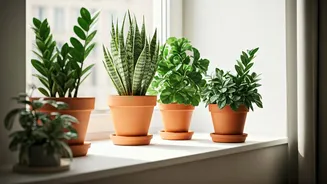
There’s a reason the Snake Plant (Sansevieria trifasciata) is a titan of the houseplant world. Its architectural, sword-like leaves are stiff, sturdy, and almost stubbornly attached to the plant. You won't find this one casually dropping leaves on your
floor just because you looked at it wrong. It’s not a frequent shedder, and its slow growth means less maintenance and repotting overall. Because it rarely flowers indoors, you also avoid the pollen and petal mess that other plants can create. It thrives on neglect, tolerates low light, and requires infrequent watering. For a plant that gives you maximum visual impact with minimum cleanup, the Snake Plant is in a class of its own. It’s the definition of a set-it-and-forget-it green companion.
The ZZ Plant: Polished and Problem-Free
If you want a plant that looks perpetually polished, meet the ZZ Plant (Zamioculcas zamiifolia). Its wide, waxy leaves are masters of collecting dust but not of falling off. They are so hardy and well-attached to their thick stems that you’d practically have to wrestle a leaf off. This plant retains water in its underground rhizomes, making it incredibly drought-tolerant and forgiving. The glossy foliage looks clean and tidy right out of the gate, and a simple wipe-down every few months is all it needs to maintain its sheen. Like the Snake Plant, it’s not an indoor bloomer, so you’re safe from the potential mess of flowers. It’s the perfect plant for someone who wants the aesthetic of a thriving jungle specimen without any of the untidy habits.
The Cast Iron Plant: As Tough As Its Name
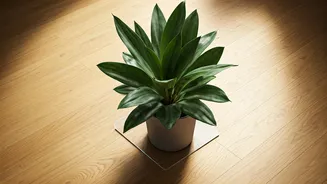
The name says it all. The Cast Iron Plant (Aspidistra elatior) is legendary for its indestructibility, and that toughness extends to its tidiness. Its large, deep-green leaves are incredibly resilient and have a very low turnover rate. This isn’t a plant that dramatically sheds its foliage when stressed; it simply perseveres. It’s a slow grower, which means you won't be dealing with constant pruning or runaway growth. It’s also extremely tolerant of low-light conditions where other plants would falter and start dropping leaves. If you have a dim corner of your home that needs a touch of green without creating a daily sweeping task, the Cast Iron Plant is your steadfast, no-drama solution. It’s the strong, silent type of the plant world.
The Ponytail Palm: Sculptural and Self-Contained
Don't let the name fool you; the Ponytail Palm (Beaucarnea recurvata) is not a true palm but a succulent. This distinction is key to its cleanliness. It doesn't have messy fronds that dry up and rain down debris. Instead, it has long, ribbon-like leaves that sprout from a bulbous, water-storing trunk. These leaves are remarkably well-attached and only need to be trimmed or removed when they are very old and fully dried, a process that is infrequent and easy to manage. Its quirky, sculptural form adds a unique design element to any room, and its water-wise nature means you won't be dealing with overflows or messy watering trays. It’s a fun, low-mess alternative to more traditional houseplants.
The Air Plant: The Ultimate No-Soil Solution
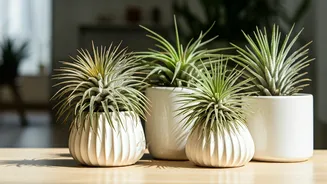
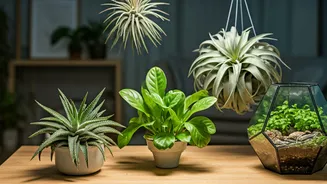
For the ultimate minimalist plant parent, the Air Plant (Tillandsia) is the champion of clean. Its biggest selling point? No soil required. That means no spilled dirt during repotting, no mud, and no soil-dwelling pests. These unique plants absorb water and nutrients through their leaves, not roots. Their only cleanup requirement is the occasional removal of a brown, dried-out leaf at the base, which is a neat and simple task. While they do need regular care—typically a weekly soak in water—they offer a level of cleanliness that ground-dwelling plants can’t match. Display them in glass terrariums, on pieces of driftwood, or in geometric holders for a tidy and modern touch of green.