


It Has Good Elasticity
One of the most reliable signs of healthy hair is good elasticity. When hair is healthy and well-moisturized, it has the ability to stretch and return to its original shape without breaking. You can perform a simple 'stretch test' on a single wet strand.
Gently hold a strand between your fingers and pull it slightly. If it stretches by about one-third of its length before bouncing back, you’re in good shape. Hair that snaps immediately is likely brittle and dehydrated, while hair that stretches and doesn’t return (feeling mushy or gummy) is often over-moisturized or damaged from chemical processes. This test is a direct indicator of your hair's internal protein and moisture balance, which is the foundation of its strength.
The Cuticles Feel Smooth
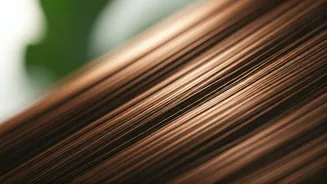
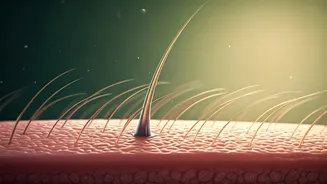
Run your fingers down a few strands of your damp hair. Healthy hair should feel relatively smooth and consistent from root to tip. This smoothness is thanks to a sealed, flat-lying cuticle layer—the outermost part of the hair shaft that acts like protective armor. When cuticles are closed and flat, they not only protect the inner core of the hair but also reflect light well. If your hair feels rough, bumpy, or tangles easily right out of the shower, it may be a sign of raised or damaged cuticles. This is often a result of high porosity, which can be caused by heat styling, chemical treatments, or environmental factors. Smooth cuticles mean your hair is better at retaining moisture and resisting damage.
It Exhibits Natural Shine
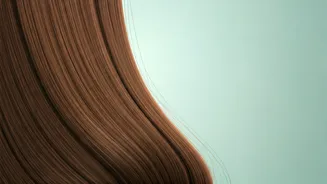
Don't confuse shine with greasiness. True, healthy shine is the result of light reflecting off a smooth hair surface. After washing, once your hair begins to air dry, look for a natural luster. This will appear differently depending on your hair type. Straight hair reflects the most light and will look glossiest. Wavy and curly hair has a natural texture that diffuses light, so the shine will be more subtle and multi-dimensional. For coily and kinky hair, which has the tightest curl pattern, shine is often seen as a healthy, low-sheen glow rather than a high-gloss finish. If your hair looks dull, flat, or chalky once it’s dry, it’s a sign that the cuticle is rough and unable to reflect light properly.
It Detangles with Relative Ease
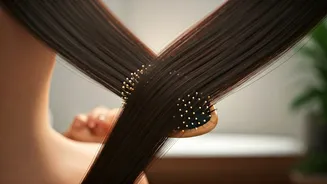
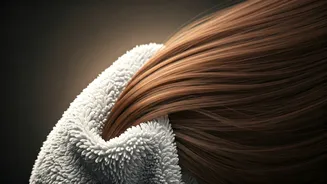
While some tangles are inevitable, especially for those with long or curly hair, healthy hair should not turn into a giant, unmanageable knot after every wash. When your hair is properly conditioned, the strands have 'slip,' allowing them to glide past one another. When you gently work a wide-tooth comb or your fingers through your wet hair (starting from the ends and working your way up), it should come apart without excessive pulling or snapping. If you find yourself fighting with major snarls and mats every time, it could indicate dryness, damage, or product buildup that’s creating friction between strands.
Your Scalp Feels Clean and Calm
Healthy hair starts with a healthy scalp. After washing, your scalp should feel clean, comfortable, and free from irritation. Look for signs of good scalp health: no excessive redness, itchiness, flaking, or tightness. A clean scalp provides the optimal environment for hair follicles to produce strong, healthy hair. If you notice persistent buildup even after a thorough wash, or if your scalp feels tight, itchy, or produces flakes, it might be a sign of dryness, a reaction to a product, or an underlying condition like dandruff or seborrheic dermatitis. A calm, balanced scalp is the literal root of good hair.
It Dries at a Normal Pace
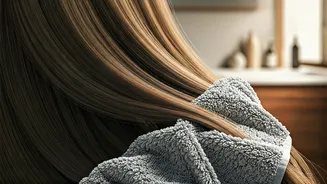
How long your hair takes to dry can tell you a lot about its porosity. Hair with low porosity has tightly sealed cuticles, making it hard for water to get in—and hard for it to get out. It might take a very long time to dry. On the other end, high-porosity hair has gaps in the cuticle that absorb water quickly but also lose it just as fast, causing it to dry in a flash. Ideally, healthy hair is somewhere in the middle, with 'normal' porosity. It absorbs water well during washing but doesn't feel waterlogged, and it air-dries within a reasonable timeframe—not instantly, but not for hours on end either. This indicates a balanced cuticle that can both accept and retain moisture effectively.