



1. Escape the Tyranny of the Top 10
Every major city has its 'must-see' list, a predictable circuit of monuments, museums, and panoramic viewpoints that forms the backbone of default tourism. Think the Eiffel Tower, the Colosseum, or Times Square. While these sites have historical or cultural
merit, they often deliver a sanitized, crowded, and ultimately generic experience. The local challenge isn't about ignoring these places entirely, but about de-centering them. Instead of building your trip around a checklist curated by guidebooks and algorithms, you build it around experiences. The problem with the Top 10 is that it treats a city like a scavenger hunt where the prize is a photo, rather than a complex, living organism to be understood. The real city, the one its residents love, operates in the spaces between these landmarks. By letting go of the pressure to 'see it all,' you create space to actually experience something.
2. Follow the Food, Not the Flags
There is no better gateway to a culture than its food. A tourist follows signs to a monument; a traveler follows the smell of grilled meat to a neighborhood street market. Instead of booking a table at the restaurant with the most online reviews, ask a local shopkeeper where they go for a simple, delicious lunch. Sign up for a cooking class in someone's home. Explore a grocery store in a residential area to see what people actually buy and eat. Food is a city's daily ritual. The tourist trap restaurant near the main plaza serves a pale imitation of the local cuisine, designed for unadventurous palates. But a few blocks away, in a non-descript diner with a line out the door, is where the city's true flavor resides. Let your appetite be your compass, and you’ll find yourself in neighborhoods you'd never see otherwise, interacting with people in a genuine, universal context.
3. Master the Art of Productive Loitering
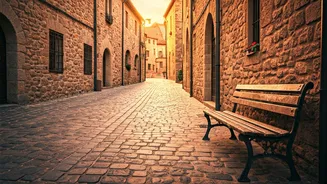
The default tourist plan is often pathologically over-scheduled, a frantic dash from one attraction to the next. The local alternative is to embrace downtime—not just as rest, but as a primary activity. This is 'productive loitering': the act of intentionally going somewhere with no agenda other than to observe. Go to a park that isn't the city's most famous one. Find a bench and watch how people interact with the space. Go to a neighborhood cafe—not a global chain—order a coffee, and just sit for an hour. Eavesdrop (politely). Watch the rhythm of the block. This is where you see the real city unfold: the daily greetings, the way people walk their dogs, the after-school rush. This unstructured time is what allows for serendipity—the conversation with a stranger, the discovery of a hidden alley, the moment you stop feeling like an observer and start feeling like a temporary participant.
4. Seek Out the 'Third Place'
Sociologist Ray Oldenburg coined the term 'third places' to describe the crucial anchors of community life that are not our homes (the 'first place') or our workplaces (the 'second place'). These are environments like cafes, barbershops, public libraries, and local pubs where people gather and connect. Default tourism rarely intersects with these essential spaces. The local challenge is to find and respectfully occupy them. Instead of a hotel bar, find a neighborhood dive bar. Get your hair cut. Visit a local library's community bulletin board. Attend a free concert in a public square. These places offer an unscripted window into the social fabric of a city. You're not there as a consumer of a 'tourist experience'; you're simply a person existing alongside other people in their natural habitat. It's the most authentic encounter you can have.
5. Use Your Phone for Connection, Not Curation
Technology can be the ultimate tourist bubble, reducing a trip to a series of Instagrammable moments viewed through a screen. But it can also be a powerful tool for breaking out of that bubble. The key is to use it for connection, not just curation. Instead of endlessly scrolling through feeds, use apps that connect you with locals. Platforms like Eatwith or Traveling Spoon link you with home cooks for a meal in their dining room. Airbnb Experiences offers everything from street art tours with local artists to history walks with amateur historians. Use Google Maps to explore public transit routes and ride a bus or tram to the end of the line and back. You can find hyper-local blogs or event listings that showcase things far off the tourist radar. The goal is to turn your device from a barrier into a bridge, using it to find the very people and experiences that default tourism is designed to bypass.