





A Landscape from Another World
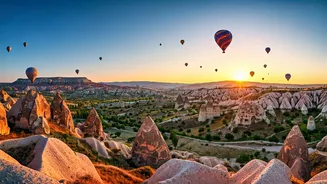
Before they were hotels, they were homes, monasteries, and hideouts, all made possible by Cappadocia’s unique geology. Millions of years ago, volcanic eruptions blanketed this central Anatolian region in a thick layer of soft ash. Over eons, wind and water
eroded the ash, sculpting it into a surreal landscape of conical formations, mushroom-shaped pillars, and rippling canyons. These formations, known as 'fairy chimneys,' are made of a rock called tuff, which is soft enough to be carved yet hardens when exposed to air. This remarkable quality is what allowed civilizations for millennia to dig in, rather than build up, creating a network of subterranean cities and cliffside dwellings that pockmark the region.
From Ancient Shelter to Boutique Stay
The history of these caves is as layered as the rock itself. As early as the 4th century, Christians fleeing Roman persecution sought refuge here, carving out chapels and monasteries, many of which still contain stunning Byzantine frescoes. Later, the caves served as vital stops along the Silk Road. For centuries, they were simply the homes of local villagers. The modern 'cave hotel' is a relatively recent, yet brilliant, innovation. Visionary hoteliers began buying and restoring these historic cave dwellings, carefully retrofitting them with modern amenities while preserving their ancient character. The result is a travel experience that’s utterly unique: you aren’t just visiting a historical site; you’re sleeping inside of it.
What to Expect from Your Cave Room
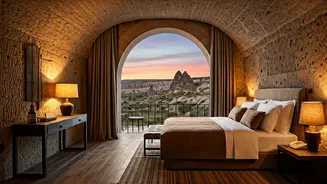
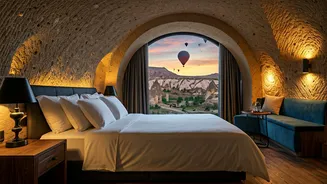
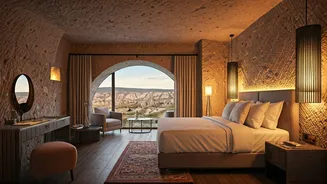
Staying in a cave hotel is a blend of rustic charm and modern luxury. Don’t picture a damp, dark cavern. Most reputable cave hotels offer suites with heated floors, luxurious bathrooms with rain showers, high-speed Wi-Fi, and plush Turkish textiles. The stone walls act as natural insulation, keeping rooms cool in the summer and relatively warm in the winter. Each room is unique, its layout dictated by the original structure of the cave. You might have a curved ceiling, natural stone niches that now hold lamps, or a terrace carved directly out of the cliffside. The acoustics are quiet and peaceful, offering a profound sense of tranquility you won’t find in a conventional hotel. It's an architectural adventure in itself.
Beyond the Hotel: The Cappadocian Experience
The hotel is the base, but the region is the main event. Cappadocia is world-famous for its hot air ballooning. Waking before dawn to watch hundreds of colorful balloons ascend into the sunrise is a core memory for any visitor—and taking a flight yourself offers an unparalleled view of the fantastical terrain. Beyond the balloons, you can explore the Göreme Open-Air Museum, a UNESCO World Heritage site filled with rock-cut churches. You can also descend into the sprawling underground cities of Derinkuyu or Kaymakli, which housed thousands of people and their livestock. For the active traveler, the valleys—like Rose Valley and Pigeon Valley—are crisscrossed with hiking trails that lead you through stunning scenery and past hidden chapels.
Choosing Your Home Base
Three main towns serve as hubs for visitors. Göreme is the heart of the action, a bustling town nestled among fairy chimneys, with the highest concentration of hotels, restaurants, and tour agencies. It’s convenient and lively. For a more upscale and slightly quieter experience, consider Uçhisar. It’s perched on the region's highest point, centered around a massive rock-cut castle, and its hotels often boast panoramic views. Ürgüp is a larger, more modern town with a mix of cave hotels and traditional stone houses, offering a glimpse into a more contemporary Turkish town while still being close to all the main attractions.