




The Long Game of Patience
A mango isn't a crop you can decide to grow on a whim. Unlike annual vegetables that yield a harvest in a single season, a mango tree is a long-term commitment. After planting a sapling, a farmer may wait three to five years before it produces its first
viable crop. These are years of watering, fertilizing, and pruning with no immediate return on investment. It’s an act of faith in the future—a belief that the soil, climate, and market will one day reward their foresight. In a world of instant gratification, the mango farmer plays the long game, tending to trees that will hopefully sustain their family and our appetites for decades. This foundational patience is the first, quiet act of heroism that precedes every single mango that lands in your grocery cart.
A Battle Against the Elements
Once a mango orchard is mature, the farmer’s job shifts from patient cultivation to active defense. Mangoes are a notoriously fickle fruit, vulnerable to a host of natural threats. A late frost can decimate the delicate blossoms, wiping out an entire year's potential crop overnight. A season of drought can stress the trees, yielding smaller, less desirable fruit. Conversely, too much rain at the wrong time—especially near harvest—can cause the fruit to split or encourage fungal diseases like anthracnose, which can ruin a crop’s appearance and marketability. Add in the constant pressure from pests like fruit flies and mites, and the farmer’s year becomes a strategic battle against nature’s whims. They aren't just growers; they are full-time meteorologists, biologists, and guardians of their grove, making high-stakes decisions every single day.
The Pressure of the Perfect Pick
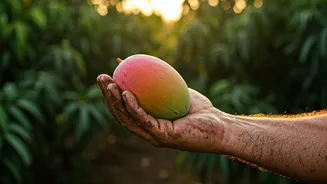
The romance of a sun-drenched orchard belies the intense, physically demanding work of the harvest. Mangoes on a single tree do not ripen all at once. This means workers can’t simply clear a tree and be done. Instead, the harvest is a painstaking, manual process. Pickers must move through the orchard repeatedly, identifying only the fruits that have reached the precise stage of “mature green”—firm enough to survive the journey to the supermarket, but developed enough to ripen perfectly on your counter. This requires a trained eye and a gentle hand. Picking a mango too early means it will never develop its full sweetness; picking it too late means it won't survive the trip. This brief, critical window turns the harvest into a race against the clock, often conducted in intense heat and humidity. It is skilled, strenuous labor, and the quality of the entire season rests on it.
The Unforgiving Economics of Farming
Even after navigating years of growth and surviving the gauntlet of weather and pests, the farmer faces one final hurdle: the market. Most of the mangoes in U.S. stores are imported from Mexico, Peru, Ecuador, and Brazil, with a smaller domestic supply from Florida and California. For small-scale farmers in any of these regions, the economics are brutal. They are price-takers, not price-setters, often at the mercy of large distributors who control logistics and access to retailers. A glut of mangoes from another region can cause market prices to collapse, sometimes to a point where the cost of harvesting is more than the fruit is worth. Add in the rising costs of fuel, fertilizer, and labor, and the profit margins can become razor-thin. These farmers absorb immense financial risk, betting their livelihood on a successful crop and a fair price. Their heroism isn't just in their labor, but in their resilience in a system that doesn't always value it.