




It’s a National Treasure, Literally
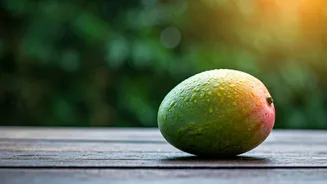
First things first: the mango (Mangifera indica) is the national fruit of India. This isn't just a fun piece of trivia; it’s a formal recognition of the fruit's deep roots in the subcontinent, where it has been cultivated for over 4,000 years. Ancient
Sanskrit texts are filled with references to it, and Hindu mythology often depicts the mango as a symbol of love and divine sweetness. The Buddha himself was famously gifted a mango grove to rest in. So when someone in India calls it the “king of fruits,” they’re not just talking about taste—they’re acknowledging its place at the center of their cultural and spiritual history.
A Mind-Boggling Spectrum of Variety
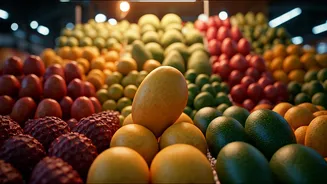
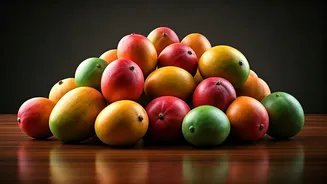
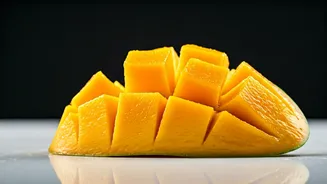
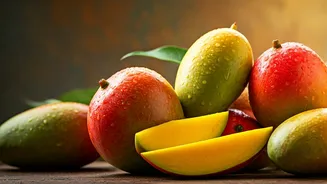
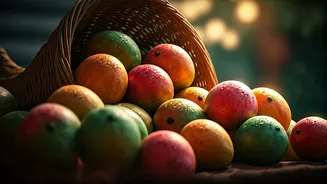
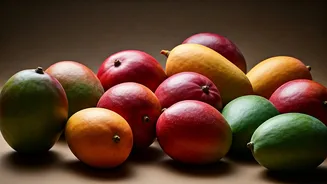
The handful of mango varieties you might see at a U.S. grocery store—like the Tommy Atkins or Kent—are just the tip of the iceberg. India is home to over 1,500 distinct mango cultivars, each with its own unique flavor profile, texture, aroma, and regional pride. The Alphonso, or ‘Hapus,’ from Maharashtra is perhaps the most famous, a non-fibrous, almost buttery fruit with a saffron-hued pulp that commands a premium price. But there’s also the sweet and fragrant Kesar from Gujarat, the uniquely shaped and incredibly sweet Langra from Uttar Pradesh, and the Banganapalli from Andhra Pradesh. The diversity is so vast that a summer in India can become a tasting tour, with different varieties peaking at different times.
A Fruit Fit for Emperors
The mango’s royal status was cemented during the Mughal Empire. The emperors were connoisseurs, and their patronage led to the sophisticated cultivation and grafting techniques that created many of the legendary varieties still enjoyed today. Emperor Akbar, who reigned in the 16th century, was so obsessed that he ordered the planting of an orchard with 100,000 mango trees in a region of Bihar. This wasn’t just about enjoying a tasty fruit; controlling the best mangoes was a display of power and refined taste. This legacy lives on, with certain mango types still carrying an air of luxury and exclusivity passed down through generations.
The Engine of an Entire Season
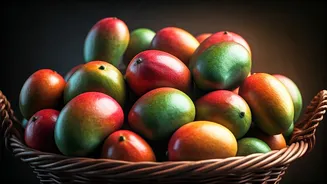
In India, summer isn't just hot; it’s mango season. The arrival of the first mangoes is a national event, signaling the end of spring and the start of a months-long celebration. Families gather for “mango parties,” where baskets of the fruit are soaked in water and devoured. Every part of the mango is used. Unripe, green mangoes are turned into tangy pickles (achaar), refreshing drinks (aam panna), and souring agents for curries. Ripe mangoes are eaten fresh, blended into lassis, made into ice cream (kulfi), or preserved as jams and sweet leather (aam papad). The fruit dictates menus, conversations, and even vacation plans. It is the flavor of summer itself.
A Global Agricultural Powerhouse
India isn't just a passionate consumer of mangoes; it's the world's largest producer by a staggering margin. The country accounts for roughly half of the entire global mango supply. While a significant portion of this bounty is consumed domestically (because, of course), India also exports its prized varieties around the world. For decades, irradiation rules kept many of the best Indian mangoes out of the U.S. market, but in recent years, those restrictions have eased. This has allowed American foodies to finally taste the legendary Alphonso and other varieties, offering a glimpse into the obsession that has defined Indian summers for millennia.