





Moving Beyond Generic Tapas
Remember the tapas boom of the 2000s? Suddenly, every restaurant had a 'small plates' section, a catch-all for everything from mini-burgers to bacon-wrapped dates. It was fun, but often felt generic—a checklist of crowd-pleasing bites without a unifying
story. The concept of sharing was there, but the soul was sometimes missing. What we're seeing now is a sophisticated evolution of that idea. Instead of just 'small plates,' restaurants are focusing on specific, regional traditions of shared eating. Think less 'assorted tapas' and more Venetian *cicchetti*, Basque *pintxos*, or Middle Eastern *mezze*. These aren't just scaled-down entrees; they are distinct culinary formats with their own histories, rules, and rituals. The food is deeply tied to a specific place, and that connection is the key to why it’s transforming the communal dining experience.
A Quick Trip to Venice or Spain
Picture a *bàcaro*, a tiny, standing-room-only wine bar in Venice. On the counter is an array of *cicchetti*: small slices of bread topped with salt cod mousse, sardines, or artichoke hearts. You order a few with a small glass of wine (*un'ombra*), chat with friends, and maybe order a few more. There’s no formal seating, no lengthy commitment. It’s a fluid, social, and delicious moment. Similarly, in the Basque region of Spain, evenings are for *txikiteo*, a crawl from one bar to the next, sampling *pintxos*. These are often more elaborate than tapas, held together with a signature toothpick (*pincho*). Each bar has its specialty, and the act of choosing, eating, and moving on with your group is the main event. In both cases, the food is the catalyst for conversation and movement, not a formal, sit-down affair. It encourages interaction by its very design.
The Story in Every Bite
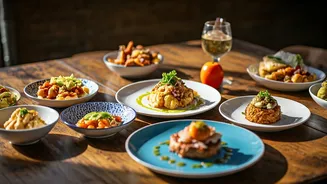
So why does adding a regional label make a meal feel more shareable? Because it replaces generic variety with shared discovery. When a server presents a platter of Greek *meze*—with its taramasalata, grilled halloumi, and dolmades—they are also presenting a mini-lesson in Mediterranean hospitality. You and your friends aren’t just eating; you’re exploring a culture together. Each dish comes with a backstory. You might find yourselves asking, 'What exactly is in muhammara?' or 'Is this how they really eat in San Sebastián?' The plates become conversation starters. You’re not just passing a dish of olives; you’re collectively participating in a tradition from another part of the world. This infusion of storytelling and authenticity elevates the act of sharing from a simple convenience to a meaningful, engaging activity. It creates a focal point for the table that goes beyond 'this tastes good.'
The American Interpretation
This trend isn't just about recreating foreign traditions. Innovative American chefs are applying the regional plate ethos to our own culinary landscape. Instead of a Spanish theme, a restaurant in Charleston might offer small plates inspired by Lowcountry classics: a single deviled crab, a small bowl of shrimp and grits, or a miniature biscuit with pimento cheese. A chef in the Pacific Northwest might craft a menu of small, shareable bites centered on local seafood and foraged ingredients. By doing this, they create a strong sense of place that feels both modern and deeply rooted. It allows diners to go on a tasting tour of a region without committing to a single, heavy entrée. This approach fosters a more dynamic and interactive meal, where the restaurant’s identity and the diners’ experience are woven together through a series of small, story-filled dishes.