






The Rise of 'Bureaucracy Fatigue'
For two years, travel was a high-stakes game of navigating restrictions. We downloaded apps, uploaded vaccine cards, filled out health attestations, and anxiously awaited QR codes. While necessary at the time, this process left a collective scar on our
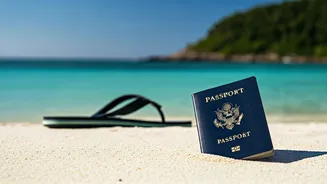
travel psyche. Now, even as most of those rules have vanished, a new travel desire has taken their place: the path of least resistance. Travel experts call this 'frictionless travel.' It’s a direct response to what can only be described as 'bureaucracy fatigue.' We're mentally exhausted by forms and fine print. In a world where you can order groceries or book a car with a single tap, the thought of printing, signing, and mailing a multi-page visa application feels archaic and draining. As a result, destinations that ask for little more than a valid passport are seeing a surge in interest from U.S. tourists eager to trade paperwork for peace of mind.
The Original 'Easy Button' Destinations
For Americans, the concept of a paperwork-free vacation isn't new. Our neighbors have long been the go-to for quick, easy getaways. You can drive to Mexico or Canada with minimal hassle, and a flight to the Caribbean often feels as simple as a domestic trip. Islands like Jamaica, the Bahamas, Aruba, and the U.S. Virgin Islands have built their tourism industries on being incredibly welcoming to U.S. passport holders. There are no visas, no complicated pre-approvals—just sun, sand, and a customs form on the plane. These destinations represent the baseline for easy travel, a familiar comfort that travelers are appreciating more than ever. They’re the reliable, always-on vacation spots where the hardest part of the planning process is deciding which swimsuit to pack.
Asia's Great Reopening Reward
Nowhere has the power of 'easy entry' been more apparent than in Asia. For years, Japan was a dream destination that required a cumbersome visa process for many. But when the country fully reopened and reinstated its visa waiver program for U.S. citizens and travelers from dozens of other nations, it unleashed a tourism boom of historic proportions. Flights were packed, hotels sold out, and tourist hotspots from Tokyo to Kyoto were flooded. The lesson was clear: remove the barrier, and they will come. South Korea has seen a similar effect. By offering visa-free entry, these countries transformed from 'someday' trips into 'why not now?' opportunities. Travelers who were hesitant to commit to a complex application process suddenly saw an open door, and they rushed through it.
Europe's Welcoming Window (For Now)
For American travelers, Europe has long been the ultimate easy long-haul destination. The Schengen Area—a bloc of 29 countries including France, Italy, Spain, and Germany—allows U.S. citizens to enter without a visa for up to 90 days. This has made multi-country trips a breeze, encouraging exploration from Lisbon to Vienna with just a passport stamp at the first port of entry. However, this golden era of simplicity is about to get a small asterisk. Starting in mid-2025, U.S. travelers will need to apply online for an ETIAS (European Travel Information and Authorisation System) authorization before they go. While it’s not a formal visa—the application is expected to be quick and inexpensive—it represents a new layer of friction. This upcoming change only highlights how valuable the current, completely paperwork-free system truly is, and it's a reminder that 'easy' access is never guaranteed.
The Unexpectedly Simple Spots
Beyond the obvious choices, a growing number of travelers are discovering hidden gems that are surprisingly easy to access. Turkey, for instance, offers a quick and simple e-visa that can be obtained online in minutes, opening up the vibrant markets of Istanbul and the surreal landscapes of Cappadocia. The country of Georgia, nestled between Europe and Asia, welcomes Americans visa-free for an entire year, making it an incredible destination for long-term travelers or digital nomads. Even some African nations are simplifying entry; countries like Rwanda offer a visa on arrival for U.S. citizens. These destinations prove that adventurous travel doesn't have to begin with an administrative headache. A little research can reveal exciting, off-the-beaten-path places that value your time as much as your tourism.