




Sethan: The Igloo Village
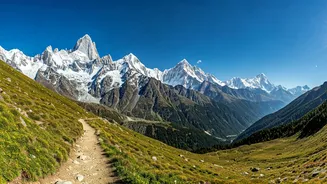
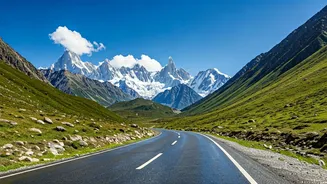
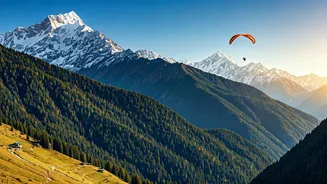
Perched at over 8,800 feet, the tiny Buddhist village of Sethan feels a world away from Manali, though it’s only a 45-minute drive. In the summer, it’s a serene base for hikers and rock climbers, offering a clear, sweeping panorama of the Kullu Valley
below. But winter is when Sethan transforms into a surreal wonderland. As heavy snow blankets the landscape, it becomes one of the few places in India where you can stay in a geodesic dome or a genuine igloo. Local operators have turned this quiet hamlet into a hub for winter sports enthusiasts seeking pristine slopes for skiing and snowboarding, far from the commercialized chaos of Solang Valley. It offers the rare combination of raw Himalayan beauty and a unique, cozy stay.
Jana Waterfall and a Traditional Lunch
While countless tourists flock to the well-known Jogini Falls, a short drive towards Naggar will lead you to the far more impressive and less-crowded Jana Waterfall. The cascade tumbles down a series of rock faces into a shallow pool, surrounded by towering deodar trees. The real secret here isn’t just the waterfall itself, but the rustic, family-run dhabas (roadside restaurants) at its base. Order a traditional Himachali thali, a platter featuring local dishes like red rice, corn flatbread, and various lentil and vegetable curries. Eating this hearty, authentic meal with the sound of the waterfall in the background is an experience that encapsulates the simple, profound pleasures of the region.
The Chandrakhani Pass Trek
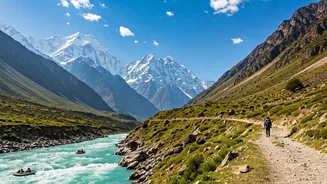
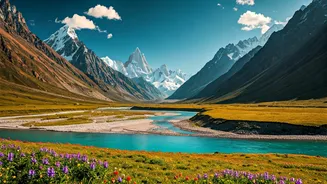
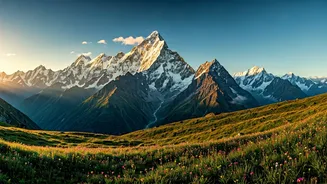
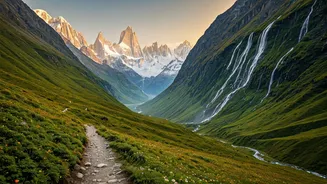
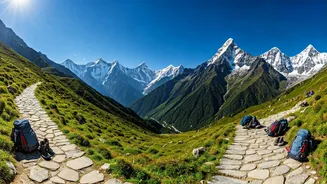
Many trekkers in Manali are drawn to the famous Hampta Pass or Bhrigu Lake treks. For a just-as-stunning but significantly quieter alternative, consider the Chandrakhani Pass. This ancient trail connects the Kullu Valley with the remote Malana Valley and is steeped in local lore; it’s believed to be the sacred resting place of the local deity, Jamlu Devta. The trek itself is a moderate multi-day journey that takes you through dense pine and oak forests, across vast alpine meadows carpeted with wildflowers in the spring, and offers jaw-dropping views of the Pir Panjal and Dhauladhar mountain ranges. It’s the perfect way to immerse yourself in the Himalayan wilderness without sharing the trail with dozens of other groups.
Naggar: The Old Royal Capital
Often treated as a quick stop, the village of Naggar deserves a full day of exploration. Once the capital of the Kullu kingdom, this hillside town is home to the magnificent Naggar Castle, a 15th-century stone-and-wood fortress that now serves as a heritage hotel and museum. The views from its balconies are worth the trip alone. Just up the road is the Nicholas Roerich Art Gallery, the former home of the famous Russian artist who settled here. His paintings of the Himalayas are mesmerizing, and the entire estate has a palpable sense of peace and creativity. Naggar offers a rich dose of history and culture, a welcome contrast to Manali’s adventure-focused vibe.
Fojal Valley: An Orchard Paradise
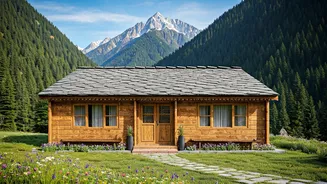
If your idea of a perfect day is a gentle walk through a landscape straight out of a storybook, then Fojal Valley is your destination. A short distance from Manali, this lesser-known valley is a lush expanse of apple and plum orchards, dotted with traditional wooden homes. Unlike the more dramatic, high-altitude landscapes, Fojal is soft, green, and incredibly tranquil. There are no major tourist attractions here, and that is precisely its charm. You can spend hours simply wandering the narrow paths that connect the small villages of Soil, Aleo, and Shuru, interacting with friendly locals, and admiring the traditional kath-kuni architecture. It’s a glimpse into the pastoral life that has sustained these mountains for centuries.