

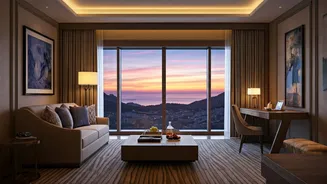
The Great Travel Reversal
Remember the old way? You’d decide on Nashville for the music or Miami for the beaches, then scroll through dozens of nearly identical hotel rooms, picking one based on price and proximity to a landmark. That logic is being flipped on its head. A growing
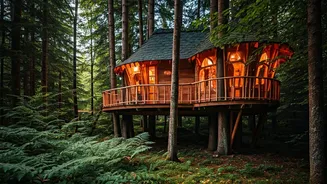
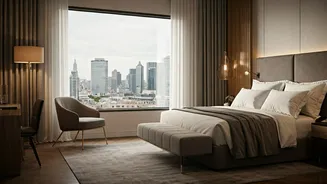
number of travelers are now starting their search not with a city, but with a stay. They’re falling in love with a glass-walled cabin in the woods, a meticulously restored Airstream in the desert, or a storybook castle in the countryside. The specific town or city it’s near? That’s secondary, a bonus feature rather than the primary draw. This isn't just about finding a place to sleep; it’s about choosing an experience. The four walls of your rental are now the destination, the museum, and the main attraction all rolled into one.
Driven by the Visual Web
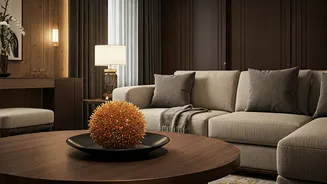
This shift didn’t happen in a vacuum. It’s a direct consequence of living in a visually-driven world. Platforms like Instagram and TikTok have become de facto travel brochures, and the most compelling “advertisements” are often not sprawling cityscapes but unique, photogenic interiors. A perfectly curated bookshelf, a clawfoot tub with a mountain view, or a sunken living room with a crackling fire are all powerful draws. These spaces aren't just beautiful; they’re content. Staying in one allows you to participate in a widely understood aesthetic, making the trip feel both personal and culturally relevant. Travel platform Airbnb recognized this seismic shift when it revamped its entire search function around categories like “OMG!,” “A-Frames,” “Domes,” and “Tiny Homes.” They understood that users weren't just searching for “3-bedroom in Austin” anymore; they were searching for a vibe.
It’s More Than Just a Photo Op
While aesthetics are a powerful hook, the trend runs deeper than a simple desire for a good photo. The pandemic fundamentally rewired our relationship with personal space. After months of being confined, travelers emerged with a new appreciation for curated environments that feel both safe and special. A unique stay offers a self-contained world. You don’t need to fight crowds to have a memorable experience when the experience is the house itself. It’s about the joy of cooking in a chef’s kitchen, reading by a panoramic window, or waking up to the sound of nature instead of traffic. This focus on the “stay-as-destination” also caters to the rise of remote and hybrid work. For a “workation,” the quality of the immediate environment—strong Wi-Fi, an inspiring desk view, and comfortable living space—matters far more than being in the heart of a bustling tourist district.
So, What About the City?
This doesn’t mean cities are becoming obsolete. Far from it. But their role in the travel equation is changing. For these stay-first travelers, the nearby town or city becomes the amenity, not the anchor. The trip isn’t *about* exploring every corner of Portland; it’s about retreating to a stunning architectural home *near* Portland. The city’s great restaurants, quirky shops, and cool breweries are a fantastic bonus, things to do if and when you decide to venture out from your sanctuary. This reframing gives travelers the best of both worlds: the peace and novelty of a unique property combined with the option of urban exploration. The pressure to have a packed, sight-seeing-heavy itinerary disappears, replaced by a more relaxed, resident-like approach to discovering a place.