






From Salad Bar to Science Lab
The phrase 'space pharmacy' might conjure images of a sterile, high-tech lab floating in zero gravity. But scientists at UC San Diego are envisioning something much greener. In a groundbreaking proof-of-concept study, a team of nanoengineers has successfully
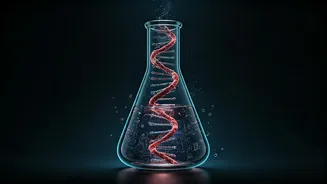
modified common lettuce plants to produce a key component of modern medicine: messenger RNA, or mRNA. This is the same technology behind the highly effective Pfizer and Moderna COVID-19 vaccines. By genetically editing plants, the researchers demonstrated that a head of lettuce could, in theory, be grown to contain the ingredients for a vaccine. The idea isn't to have astronauts munch on a salad to get their shots. Rather, the plants act as living factories—or bioreactors—that can be grown from a handful of seeds, with the active medicinal compounds later extracted and purified for use.
How to 'Teach' a Plant to Make Medicine
So, how do you convince a vegetable to become a vaccine manufacturer? The process involves a clever bit of genetic engineering. The UC San Diego team, led by Professor John E. Pokorski, focused on the chloroplasts—the tiny green engines inside plant cells responsible for photosynthesis. Unlike introducing genetic material into the plant cell's nucleus, which can be complex and sometimes result in the new genes being silenced, targeting the chloroplasts offers a more stable and high-yield approach. The researchers inserted the genetic instructions for producing a target mRNA sequence into the lettuce's chloroplasts. As the plant grows, its cellular machinery reads these new instructions and churns out the desired mRNA molecules alongside its normal proteins. The team was able to show that the plants could produce enough material for a viable dose and that the technology could be applied to different types of plants, not just lettuce. This method effectively transforms the plant into a self-replicating, solar-powered production facility for complex biologics.
The Ultimate Off-World Pharmacy
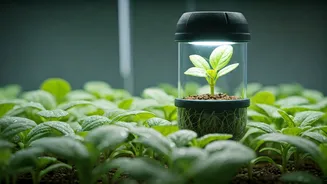
The primary driver for this research is solving one of the biggest hurdles for long-duration space missions, like a human journey to Mars. A mission to the Red Planet could last up to three years. Predicting every medical need and packing enough stable medication for the entire crew is practically impossible. Pharmaceuticals degrade over time, especially when exposed to the high radiation of deep space. Packing every potential vaccine, antibiotic, and therapeutic would add immense weight and cost to the payload. The 'space pharmacy' concept flips the script. Instead of packing finished drugs, astronauts would pack a tiny vial of engineered seeds. Whenever a specific medicine is needed, they could grow the corresponding plant in a small hydroponic bay, harvest it, and extract the compound. This creates an on-demand, renewable source of medicine that is far more efficient than trying to front-load a mission with a massive, perishable drug supply. It’s the ultimate form of living off the land, adapted for the final frontier.
Challenges and Earthly Applications
While the breakthrough is exciting, your local pharmacy isn't about to be replaced by a greenhouse just yet. This is still a foundational proof-of-concept, and several challenges remain. Scientists need to refine the extraction and purification process to ensure consistent dosing and safety. They also need to confirm that the plant-produced mRNA functions identically to conventionally produced versions when administered. However, the potential extends far beyond space travel. Imagine being able to rapidly produce vaccines or therapeutics in remote or low-resource regions on Earth by simply shipping seeds. This technology could decentralize pharmaceutical manufacturing, making it cheaper, faster, and more accessible globally, especially in response to a new pandemic. The same plant-based factory that could one day keep a Martian astronaut healthy might also provide a lifeline to a village on our own planet.