






An Ancient, Earthy Hydrator
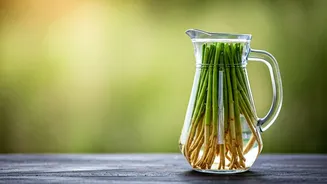
Forget flavor packets and electrolyte powders. Vetiver water, known as ‘khus’ water in India, is hydration at its most elemental. It’s made by infusing water with the roots of vetiver grass (*Chrysopogon zizanioides*), a fragrant perennial bunchgrass
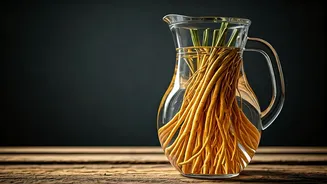
native to India. If the name ‘vetiver’ sounds familiar, it’s likely because its essential oil is a prized base note in high-end perfumes and colognes, celebrated for its complex, woody, and earthy aroma. But long before it was used in perfumery, its roots were used to purify and cool drinking water. Unlike a tea or a sugary cordial, vetiver water is subtle. The infusion process imparts a delicate, hay-like, and slightly smoky flavor to the water, along with its signature cooling essence. In many South Asian households, especially during brutal summer months, a clay pot filled with water and a bundle of vetiver roots is a common sight, offering a constant supply of naturally chilled and fragrant hydration.
The 'Cooling' Secret of Ayurveda
So, what does “cooling” actually mean? In the traditional Indian wellness system of Ayurveda, foods and herbs are classified by their intrinsic properties, including their effect on the body’s temperature. Vetiver is considered a *sheeta virya*, or a substance with a cooling potency. It’s traditionally used to pacify the *Pitta dosha*, the bodily energy associated with fire, heat, and metabolism. When summer heat leaves you feeling irritable, overheated, or inflamed, vetiver is believed to help restore balance from the inside out. Beyond its cooling reputation, vetiver is traditionally valued for a host of other benefits. It’s considered a natural antioxidant and is often used to soothe the stomach and support healthy digestion. The earthy aroma is also known for its calming, grounding effect on the nervous system, making a glass of vetiver water a simple meditative ritual in the middle of a hectic day. While modern science has yet to fully validate all of these ancient claims, the cultural trust in this simple root spans millennia.
How to Make Vetiver Water at Home
Making your own vetiver water is incredibly simple. The only special item you need is the vetiver root itself, which you can find online or at most South Asian grocery stores, where it’s often sold in dried, bundled bunches. 1. **Source and Clean the Roots:** Purchase a small bundle of dried vetiver roots. Take a handful (about 1/4 of a typical bundle) and rinse them thoroughly under cold running water to remove any dirt or dust. 2. **Soak and Infuse:** Place the cleaned roots in a large pitcher or, for a more traditional touch, an unglazed clay pot (a *matka*). Fill the container with about two liters (approximately half a gallon) of cool, filtered water. 3. **Let It Steep:** Let the roots infuse for at least two to three hours at room temperature. For a stronger flavor and more potent cooling effect, you can let it steep overnight in the refrigerator. The water will take on a pale, straw-like color and a beautifully earthy scent. 4. **Serve and Store:** Pour the infused water into a glass and enjoy. You can leave the roots in the pitcher and simply refill it with fresh water for up to three days, after which the roots’ potency will begin to diminish. The infused water itself will keep in the refrigerator for several days.
More Than Just a Glass of Water
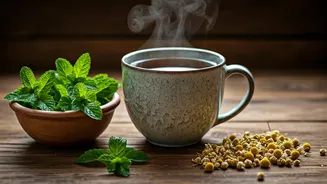
While delicious on its own, vetiver-infused water can be used as a sophisticated base for other refreshing drinks. Use it to make a next-level lemonade or iced tea, adding a complex, earthy note that balances the sweetness and acidity. For a simple and elegant mocktail, mix vetiver water with a splash of lime juice, a few muddled mint leaves, and a touch of honey or agave syrup. Some people even pour the fragrant water into a spray bottle and use it as a cooling facial mist on a hot day. Its gentle, natural properties make it a soothing and refreshing treat for the skin, connecting you back to the simple, powerful wisdom of nature.