





The Trend: Old-World Charm, New-School Cool
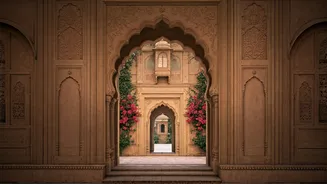
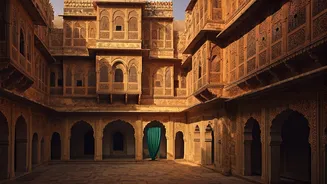
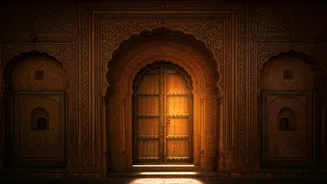
For generations, Jaipur’s walled city has been home to magnificent 'havelis'—ornate private mansions built by royals, nobles, and wealthy merchants. These architectural marvels, with their intricate latticework, hidden courtyards, and hand-painted frescoes,
were designed as secluded family sanctuaries. But as times changed, many of these sprawling properties became difficult to maintain. Now, a new generation of hoteliers and designers is breathing life back into them, transforming them into stunning heritage villas and boutique hotels. They are carefully preserving the soul of the buildings while infusing them with the amenities and aesthetic sensibilities that appeal to a younger, design-conscious, and experience-hungry traveler. It's less about a formal, hands-off museum experience and more about living inside a beautiful, story-filled home.
The Jewel Box: For the Design Obsessive
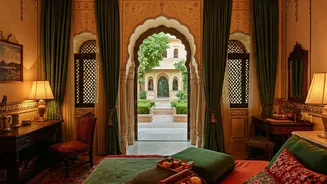
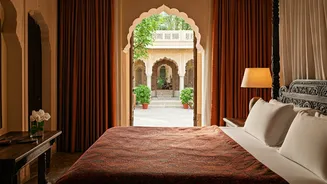
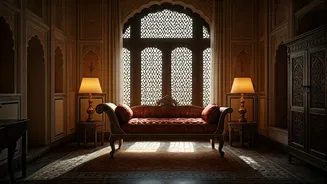
Some of the most sought-after villas are intimate, 'jewel-box' properties that feel like a personal discovery. Think of places like The Johri or 28 Kothi, which often feature a limited number of suites, each individually designed. The vibe here is curated and deeply photogenic. You’ll find walls lacquered in vibrant gem tones—emerald, sapphire, ruby—nodding to Jaipur's legacy as a gem capital. Traditional block-printed textiles are paired with sleek mid-century modern furniture. Instead of a sprawling, impersonal buffet, you might get a farm-to-table breakfast served in a sun-dappled courtyard. This style of villa appeals to the traveler who appreciates details: the custom brass fixtures, the locally sourced organic toiletries, and the feeling of staying in a place that has a distinct point of view. It’s luxury that whispers rather than shouts.
The Grand Haveli: For Aspirational Royalty
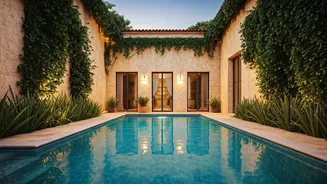
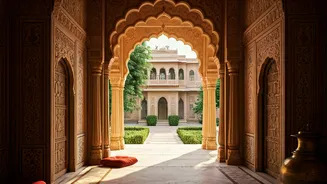
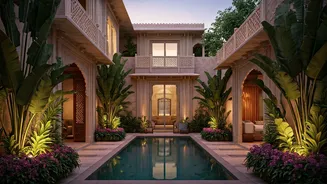
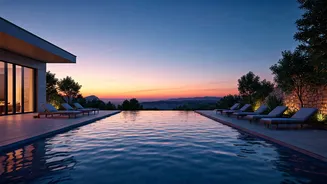
For those who want the 'royal feel' on a slightly grander scale, there are the larger, more established havelis like Samode Haveli. While bigger, these properties masterfully avoid the impersonal nature of a large resort. Because they are converted family homes, their layouts are wonderfully eccentric, with a maze of courtyards, gardens, and verandas that encourage exploration. You can start your day with yoga by a centuries-old fountain, take a dip in a pool lined with intricate blue tiles, and enjoy an evening cocktail in a hall filled with ancestral portraits. These stays offer the grandeur of a palace—sweeping archways, frescoed ceilings, and impeccable service—but with the warmth and intimacy of a home. They provide the perfect backdrop for that main-character moment, making you feel less like a tourist and more like a guest of the family.
The Bohemian Retreat: For the Artistic Soul
Beyond the purely opulent, another strain of heritage stay caters to a more bohemian, wellness-oriented youth. These villas, sometimes located just outside the city's hustle, focus on a slower, more holistic experience. They might host artist residencies, offer block-printing or pottery workshops, and feature menus centered on Ayurvedic principles. The design is often more rustic and earthy, celebrating handcrafted imperfections and natural materials. Properties like Villa Palladio, with its distinctively bold red-and-white Italian-inspired design, offer a high-fashion fantasy escape. These places aren't just about seeing Jaipur; they're about being creative within it. They attract travelers who want to connect with a community of like-minded people, learn a new skill, and return home with a story that goes beyond sightseeing.
Why It's the Future of Travel
This trend speaks directly to what a new generation of U.S. travelers craves: authenticity, narrative, and aesthetic value. The cookie-cutter luxury of global hotel brands is losing its luster. Younger travelers want a strong sense of place; they want their accommodation to be as much a part of the story as the sights they see. These heritage villas offer just that. Each stay comes with a built-in narrative—the history of the family who lived there, the craftsmanship of the artisans who built it, and the vision of the restorers who reimagined it. It’s an immersive, sustainable way to travel, supporting the preservation of local architecture and culture while offering an experience that is anything but generic.